Can you produce your food's "résumé" in 24 hours? Korea's FUTURE SENSE is betting on blockchain as export rules tighten
In the US, enforcement of a rule requiring records for listed foods within 24 hours is set for July 2028. In Indonesia, imported food has needed halal certification since October 18, 2026. To cross a border, food now has to prove where it came from. FUTURE SENSE, based in Incheon, South Korea, records the journey from farm to table on a blockchain. CEO Dami An talks about the kimchi project that started it all, why halal and traceability rules are converging, why selling is harder than building, and the company's plans with a Japanese food maker.
 DATA TIMES Editorial Team
Interview · 17 min

On October 18, 2026, halal certification became mandatory for imported food in Indonesia. Halal means "permissible" under Islamic law. It is not only about leaving out pork and alcohol: the ingredients, the processing and even the transport have to follow the rules. There were about 2 billion Muslims in 2020, around 26% of the world's population, according to the Pew Research Center.
The United States has its own new rule. For a list of designated foods, from leafy greens to seafood, the Food and Drug Administration (FDA) requires companies to keep records from receiving to shipping and to hand them over within 24 hours of a request. Congress has told the FDA not to enforce it before July 20, 2028. That still leaves less than two years.
This is personal for me. My wife is from Indonesia, and whenever her family visits Japan, we go looking for halal food together. We read the ingredients on the back of every package, hunt for a certification mark, and ask the staff when we can't tell. Every time, I'm struck by how much work it takes just to find out where food comes from.
Now imagine that the full history of a product, from the farm to your plate, were recorded in a way no one could rewrite, and you could check it with your phone. A company in South Korea is building exactly that with blockchain: FUTURE SENSE, based in Incheon.
A blockchain is a shared ledger: many computers keep the same record of transactions, so no one can quietly change it later. It is best known as the technology behind Bitcoin. FUTURE SENSE uses it as a résumé for food.
I got the chance to talk directly with the company's CEO, Dami An!
Here's the big picture of what I learned.
- Recording food's journey from farm to table, in a form no one can rewrite
It started with kimchi. FUTURE SENSE built a system that lets customers scan a QR code to see which farm the cabbage and chili peppers came from, and which factory and wholesaler they passed through. - The US, Indonesia and Europe are all moving on "proof" at once
The US food traceability rule, Indonesia's mandatory halal certification and the EU's deforestation regulation all demand data showing where food comes from. - The hard part isn't the technology. It's selling it.
The food industry is deeply traditional. In Korea, FUTURE SENSE got its foot in the door by working with government agencies first. In Japan, it plans to start by building a few big success stories.

Dami AnDami An
CEO, FUTURE SENSE
“No one can play with the data on a blockchain. That's why the people eating the food can check it for themselves.”── Dami An, in this interview
- 2003–Moved to China at 16International school in China, then sociology at Peking University
- After graduatingB2B sales and strategy at a consulting firmExpanded a sales network across 40 Chinese cities and helped launch branches in the US and Canada
- 2017–Korea director, ConsenSysBrought the global blockchain company's proven cases to Korea's largest IT firms
- NOWCEO, FUTURE SENSECo-founded the company in 2020 with ConsenSys's former CTO. Taking blockchain-based food traceability from Korea to the US, Indonesia and Japan
From Beijing to blockchain
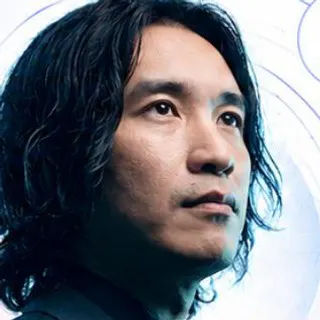 Ogasawara
Thank you for joining us, Dami! Could we start with your background?
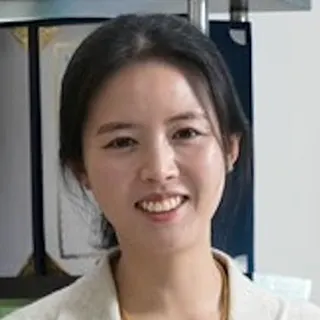 An
I went to China to study when I was 16, in 2003. I graduated from an international school there and then studied sociology at Peking University.
My first career was in B2B sales and strategy at a consulting firm. I helped expand our network of Chinese agency partners to 40 cities, and I watched the business grow very fast. I also worked on the US and Canada branches. I spent about five years there.
But consulting is a business that leverages the information gap. And in this world, the information gap is becoming smaller and smaller. So I wanted to work closer to the core: on the technology side.
OgasawaraThe information gap getting smaller. So that's what pulled you toward technology?
AnYes. At that time, the blockchain industry was growing very fast. Bitcoin came to the world in 2008, and then Ethereum came along. Ethereum was the first platform where developers could actually build real solutions on blockchain. Blockchain is an infrastructure technology. It can be adopted in many, many industries in different ways.
I worked at ConsenSys, the company that helped found Ethereum. It was like the Amazon or Google of the blockchain industry, helping Fortune 500 companies digitally transform with blockchain. In 2018, I came back to Korea as ConsenSys's Korea director, and brought its proven cases from around the world to Korean IT companies like Samsung SDS, LG CNS and SK C&C.
Korea's blockchain industry was still very immature then, but people were paying a lot of attention. So I decided to start my own company with ConsenSys's former CTO, an American with deep technical experience. That was the start of FUTURE SENSE.
Our vision was to make future technology make sense in our daily life. Blockchain, AI, that kind of future technology. We wanted to make it work in real business and in real daily life.
OgasawaraAnd within "daily life," why did you choose food?
AnBecause food is very closely connected with me and my beloved family. It's very important to our health. And consumers want trusted, transparent information about what they are eating. We thought technology could help with that.
How kimchi started the farm-to-table chain
OgasawaraBut you didn't come from the food industry. How did you first run into its problems?
AnAt first, we were a blockchain technology company. We wrote a lot of proposals to Korean government agencies. We even worked with Korea's National Police Agency, on R&D for putting blockchain into a big data platform. It was about how blockchain can protect data: immutability, and being able to trace it.
Our second project was the one that really mattered for us. It was kimchi.
OgasawaraKimchi! What happened?
AnThere was a pretty serious kimchi scandal. A video went around showing people in very dirty water, using their feet to work the cabbage. You have to salt the cabbage to make kimchi, right? So suddenly people were worried: is the kimchi in front of me at this restaurant clean? Is it made from clean cabbage? Trust dropped.
But kimchi is a very important food in Korea. So the World Institute of Kimchi, a public research center, chose us to build a blockchain-based kimchi traceability system.
We traced the four main ingredients, like cabbage and chili pepper, from the farm: how they're transported to manufacturers, and how the finished kimchi goes to wholesale, retail and the consumer. Customers can scan a QR code in the restaurant or on the package and check, step by step, where that kimchi really came from. They can trust the data because no one can play with data on a blockchain.
We ran that project for two years and got to work with kimchi manufacturers and ingredient suppliers. That's when we started to understand how traditional and inefficient the food industry is.
OgasawaraTraditional and inefficient. What did that look like on the ground?
AnA lot of companies were using Excel spreadsheets. But food has an expiry date, unlike most industries. Fashion or batteries can be stored for a long time, but food goes bad very fast. When the date passes, inventory turns into waste. Spreadsheets have a lot of limits for managing that.
We felt the food industry needed an IT system built for it. And then, suddenly, global regulation arrived.
2028: the US wants your records in 24 hours
OgasawaraGlobal regulation? What kind of rules?
AnThe food traceability rule from the US FDA. It requires food coming into the US to be traceable, and it applies to US manufacturers and distributors too, not just foreign ones. It becomes fully mandatory from July 2028. That gives everyone less than two years to prepare.
Big players like Walmart have already started preparing by adopting a US traceability solution. The US solutions are very good, but they're not that compatible with Asian or Korean food companies, because of different languages, different units and different standards.
That's where our AI engine comes in. It pulls data from paper, Excel or photos, using OCR and computer vision, and builds a data pipeline that meets the FDA's very complicated rule. The key is 24 hours. Once the rule is fully in force, when the FDA asks, food companies have to submit all their electronic traceability data within 24 hours.
OgasawaraTwenty-four hours is tight. Actually, my wife is Indonesian, and when her family comes to Japan we always look for halal food together. Are the halal rules getting stricter too?
AnOh, really? Yes, halal is the other big global regulation. About one in four people in the world is Muslim, the population is still growing, and buying power is rising in the Middle East and South Asia.
We've held a workshop together with BPJPH, Indonesia's halal authority. Indonesia has a huge population, and it is making halal certification fully mandatory for food and beverages.
There used to be no regulation like this in the food industry, and now there are many rules to comply with at once. It's a very big change. So our AI and blockchain engine builds one data foundation, a master data set that can comply with the FDA traceability rule and also with the EU Deforestation Regulation (EUDR).
When origin can no longer be faked
OgasawaraSo it's already started. Why is there suddenly so much demand for this kind of proof?
AnBecause the global supply chain is changing so quickly, and there's a need to prove things very transparently.
For example, the US wants to make sure materials are not from China or Russia. Some commodities and raw ingredients are originally Chinese, but they go through Mexico or Vietnam and get labeled "made in Mexico" or "made in Vietnam" to avoid tariffs. There's a global trade war going on, with tariffs and non-tariff barriers. So you need end-to-end traceability that's actually proven. And that's not only the food industry.
Let me give you a real-world example: batteries. LG's chemical business in Korea imported cobalt from Congo, made batteries and sold them to Volvo. If that cobalt was mined by children under 15, that's child labor abuse. When somebody discloses that, LG has a big problem, Volvo has a big problem, everyone in the supply chain does. So they ran a blockchain project to trace the cobalt and make sure of who mined it, and where. The food supply chain has very similar issues.
OgasawaraThere are fair-trade efforts for cacao, the raw material for chocolate, too. With blockchain, could you check that without flying out to the farms?
AnIt's interesting that you mention cocoa. FAO Korea, the Korea office of the UN's Food and Agriculture Organization, is working with us. Just two weeks ago, they selected us to go to Rome, where the FAO is headquartered, and exhibit at a very big global conference and exhibition.
There, FAO Ghana told us about a problem. Ghana produces the second-largest amount of cocoa in the world, and sells a lot of it to Europe. But Europe has the EUDR, which also requires traceability: you have to prove the cocoa was not grown by cutting down the existing forest.
Cocoa brings in a lot of money, so some farmers cut down the native trees and plant cocoa trees instead. That's deforestation. So the EU needs traceability proof that the cocoa was grown on the right land, without cutting down the forest. FAO Ghana is very interested in blockchain-based cocoa traceability.
Harder than the tech: selling it
OgasawaraSo the same kind of proof is needed everywhere. With that much demand, surely other companies have tried this too?
AnThey have. There were blockchain companies that wanted to do this business before. But to tell you the truth, not many were successful, because a business plan doesn't always match reality.
It worked for us because we started by working with Korean government agencies, including four different agencies under the Ministry of Agriculture. That gave us credibility and references. The food and agriculture industries are very conservative and traditional. On our own, we couldn't have persuaded them to adopt AI and blockchain. Working with government gave us references and a top-down path into the industry.
Other companies can build a solution. But if you can't sell it, the company goes bankrupt. So it's not only about technology. It's about sales and partnership.
In the US, there's a very good company called ReposiTrak, which is recommended by the US food industry association. But we offer more functions for Korean and Asian vendors, like unifying different units and languages, and our AI engine builds the data pipeline very quickly.
OgasawaraSpeaking of getting into the field: what actually happens when you bring your system into a Korean food company?
AnFirst, they move what they've been managing in Excel into our solution. That alone makes inventory much easier to manage. In food, inventory becomes waste when the date passes.
We also use AI demand forecasting for purchasing. Food companies waste a lot because of wrong purchase decisions. They overbuy, can't turn the goods into products in time, and throw them away. So our solution covers purchase management, inventory management and traceability management: everything a food company needs.
And regulation is something you have to comply with even if you don't like it. Otherwise your exports will be banned. On top of that, bigger companies require data from their smaller suppliers. If a big company wants to export, it needs the records from earlier in the value chain. The chain is connected, so smaller companies have to prepare anyway.
Taking Japanese food to the world, with proof
OgasawaraSo the data has to flow all the way through the suppliers. That sounds like it will happen in Japan too. What are your plans there?
AnOf course we're eager to work with Japanese companies. Japanese cuisine is famous around the world and has a lot of branding power. And a lot of Japanese food is exported to the US and Indonesia. Those companies will need traceability, and they'll need halal certificates.
We can manage their global regulatory compliance on one platform and help them export sustainably, with minimal risk. And consumers can see that Japanese food really came from the farm, or from the sea, to the table. That can help their marketing and branding, too.
OgasawaraFrom the sea to the table sounds very Japanese. But I imagine Japan has different hurdles from Korea.
AnWe'll face different issues. Language is the first. We can publish a Japanese front end, but selling in Japan will be harder than in Korea.
Education after adoption is also very important. Employees and managers have to use our solution fluently. Bigger companies have their own ERP or manufacturing systems, so we need to connect our solution with those. So in Japan, I think we need good partners: technology and sales partners who can help us sell, educate users after purchase and support the technology when needed.
OgasawaraI don't think many companies in Japan are doing this yet. How does the Japanese market look from where you sit?
AnCan I be honest? Japan is very, very strong in infrastructure technology. But IT comes a little later.
That's why I think we have more opportunity in Japan: there aren't many IT solution vendors in this space. We'll work with a few anchor customers to build a great success story, and then I think we can open up the Japanese market.
Carrying the trust in our food across borders
OgasawaraIs anything already moving in Japan?
AnWe're a startup supported by Incheon City, and the Incheon Center for Creative Economy and Innovation selected us for its 2026 program. Through that program, we were connected with a long-established Japanese food company.
That company also sells a lot of Korean food in Japan. We've met several times and presented our proposal to their leadership. They want to expand in the US, so they'll need traceability and halal certification, and they want to manage their many products more efficiently with a digital system. We're now discussing how to work together, and I think it will be a very important step for us.
Next month we'll be in Japan for an exhibition. I'm looking forward to more conversations with people there.
A food's résumé is becoming its passport for export
What I took away from Dami's story is that food traceability is shifting from a safety measure to a condition for crossing borders.
Three regulations land within two years
What surprised me most was how the rules stack up. Indonesia began requiring halal certification for imported food on October 18, 2026. The EU Deforestation Regulation is set to apply to large operators from December 30, 2026. And enforcement of the US food traceability rule starts on July 20, 2028.
The three rules have different goals and scopes: religious law, forest protection, tracing the source of foodborne illness. But they all ask for the same thing: data on where a food came from and how it was handled. Instead of answering each country separately, FUTURE SENSE wants to answer all of them from one data foundation. For exporters, that approach makes a lot of sense.
A blockchain can only protect the record
A blockchain keeps records from being rewritten later. But that cuts both ways: if the data was wrong when it went in, the error stays there, unchangeable. The US National Institute of Standards and Technology (NIST) notes in a technical report that a blockchain may have no way to know whether its inputs reflect what actually happened in the real world.
So the real contest is the first entry. Reading paper and Excel records with AI, and partnering with government agencies to get suppliers entering data at the source: FUTURE SENSE's edge, as I see it, is less the blockchain itself than its ability to get into the places where data is born. The arc from Walmart's 2.2-second experiment to IBM's withdrawal notice seems to tell the same story.
What this means for Japan's food makers
Japan already requires companies to keep transaction records for rice and track individual cattle for beef. What's missing is the ability to pull those records out quickly, in the format foreign rules demand. If you're a food maker exporting to the US or Indonesia, checking whether your records could be produced in 24 hours is a good way to find out what to do next.
More visitors are coming to Japan, too. According to JNTO, Japan received about 641,000 visitors from Indonesia and 637,000 from Malaysia in 2025 (counted by nationality, not religion). People like my family, who want to know where their food comes from, will be showing up at Japanese stores more and more.
For engineers, turning paper documents and spreadsheets into structured data is becoming a big job across the food industry. For students, connecting food, data and national regulations is turning into a profession of its own. And the data collected as proof can eventually become a brand story, from the sea to the table. I'm looking forward to seeing whether FUTURE SENSE's work with a Japanese food maker becomes the first example.
SOURCES ── References
- FUTURE SENSE, official website (company and team) (in Korean)
- FUTURE SENSE, e-Halal and certification services (in Korean)
- FoodNavigator, "Five food tech startups judges say could help shape the future of food" (October 9, 2026)
- MoneyToday, report on FUTURE SENSE and Indonesian universities' e-Halal co-development (October 28, 2025, via Daum) (in Korean)
- Pew Research Center, "Countries with the most Muslims & global Muslim population change, 2010-2020" (June 9, 2025)
- U.S. Food and Drug Administration (FDA), "FSMA Final Rule on Requirements for Additional Traceability Records for Certain Foods"
- U.S. Congress, H.R.5371 (Public Law 119-37, enacted November 12, 2025)
- Indonesia's Halal Product Assurance Agency (BPJPH), "Wajib Halal Berlaku 18 Oktober 2026" (statement of October 9, 2026) (in Indonesian)
- BPJPH, "Penegasan BPJPH di Sidang WTO" (statement of June 25, 2025) (in Indonesian)
- Council of the EU, "Deforestation: Council signs off targeted revision to simplify and postpone the regulation" (December 18, 2025)
- Walmart, 2018 Global Responsibility Report Summary
- IBM, "Cloud service program withdrawal: IBM Supply Chain Intelligence Suite and IBM Blockchain Transparent Supply" (updated January 14, 2025)
- National Institute of Standards and Technology (NIST), "Blockchain Technology Overview" (NISTIR 8202, October 2018)
- Japan National Tourism Organization (JNTO), visitor arrivals by nationality, 2025 final figures (in Japanese)


