Shisa AI's CEO: You can't build physical AI that fails fast, and that's where Japan wins
Shisa AI is one of 21 developers on the Japanese government's list of domestic foundation-model builders, alongside NTT and Fujitsu. We talked with CEO Jia Shen about why AI models couldn't play Japanese characters, why he calls AI "culture," how his harness Jouzu runs teams of AI models with different personalities, what it does to your AI bill, and why Japan's caution could become its edge once AI moves into the physical world.
 DATA TIMES Editorial Team
Interview · 21 min

More and more of us ask an AI instead of running a search. Japan is catching up fast here: in the government's 2026 White Paper on Information and Communications, 58.8% of people in Japan said they had used generative AI, up from 26.7% a year earlier.
So who builds those AIs, and where does everything we type into them go? ChatGPT, Gemini and Claude all come from U.S. companies.
Kids will grow up asking AI questions. How well does that AI understand the Japanese language and Japanese culture? Is it safe to give it a company's sensitive data? Working with AI and data every day, we've been asking ourselves the same things.
One Tokyo company is working on exactly these questions: Shisa Inc. (Shisa AI), which builds AI with Japanese as its first priority.
Shisa AI doesn't stop at Japanese language models. It also builds a harness for teams of AI models that lets you choose where your data goes.
And this time, we got to sit down with Shisa AI's CEO, Jia Shen.Here's what came out of the conversation:
- AI is already culture
The next generation will grow up asking AI. So Japan needs AI that understands how Japanese actually sounds, and that lets Japan choose where its data goes. - Not one smart AI, but a team with different personalities
One model directs, others do the work, another checks it. Pick a model for each job, and safety and cost become choices you make yourself. - Japan's caution could become its edge
AI that works in the physical world can't "fail fast." Japan's habit of getting a product right before it ships is exactly what that world needs.

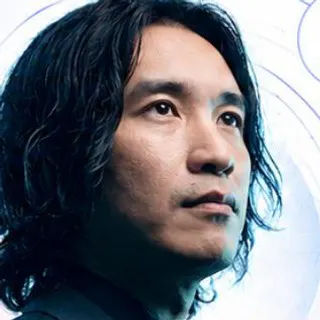
Jia Shen
CEO and Representative Director, Shisa Inc.
“The next generation will grow up asking AI everything. AI isn't just software anymore. It's culture.”── Jia Shen, in this interview
- 2005Co-founds RockYouAs CTO, builds games and apps for social networks. SoftBank invests, and in 2009 a joint venture for Asia is set up in Tokyo
- 2010Moves to JapanBased in Tokyo, works on gaming, smart-toy and virtual-character companies
- 2021CEO of AKA VirtualProduces virtual characters such as VTubers. Trying to make those characters talk with generative AI leads to Shisa AI
- NOWCEO and Representative Director, Shisa Inc.Leads work on the Shisa Japanese-English language models, the Chotto real-time translator and the Jouzu harness for teams of AI models
Japan, as taught by a college roommate
 Ogasawara
Thanks so much for doing this! Could we start with your background?
 Shen
Sure. I've lived in Japan for 16 years now. I moved here in 2010. I'm originally from the U.S. — Chicago, then San Francisco, then Tokyo.
I started my first company in 2005. It was one of the first social game companies. We were funded by SoftBank, long before there was a SoftBank Vision Fund. That was my first real connection to Japan.
Going back further, my college roommate was one of the people who would go on to found Mercari. This was the late '90s, and he was basically the only Japanese guy around. Almost everything I knew about Japan, I learned from him.
So I got familiar with Japan in college, and I started visiting in 2003. I was actually here when Roppongi Hills opened.
OgasawaraYou learned Japan from your roommate! So what made you decide to actually live here?
ShenThere's a word in English these days, "manifestation." It's a bit of a Gen Z term. The idea is that if you picture who you want to be, reality starts moving toward it.
For me, I knew early on that I wanted to live in Japan. I didn't make any big plans. But the things I liked, the people I knew and the things I did kept pulling me a step closer to Japan. On some level, it was an accident that SoftBank found us and decided to fund us.
But mathematically, the more you move in one direction, the higher the probability that it happens. So when the chance to move came, I took it. Part coincidence, part probability.
AI couldn't sound like a Japanese character
OgasawaraCoincidence and probability brought you to Japan. So how did you end up building Japanese AI?
ShenMy background is engineering first, then product. That's why this era of agentic coding is so much fun for me.
Shisa AI comes from two halves. One is the foundation-model side, led by my co-founder Leonard Lin. To be really strong at training models, you need people who are very good at math, machine learning and data science. Honestly, that's not me.
The other half is AKA Virtual, the company I was running. We did virtual characters and influencers, like VTubers. Every company I start comes back to the same idea: how technology can support culture and entertainment.
Around then, GPT-3 and GPT-3.5 were starting to show they could hold a natural conversation. Before, you had to figure out the right search words yourself — "hamburger place near me." Now you can say, "I kind of want a hamburger," and it asks, "What are you in the mood for?"
So the first thing we tried was putting an AI behind our virtual characters to do the talking.
OgasawaraAn AI talking behind the character! How did that go?
ShenThe first thing we discovered was that large language models (LLMs) were really bad at Japanese, especially Japanese entertainment.
Take role play. "You are Oda Nobunaga" — the 16th-century warlord — "now talk like him." They couldn't do it well. They still aren't great at it.
It's not just about switching to a Kansai accent, either. Say, "You're not from Osaka, you're from Kyoto, born in 1980, a man who has worked at a trading company for 20 years. How would you talk?" Characters carry that kind of cultural background. In English, you can say "a guy from Brooklyn in the 1970s" and the model can play it. In Japanese, it really struggled.
So back in the GPT-3.5 days, we said, "Let's build our own models." At the time we worked from open models like France's Mistral.
OgasawaraKyoto, born in 1980, 20 years at a trading company — that does sound hard for an AI. Once you started building your own, what came first?
ShenAs engineers, the first thing we did was build really strong tests to measure the models — benchmarks. It's something a lot of people still don't think about.
With normal software, if 1 plus 1 doesn't equal 2, the test fails. Simple. But an AI doesn't always give the same answer to the same question.
When the switch from GPT-4o to GPT-5 happened, everyone in the U.S. said the personality had changed. If you're doing work that isn't programming and you swap models, how do you check that it still behaves the way you want? The more the work depends on tone and personality, the scarier that gets.
So we spent a lot of time building tests and tooling to measure models in Japanese. We're also good at measuring safety and alignment — whether a model leans one way or another, or takes sides. If you can't measure it, you can't even tell whether you built a model that's good at Japanese.
That work paid off: our 405-billion-parameter model "Shisa V2 405B," released in June 2025, posted the highest benchmark scores among models trained in Japan at the time.
AI is already culture
OgasawaraIf you can't measure it, you can't build it. Then why build apps too, like chat and translation, and not just models?
ShenIt's easier to explain if you start with what AI companies are doing.
AI companies put out products partly because usage makes their models stronger. Today's AI has been trained on pretty much everything that's already public, and every AI company, including us, is running out of training data. To improve the next model, you need more feedback from real people using it.
In Silicon Valley right now, if you go to dinner with people, everyone is talking about how to get new training data. Physical AI companies, the ones building robots, are recording as much training data as they can. Data is money.
Our chat and translation products are first of all about finding problems. Actually, this interview is running through our real-time translator, Chotto Meet, and my colleague is checking the translation in real time right now.
 Ogasawara
Right now, even this conversation! As all that data piles up, what worries you most?
ShenData safety, and sovereign AI — AI that a country owns and chooses for itself.
AI is no longer just ones and zeros. It's a representation of culture, and of how the next generation learns.
My daughter is six. She's going to grow up asking ChatGPT things like, "What do you think about France?" You probably don't Google much anymore either; you just ask an AI. In the future, everyone will deal with the world through AI.
And right now, those AIs are controlled almost entirely by American and Chinese companies. From a Japanese cultural standpoint, that's a little concerning.
The data safety side is even more dangerous. Everything you say — where does it go? Does it become training data? We care about that a lot. And having come to Japan for over 20 years, I know data privacy and security matter a great deal to Japanese people.
OgasawaraWhere does it go... So how do you keep your data from leaving your hands?
ShenWe think open models are the right direction — models whose weights are published, so anyone can run them in their own environment. France's Mistral and Alibaba's Qwen from China are examples.
The nice thing about open models is that you can run them in your own data center or on your own hardware. You can test them yourself. If the server literally can't connect to the outside, your data can't end up at some company's headquarters in another country. That's the most basic kind of safety. Our own Shisa models are published together with the data mix we trained them on, so you can run them on your own servers.
A company example makes it easier. Say you're a bank. You want AI to answer customer calls. But that's customer data. You don't want it leaving your company, and you don't want it leaving the country. With a closed AI, there's no way for you to check where the data finally ends up.
Attackers are learning AI, too
OgasawaraWe see news about cyberattacks all the time now. How does Japan look from where you sit?
ShenJapan is under more ransomware attacks — where attackers lock up your data and demand payment — than it has ever seen. Attacks are up everywhere, because attackers can now use AI to move much faster. As an AI company, we're under AI-driven attacks constantly ourselves.
The other scary thing is scams. It's become really easy to scam elderly people. With agentic AI, I can look up your background and figure out how to message your parents. "Hey, I'm in Hiroshima today, but I lost my credit card" — with a few details about you mixed in. Your mom thinks, "Oh, that's my son."
Just as we're learning AI every day, criminals are learning AI every day too. That's why we've joined an international effort to detect AI-enabled scams and impersonation, contributing the technical work.
OgasawaraDefenders need choices too... Is that where Jouzu comes in?
ShenExactly. We can use U.S. AI tools, and we do. What matters is having the choice. That's the whole concept behind Jouzu: you choose your models.
Why does choice matter? Three reasons. First, safety from a Japan-centric standpoint, which we've been talking about. Second, very simply, cost. And third, the right model for the right job, in the right role.
Not one smart AI, but a team with different personalities
OgasawaraSafety, cost and the right model for the job. So what exactly is Jouzu?
ShenJouzu is a harness for running a team of AI models. A harness is the layer that gives a model tools and procedures so it can do real work. It's an open-source tool whose first version came out in August 2026, starting with programming.
The key point is that the models aren't just ours. You can use Shisa models, other open models, and closed models from Anthropic or OpenAI. You can run everything on Claude if you want.
For code review, for example, we use three different models: GPT, Claude and GLM, a model from China. Each one catches different issues.
OgasawaraDifferent models catch different problems?
ShenThey do. The best way to think about agents is that it's like running a company. You always want people with different personalities.
Think in roles. The orchestrator, which directs everything, needs to be smart, but it doesn't need a huge context. The workers who do the hands-on work need to read a lot, but they only have to be moderately smart. You don't need a top-tier model for implementation. The reviewer only needs a small context, but it has to be smart. You balance the roles against each other.
We do the same thing for translation. For our documentation and marketing, we have reviewers with four personalities. One is an older Japanese executive — how would they read this translation? Another is a younger, Gen Z person. We turn them into an "agent committee," let them discuss it and decide which translation is best. Then a human makes the final call.
 Ogasawara
An older executive and a Gen Z reviewer on one committee — I love that. But with so many AIs, who keeps them in line?
ShenThat's the orchestrator. Think of it as a manager that never sleeps.
Picture a social media team. A research agent goes online and looks at what's getting traction on X and Instagram right now. Personally, I'd use an OpenAI model there; it's very good at web search. The next agent analyzes that and writes a script. Another uses a multimodal model to create the visuals. If you built a social media team with people, you'd split the work the same way.
The manager says, "You research, you create." When someone finishes, it hands them the next task and passes their results to whoever is waiting on them. Give it a goal, like "get more views on Instagram," and it keeps trying: if a version misses the goal, try again; if it's better, keep it; if it's worse, roll it back. That's how real work runs — not one prompt box where you type "make me a video."
Claude does run sub-agents behind the scenes like this, and Claude is a great harness. But you can't really see what's happening. In Jouzu you build the team yourself, so it's clear why the team looks the way it does, and you can keep it as a repeatable playbook.
One more important piece is TextGuard. When you paste text from the web into an agent, there can be hidden instructions — "ignore your previous instructions" tucked into an HTML comment, or invisible characters. Jouzu scans that text on your own machine before it ever reaches the model.
No more staring at the usage bar
OgasawaraA repeatable playbook... But with that many AIs running, what happens to the cost?
ShenThat part is amazing. Open models are just much cheaper — generally about ten times cheaper than the U.S. ones.
If you use Claude today, aren't you watching the usage bar going, "Oh, 20% is gone... 50% is gone"? You send one prompt and see what happens. That's pretty scary.
In Jouzu, each task gets a model that fits it, as cheap as possible. The person thinking about your overall social media strategy is an expensive hire at a human company, too. The person writing post copy can be cheaper; they don't need a top-tier model. When you write each role like a job description, the system builds a model card for it, so you know up front whether a job is expensive or cheap. You can also set a token budget for each goal, and the run pauses before it goes over.
Our view is that companies get used to Claude first, then try to roll it out across the organization. Then they see the annual bill for 20 people, and they start looking for alternatives. Jouzu is meant to be the next choice after Claude. You can keep using Claude while spreading work across other models based on your requirements, like cost and data safety.
OgasawaraThe number of digits on your bill... How are you getting Jouzu out into Japan?
ShenThe main thing is offering state-of-the-art open models, safely hosted. If you're using Claude now and your company wants to deploy the best models widely, look at Shisa's models. It's safer and it's cheaper.
Another fun piece is working with developers who have big followings online. Like the social media example I gave today, they show great examples of what you can do with a team of agents. China and the U.S. already have big companies built on harnesses and agentic workflows. We want a lot more awareness of that idea here in Japan.
AI that can't fail fast
OgasawaraMore awareness in Japan... Finally, what are you hoping to see from AI users in Japan?
ShenI believe Japanese users will use AI differently from anyone else. AI adoption in Japan has been slower, but that's because culturally, people here are much more meaningful and thoughtful about how they use tools, especially technology. That's what excites me.
Internationally, agentic coding has made everyone try all sorts of things, instead of making individual things very, very good. Japan is a master at making very good products and very good processes. Imagine the best people in Japan learning to do that with a team of agents. I think it could compete at massive scale, in a very different way from how the global AI market looks today.
I think the biggest thing Anthropic has done isn't the products it puts out. It's how it uses AI internally — tracking how much software is being written collaboratively by people and AI. That's why it ships faster than anybody else. This idea of working with AI as a team is something the AI coding world still isn't doing well. As Japan learns it, Japan could be a big competitor.
OgasawaraWorking with AI as a team... What do you see beyond that?
ShenJapan says it's going to be strong in physical AI — AI that moves in the real world, like robots and cars. Building agent teams that reach into the physical world is scary and exciting at the same time. In Tokyo, Waymo's robotaxis are already being tested, aiming for fully driverless service sometime in 2027.
Behind the scenes, what we're really thinking about is large restaurant chains and supply chains. Lots of locations, lots of data. A package got delivered, a coffee got made, a store closed on time. Taking in events from the physical world like that and running them with a team of agents.
At that scale, token cost, data safety and whether you can trust the orchestration all become very important. That's our next big step.
OgasawaraAI in the physical world often can't afford to fail. Where does that leave Japan?
ShenI think Japan's big companies would be the best at deploying this. Honestly, better than the U.S. The U.S. isn't good at coordinating physical things across the country. That's why America doesn't have bullet trains.
U.S. and Chinese startups always say "lean startup" — build fast, fail fast. That doesn't work in Japan. By the time a customer sees the product, it already has to be good.
With physical AI, that matters even more. You can't build physical AI that fails fast, because it's going to break and hurt people. Japan will be much stronger there — in design, in quality, in well-thought-out hardware. Japan has a lot of strengths for this new era of AI.
Japan's caution becomes an edge once AI works as a team
Shisa AI, one of the developers on Japan's list of domestic foundation-model builders, is making Japanese AI and teams of AI models that let you choose where your data goes. Hearing why, I came away with three takeaways.
The freedom to choose a model only works if you can measure it
Jouzu's selling point is that you can pick any model. But what stuck with me most was that the first thing Shen's team built wasn't a model — it was the tests to measure one. Switch to a cheaper model and its tone or judgment may shift. If you can't measure that, choosing becomes too risky to try.
Japanese companies have room to grow here. In the white paper, 41.1% of Japanese companies have company-wide AI guidelines as a risk measure, not far from the U.S. at 50.4%. The gap opens on "regular evaluation and verification after deployment": 29.1% in Japan versus 45.7% in the U.S. The rules get written; the habit of measuring after deployment is still thin.
If you're an engineer, keep one small test that checks what changes when you swap models. That's your ticket to actually using the freedom to choose.
Sovereign AI comes down to where data can live and who gets to choose
Shisa AI is listed among the 21 developers in GENIAC, the government program backing domestic AI. It's led by Shen, who learned Japan from his college roommate and has spent 16 years building companies in Tokyo.
His thread ran through the whole conversation: Japan being able to choose. AI that can speak like Japanese characters. Open models you can run without your data leaving the country. And on top of that, teams of models you can rearrange to fit the job. Each one widens what Japanese companies and people can decide for themselves.
After the interview, I came to think that with sovereign AI, what matters is where your data can live and who gets to choose. There are people who genuinely believe in Japan's potential and are building tools so Japan can choose. Honestly, that moved me.
Where you can't fail fast, Japan's "slowness" becomes an advantage
Look only at the white paper, and Japanese companies seem slow to put AI into their organizations. Shen calls the same thing a thoughtful culture, and says it becomes a strength once AI moves into the physical world.
Tokyo's robotaxis already show what that looks like. Using Waymo's technology, the project has been testing in seven Tokyo wards since 2025 with Nihon Kotsu crew on board, and aims for fully driverless service with up to 100 cars in 2027, after safety checks and permits. U.S. technology, with a Japanese company running the operation on the ground. Not failing fast, but expanding while checking each step.
If you plan projects at a company, try writing one job out as "roles and procedures." That becomes the playbook you can hand to a team of AIs. If you're a student, practice treating AI not as one clever partner but as a team with different roles. Can Japan turn its caution into skill at assembling AI? I think that's where the next round of Japan's AI story will be decided.
SOURCES ── References
- Shisa Inc., About Shisa Inc.
- Shisa Inc., About (in Japanese)
- Shisa Inc., Shisa AI and Japan (in Japanese)
- Shisa Inc., Shisa AI official site
- Shisa Inc., Shisa AI added to the list of domestic foundation-model developers (July 28, 2026, in Japanese)
- Shisa Inc., Shisa AI joins a UN-registered global initiative against AI-enabled scams (August 6, 2026, in Japanese)
- Shisa Inc., Jouzu: an open-source agentic coding harness
- Shisa Inc., shisa-ai/jouzu on GitHub (v0.1.0 released August 22, 2026)
- Shisa Inc., Shisa API pricing (accessed October 29, 2026, in Japanese)
- Shisa Inc., Chotto Events
- Anthropic, Claude pricing (accessed October 29, 2026)
- Ministry of Internal Affairs and Communications, White Paper on Information and Communications 2026: AI use by individuals (July 24, 2026, in Japanese)
- Ministry of Internal Affairs and Communications, White Paper 2026: generative AI use at work (July 24, 2026, in Japanese)
- Ministry of Internal Affairs and Communications, White Paper 2026: organizational efforts (July 24, 2026, in Japanese)
- Ministry of Internal Affairs and Communications, White Paper 2026: perceived risks and countermeasures (July 24, 2026, in Japanese)
- National Police Agency, Cyberspace threats in the first half of 2026 (September 10, 2026, in Japanese)
- NICT Venture Support Center, Interview with Ryo Ishizuka, CEO of Mercari's U.S. subsidiary (2017, in Japanese)
- Wikipedia, Jia Shen
- Adweek, Jia Shen of RockYou at Community Next
- SoftBank, Additional Investment in RockYou, Inc. (November 18, 2009)
- Impress Car Watch, GO, Waymo and Nihon Kotsu aim for Japan's first fully driverless taxi service in 2027 (September 15, 2026, in Japanese)


