AI says “looks fine.” So why are you still rereading? Shodo's Hiroki Kiyohara on proofreading AI that shows its work
Ask a chatbot whether your draft has typos, and it tells you it looks fine. Then you read the whole thing again anyway, because you can't see what it actually checked. In print, where a single wrong character costs money, that gap matters. Hiroki Kiyohara, CEO of ZenProducts and the engineer who builds the Japanese AI proofreading service Shodo and its print edition Shodo Print, explains why his AI lays the page and the spreadsheet side by side, why PDFs are messier inside than they look, what is hardest in an age when an app can be built in a day, and how a programmer of 20 years really feels about AI.
 DATA TIMES Editorial Team
Interview · 21 min

You paste your draft into ChatGPT or Claude and ask, "Any typos?" The answer comes back: "I don't see any major issues."
And then you read the whole thing again yourself. Don't you?
I do. The AI says it's fine, but it doesn't tell me what it looked at to decide that. So in the end, my own eyes have the final say.
For a blog post, that's a nuisance. Now picture printed material, where a single wrong character turns into real money.
Take a mail-order catalog. Someone has to check hundreds of prices and product codes, one by one, against the product list in Excel (the "product master"). Or a city's public newsletter: dozens of pages, read straight through against the house style rules. Once it's printed and delivered, there's no fixing it. Most of this comparing and read-through work still depends on human eyes.
How much of that checking can AI take on? And what should stay with people?
One company working on that question, from inside Japan's proofreading world, is ZenProducts, based in Asaka, just outside Tokyo.
So I was thrilled to sit down with Hiroki Kiyohara, the company's CEO, who still writes much of Shodo's code himself!
His answer had less to do with how smart AI is than with one test: does a person still have to go back and check?
- Put the evidence next to AI's "OK"
Show the value on the page and the value in the product master side by side, and where they match or don't. Then nobody has to open the spreadsheet and check again. - When it can't decide, the AI asks
Abbreviations and style rules differ by company and industry. Where even a person couldn't decide, the AI asks "Which one?" Once a rule is settled, the whole team uses it. - Leave the fun parts to people
Hand AI the job of comparing things by eye, so people can focus on the expressive work: reporting, planning, design. That is where Kiyohara started.

Hiroki KiyoharaHiroki Kiyohara
CEO, ZenProducts Inc.
“I want AI to do the tedious checking. Honestly, my wish is: don't take away the fun parts.”── Hiroki Kiyohara (from this interview)
- Age 14Starts programmingInspired by indie games and game makers, he enters a technical college and throws himself into programming
- After graduatingJoins a Python development firmBuilds client systems in Python, still a rare choice at the time, and plans and develops PyQ, an online Python learning service
- 2017–2020Co-authors three Python booksIncluding Python Professional Programming (3rd edition) and The Self-Driven Programmer. Also chairs DjangoCongress JP, Japan's conference for the Django web framework
- NOWCEO, ZenProductsFounded the company in Asaka, Saitama in August 2020. Develops the AI proofreading service Shodo and Shodo Print for printed materials himself
The non-creative work of creative people
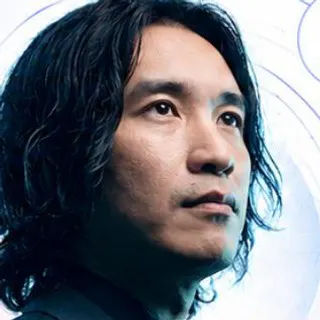 Ogasawara
Thank you for joining us today! Could we start with your career so far?
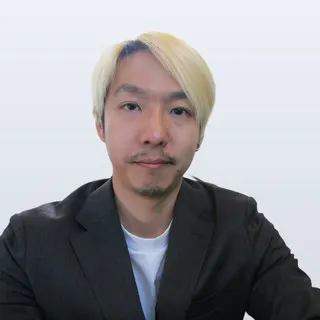 Kiyohara
Thanks for having me. I've always loved programming and making things. Even my graduation project was a product that used AI.
After that I joined a development firm that built client systems in Python, and that's where I learned the trade. Python was a pretty minor language back then. Somewhere along the way it became a language everyone knows. I've stuck with Python the whole time, so maybe I've just been riding the winning horse.
At that company I launched a Python learning service, and it really took off. I handed the business over to the team and went independent.
OgasawaraWow, you launched a hit and then went out on your own. So why proofreading?
KiyoharaAt my previous company I was also running PR and marketing, and I noticed something. So much of the time went to things other than thinking about the content or the customer.
Take this interview. The time we spend talking is precious. But afterward, the time spent arranging the structure and passing drafts around is hard work, and it isn't the valuable raw material of the interview.
Back then, I was building a proofreading tool as a hobby. I started a company around it and released it as a proofreading service. That's Shodo. A version specialized for print is our new product, Shodo Print.
OgasawaraA hobby project turned into a company. In printing, where does that "time not spent on the content" go?
KiyoharaWhen you make a printed piece, you report, you plan what readers want, you design the catalog. Those parts matter a lot.
But checking by eye whether the information in the layout really matches the source data, the master? Honestly, I don't think a human needs to do that. So let's have AI do it. That's Shodo Print.
My starting question was: don't creative people spend too much time on work that isn't creative? These days it almost feels like AI is taking the creative work instead, which I don't think is right. People should focus on expression, on reporting, on meeting and talking with customers. I want to get rid of checking things by eye. That's the feeling underneath it all.
Where AI arrived just in time
OgasawaraGetting rid of eyeball checking. How are people in the field taking AI these days?
KiyoharaThe biggest change I feel is that people outside the web industry now see AI products with a kind of urgency, as something they truly need.
Take PR staff at city and town halls. Many work with very few people, or alone, as a "one-person PR department", and they've reached the point where producing the newsletter by themselves just isn't possible anymore.
I think that's less about wanting to try AI and more about population change and labor costs. They were already struggling for reasons that have nothing to do with AI, and then AI showed up. For them it's a relief: now there's a way to solve it.
OgasawaraSo it's out of necessity. Who uses Shodo Print most right now?
KiyoharaPeople who make catalogs. When you publish a catalog regularly, the checking takes a huge amount of time.
For a one-person PR department, there's also the problem of not knowing who to ask to look it over. You end up doing nothing but checking, and you lose sight of what you even wanted to say. That's not good, and it's something I really want to fix.
A chatbot's “OK” versus an OK that shows its evidence
OgasawaraNot knowing who could look it over sounds tough. But you can also paste a draft into ChatGPT or Claude now and ask if anything looks off. How is that different?
KiyoharaThat's exactly the key point. When you leave it to a chat AI, its OK often comes without a clear reason. Even when it points things out, you still have to go back to the original text and have a human look again.
When Shodo Print checks a catalog, it links each product on the page to the product master in Excel and lays them out side by side in two columns. It shows the match against the master as evidence that this one is correct, so a human doesn't need to go back and look.
It also finds mismatches between images and text. Say the copy describes a short-sleeved shirt, but the photo shows long sleeves. It flags that too, with the evidence: here's what this text says.
And if you feed a document of several hundred pages into a chat AI, you'll probably get about ten comments back. Shodo Print is built to look at every single page.
 Ogasawara
I see! With a chat AI, it might sound convincing and still not have checked anything at all.
KiyoharaExactly, exactly. People are starting to notice that risk.
Proofreading and fact-checking is a very exacting world. So we use AI for the work of matching things up and showing the evidence clearly. You don't have to open Excel and look things up each time. You get "It's OK. Here's why," with both sides right there. That's where an AI product can make a real difference.
Inside a PDF, it's messier than it looks
OgasawaraTo line up the evidence, the AI first has to read the page correctly. How do you make that work?
KiyoharaOne part is making it refer firmly to the master data. The other is what's inside the PDF. A PDF may look neat to the human eye, but as a data structure, it's pretty messy inside. The positions and coordinates of the text are nowhere near as tidy as they appear.
So we use AI to analyze the page layout, vertical versus horizontal writing (Japanese can run either way), and where images sit. It's not "drop in a PDF and get something back." We combine several AI processes and have AI agents work through them one step at a time. That's how we get the accuracy.
OgasawaraOh, I've copied text out of a PDF and pasted it, and it came out scrambled! I always wondered why that happens.
KiyoharaRight, that happens all the time. That's what the world of PDFs is like. A PDF mostly holds the characters and their positions. It contains almost no information about where a paragraph starts and ends, or what order to read things in.
Pull the text straight out of a two-column paper, for example, and the left and right columns get interleaved into gibberish. Then you get errors flagged in correct sentences, or real errors slipping through.
On the Shodo side, we added AI parsing to PDF proofreading that recognizes paragraphs and reading order from how the page looks. Comparing five PDFs, including vertical-text novels, a two-column paper and a contract, the share of sentences read correctly rose from 68.8% to 98.9%. The characters themselves still come from the text embedded in the PDF, so the AI can't change a letter by misreading it. That reading step is one of our selling points too.
OgasawaraSo the AI even works out the reading order. I imagine Excel files vary a lot from company to company too.
KiyoharaThey do. A "product master" might be neatly arranged in columns, split across sheets, or laid out like graph paper, with every cell used as a layout grid. The AI recognizes "this is that kind of pattern" and reads it accordingly.
Overall, it isn't about feeding things to AI and seeing what comes out. What we work hard on is turning AI into a product.

When neither AI nor people can decide
OgasawaraTurning AI into a product. But style rules and abbreviations vary by industry and even by person. How do you handle that?
KiyoharaThat part is really hard. There are cases even a human can't call, so we have the AI ask: "Which one is it?"
For example, the PDF shortens a name to fit the layout, while the master spells it out in full. Or a list gets cut short with "and others." Simply comparing data one-to-one can't handle that, so we let the AI make the judgment. That's a big part of it.
People often ask: if the PDF was made from the master, why check at all? But real pages are built in design software, fitted to the page width and the design. There's no way they match the master exactly. That's why matching them up again properly matters so much.
And beyond handling things flexibly with AI, you can also set firm rules. We can read a customer's style guide and turn it into rules. Then you can work in a world without ambiguity, "this is how we write it," which helps keep the team's quality and protects the brand. That's territory a chat AI can't cover.
OgasawaraWith chatbots, if you give them too much material or too little, it goes wrong. You're splitting the work between flexible reading and fixed rules.
KiyoharaExactly. I think a lot of people are struggling with how to build a product with AI. Even if you build one, what's the point if the AI companies just absorb it?
But look at AI coding tools. I don't think what they do is just the raw AI. There are all kinds of skills, and they combine programmatic parts cleverly so the whole thing works remarkably well. It isn't something any plain LLM could do on its own. We have to build with that mindset too.
Still, you never know when you'll be wiped out. That's why choosing where to play matters so much.
When an app takes a day, the hard part is adoption
OgasawaraChoosing where to play. People across many industries are starting to use it. What gets in the way when they adopt it?
KiyoharaQuite a lot. Actually, I think it's the most challenging part.
Suppose an AI product just gives you a chat box: "type here." For many people, it isn't obvious what they're supposed to type. And the person who wants to sign the contract and the people who'll actually use it are completely different. We care a great deal about how easy it is to use.
These days there's also the route of connecting through MCP, a standard for linking AI to outside tools, and just using it from Claude on your own computer. I think that's great, but surprisingly few people can do it. When a company decides to adopt something, can you explain it to fifteen people on the team and get them using it every day? Can the person who decided even explain it?
A startup or a cutting-edge marketing team could manage. But what I care about is making sure people who aren't chasing the cutting edge can benefit from AI too. I want to remove the pain itself, so with Shodo Print I want to get it down to: drop in the PDF, press Start, done.
OgasawaraDrop in the PDF and press Start. You're designing all the way down to the person using it. Do you explain it to customers yourself, too?
KiyoharaWe'll hold an explanation session any time, free, and I run it myself. If questions or requests come up there, I can feed them straight into development. We really value that.
Online, there are endless stories like "I built a new web app in one day." But I've never seen one actually selling in large numbers. What's the difference? The hardest part is getting people to keep using it after it's built.
Now that anyone can build things, you'd think we'd see news that the number of startups grew tenfold in a year. But you don't hear that, do you? Getting people to use what you make has always been hard.
I think media is the same. Even if AI can write articles and outline them, the reporting, judging the information, coming up with a good idea don't change. If those are weak, it doesn't matter how many articles get written.
OgasawaraOuch, that hits home! So the CEO himself is also an engineer standing in front of customers. How do you take in what users tell you?
KiyoharaI read every single inquiry and handle every one myself. All of it, including the ones where we get scolded and the ones where we get praised.
It's a heavy load, and I'd like to do something about that. But customer messages carry things that disappear if you filter them: a slight tone, the number of exclamation marks. That changes how much you can take from them. I want to be efficient, but I want to protect that.
From the comfort of a checked apology to guarding everything a company writes
OgasawaraEven the number of exclamation marks. Since people started using it, has anything surprised you?
KiyoharaIn my mind, it was mainly about saving time. Running things efficiently.
But some people use Shodo for customer support, and they told me that having it check something like an apology letter, a text that absolutely can't contain mistakes, gives them a lot more peace of mind. When you write it alone, even after checking twice or three times, you wonder whether the wording is right. When I heard that it had put their minds at ease, I realized that matters too.
Shodo Print came out of Shodo because I learned that the problems with printed pages are completely different from text proofreading. Product matching is one example. It isn't just a world of reading strings of text and fixing them. Proofreading and fact-checking is a much, much bigger world than people think.
Of course I think human checking matters. People seem to glance over a page, but they're drawing on an enormous amount of knowledge. I want to lighten that load as much as possible, but there are things only a human check can do.
That's exactly why I want proofreading companies to use Shodo Print. A proofreader's eye, built over years of experience, can't be replaced. Let AI handle the mechanical parts and put the proofreader's eye to work on more and more jobs. I'd love for them to make that their selling point.
OgasawaraSo proofreading is a bigger world than I imagined. Where is the business headed?
KiyoharaIn the bigger picture, I want it so that if you let AI read all of a company's information and past writing, it automatically checks every piece of PR and every channel.
Right now it's split up: text proofreading, print proofreading. Ideally, you'd point it at your company's web pages and documents, and it would read absolutely everything, turn it into rules, turn that into a spec on its own, and then check everything the brand puts out, whether it's a CSR report or the company newsletter.
I want to guarantee the accuracy of the brand as information, text and images included. I'd like people to see Shodo Print as the first step. When you think of it that way, there's no way a chat AI could do that. That's why AI products have to step up.
OgasawaraIf it reads everything a company has, security comes to mind. Do customers ask about that?
KiyoharaAll the time. "Will the AI learn from our data?" "Is it OK on overseas servers?" Those questions always come up. And of course they're points we absolutely have to address.
Shodo Print runs only on servers in Japan, AI included. We never train on customer data. If we optimize anything, it stays within that customer. I never want anyone to end up in trouble because they tossed something into a chat AI.
We use a combination of AI models. In the past we even fine-tuned a language model called BERT ourselves (training it further to adjust it) and ran it on AWS servers with dedicated AI chips. I spent ages watching the dashboard of a hyperparameter-tuning tool, going "ah, the training loss did this here."
I was really good at fine-tuning. But today's LLMs aren't that world anymore. Not being able to use that knowledge much is a little sad.
Twenty years of code, and the fun parts
OgasawaraSomething you were good at, no longer needed. As products built on generative AI keep multiplying, how do you see the role of engineers changing?
KiyoharaI'm on the fairly positive side.
There's a lot of worry about whether engineering jobs will be OK, watching Claude produce code in an instant. I've been programming since I was about 14, so twenty years of programming. Coming from someone who has done an absurd amount of it and even written books, I see it positively. Or maybe I'm trying to.
There is sadness. Twenty years poured into something. But think of it this way: everything until now was the run-up. If you can use what you've learned and experienced to solve more problems than before, you can see it positively.
Even today's AI, however smart it gets, sometimes makes what looks like a bad move given the instructions and context. It's like Chairman Netero in the manga Hunter × Hunter: we fight with experience. Sure, he loses in the end. But we're still holding on for now, so buy some time and learn to look at the bigger picture.
OgasawaraEverything until now was the run-up. But how do you really feel?
KiyoharaHonestly? It's fifty-fifty. I've been trying hard not to say anything too cool. "Wow, it solved it, great!" and "Wow, it solved it..." really hit at the same time. I think everyone feels the same.
Illustrators, composers, video makers, writers. Every kind of creator might be feeling this.
Sometimes I wonder: is this feeling about AI just me getting old? Like older people who scoffed at every new thing, only a much stronger version. I can't rule out my own aging, so I try not to dwell on it. The times they are a-changin', as Bob Dylan sang.
We're in an era of nonstop AI news, and whenever engineers talk, this topic comes up. I think it's important not to worry too much. So, everyone, you'll be fine. You don't need to suffer that much. That's the good news I'm holding on to. Though it sounds like I'm telling myself.
OgasawaraLet me hold on to that good news too! How do you think printing and PR work will change from here?
KiyoharaThe shrinking of publishing and magazines is a story everyone has heard dozens of times. The data shows it, too.
But putting information into a designed form, not plain text, and handing it to people as a PDF or on paper? I think that will never really go away. Flipping through a catalog is fun, right? Partly because it leads to buying, but there's a kind of artistry, an enjoyment, that matters.
Video too. If you just want the information, a text interview is far faster, yet somehow everyone wants podcasts and videos. I think it's because they're fun.
I'm bad at fortune-telling about how big an industry will be. But the human urge to put your own expression into things isn't going to disappear.
OgasawaraThe urge to put your own expression into things. On the flip side, there are times people really dislike AI.
KiyoharaI think AI gets disliked because it doesn't touch people's hearts. People feel that what they poured their hearts into is being trampled on, and that's why they push back.
That's why, in the age of AI especially, I want to protect that. So when AI somehow shows up in image generation, I really get the feeling of "No, that's not your job."
That's my motivation for focusing on proofreading. Not "here, I made it," but checking. Let AI do the tedious parts, and don't take away the fun parts.
OgasawaraTedious parts to AI, fun parts to people. A way for AI to help without taking away the fun parts.
KiyoharaOh, I like that! That really struck a chord with me. There's your headline.
That's what we want to do. You make videos and interview content too, Ogasawara-san, and I imagine you value the fun parts. That's exactly why I want AI to handle the part that guarantees accuracy. We've come full circle, but that's what I believe.
Give AI the work nobody should have to check twice
We end up rereading a chatbot's “looks fine” not because the AI isn't smart, but because we can't see its evidence. After the interview, I came away with three takeaways.
AI is worth what it saves you from rechecking
When you bring AI into your work, it's tempting to compare how often it gets things right. But in the Eltes survey, most people who caught an AI mistake had checked it again themselves. Even with a high accuracy rate, if people still reopen the spreadsheet or the manuscript every time, the work barely gets shorter.
Shodo Print lays the page values and the master values side by side and reports exactly which entry it compared against. Where it's unsure, it doesn't hide it; it marks the item "needs review." And only the flags the proofreader accepts go into the report. The AI does the first pass. People make the call.
When choosing or building an AI tool, the question to ask is how many times it saves people from going back to look. For engineers, that might mean designing, first, the screen that shows the source data right next to the answer. The same AI, used that way, gets used very differently.
Now that building is fast, the difference is in getting it used
Kiyohara said he'd never heard news of startups growing tenfold in a year, so I checked. According to Tokyo Shoko Research, Japan saw 157,011 new corporations in 2025. A record, but up just 1.9% from the year before. AI has made building things many times faster, yet the number of new companies has barely moved.
The difference comes after the build. Can fifteen people on a team use it every day? Can the person who chose it explain it? That's why Kiyohara insists on a screen where you drop in a PDF and press Start, runs free explanation sessions himself, and reads every inquiry. He even pays attention to the number of exclamation marks.
When DATA TIMES read through Japanese job listings for forward-deployed engineers (FDEs), the engineers who take AI into customers' workplaces, what employers wanted was someone who keeps building until the thing is actually used. Seeing a CEO take on that role himself says a lot about where an AI company should spend its most valuable hours.
Hand AI the parts that aren't fun first
AI gets disliked because it doesn't touch people's hearts. I think that line from Kiyohara works as a yardstick for deciding what to give AI first.
Writing, drawing, shaping an idea: if AI takes over the work people enjoy, something feels hollow for both the people making things and the people receiving them. But if you start with the tedious parts, like comparing by eye, reading hundreds of pages straight through, checking against the rules, people can put the time they get back into expression.
If you work on PR or catalogs, try counting how much of your week goes to simply comparing things. If you're an engineer, try starting from features that take over people's checking rather than features that make things. If you're a student or a creator, keep a firm grip on the step you enjoy most. A way for AI to help without taking away the fun parts starts with us, the users, deciding what to hand over first.
SOURCES ── References
- ZenProducts, company profile (in Japanese)
- ZenProducts, Shodo: your AI editorial team (in Japanese)
- ZenProducts, Shodo Print: automating proofreading of printed materials with AI agents (in Japanese)
- ZenProducts, Shodo Print, an AI agent for proofreading printed materials, begins pilot testing (July 24, 2026; in Japanese)
- ZenProducts, Shodo Print officially released (September 28, 2026; in Japanese)
- Writing Lab by Shodo, AI parsing for PDF proofreading raises correctly read sentences from 69% to 99% (October 27, 2026; in Japanese)
- Hiroki Kiyohara, We officially released Shodo Print, an AI proofreading agent for printed materials (Make-gumi Blog, September 28, 2026; in Japanese)
- Hiroki Kiyohara, I turned 34: longing for magic, and AI (Make-gumi Blog, November 5, 2025; in Japanese)
- Eltes, Survey: 80% of business people have experienced AI hallucinations (September 29, 2026; in Japanese)
- Tokyo Shoko Research, New corporations in 2025 hit a record 157,011 (May 12, 2026; in Japanese)


