NVIDIA's factory never stopped. Its stock did. What Jensen Huang's exit revealed about leaning on one man
Jensen Huang, who founded NVIDIA and ran it for 33 years, has resigned, and CFO Colette Kress is now interim CEO. Will the world's AI computing stall? We read NVIDIA's SEC filings: its AI chip sales are 5.3 times Broadcom's, its next-generation GPUs are already shipping, and the factory is not stopping. Yet over seven trading days the stock fell 18.6%, about 17 points worse than the chip index. Sixty executives reported directly to Huang, the board had no chair, and the search for a successor began only on the day he left. We trace where the dependence on one person really sat, using the filings of eight big peers, past founder exits and the impact on Japan.
 DATA TIMES Editorial Team
Feature · 17 min

At DATA TIMES, we use generative AI almost every day to put our articles together. Much of that computing runs on GPUs made by NVIDIA — the chips that do the heavy lifting of AI.
On the night of November 12 in Japan, news broke that Jensen Huang, who co-founded NVIDIA and led it for 33 years, had resigned as president and CEO. Our editor-in-chief, Kaito Ogasawara, had a very down-to-earth first thought:
"The AI we use isn't going to stop working tomorrow... right?"
To find out, we went back through the filings NVIDIA has made with the US Securities and Exchange Commission (SEC): its financial reports and its annual proxy statements. Two things stood out. Sales and the product pipeline are built to keep running even if one person is gone. But the way the company makes decisions — how key calls flowed, and who was watching over the next generation of leaders — leaned on Huang alone to a striking degree. That, it seems, is what the market was pricing.

NVIDIANVIDIA Corporation
The US company that sells the chips behind AI — and the software to run them
- 1993Three co-foundersHuang and two partners start the company in California. Huang is president, CEO and a director from day one
- 2006CUDA launchesSoftware that lets graphics chips handle general computing — later the foundation of modern AI
- 2022H100 shipsThe AI-training GPU enters full production; the generative AI boom sends orders pouring in
- NOWFounder resignsOn Nov 11, 2026, the board accepts Huang's resignation and names CFO Kress interim CEO
NVIDIA sells the whole package for AI: the GPUs that train and run models, the networking that links tens of thousands of them together, and CUDA, the software layer developers use to program them. Many of today's generative AI systems, including ChatGPT and Claude, are built and run on NVIDIA hardware.
The scale is enormous. According to its quarterly report, NVIDIA booked $96.2 billion in revenue in the three months from May to July 2026, roughly double a year earlier — $89.0 billion of it from data centers. Its annual report puts the workforce at about 42,000 as of late January 2026.
Japan relies on it too: the AI computing systems built by the country's national research institute and its big telecom carriers run on NVIDIA GPUs (see Part 02).
When a CEO resigns, attention naturally goes to why. But as people who work with AI and data, we wanted to answer a different question: how much did the company at the center of the world's AI computing depend on one person? And now that he's gone, what changes — and what doesn't?
What we set out to check after Huang's resignation
The factory keeps running. What shook was a decision-making system built around one man
Q1Will AI computing stall?
Q2So why did the stock fall?
Q3Where was the dependence?
Q4What about Japan?
A 33-year founder steps down, and Colette Kress steps in
First, the facts.
According to the Form 8-K NVIDIA filed on November 12 (US time), the board accepted Huang's resignation as president, CEO and director the day before, on November 11, effective immediately.

The new interim CEO is Colette Kress, NVIDIA's chief financial officer since 2013. She keeps the CFO job while the board searches inside and outside the company for a permanent chief.
At the same time, Harvey Jones, a director since 1993, became the first chair of the board in NVIDIA's history. In the announcement, Jones said the board has full confidence in Kress and the leadership team, and expects operations, customer commitments and the product roadmap to continue without interruption. NVIDIA still plans to report earnings on November 17 (US time).
Kress, in the same release, said that "NVIDIA's strength has always come from its people," and pledged to build, with the leadership team, on the foundation Huang created over 33 years.

The company has not given a reason
NVIDIA has not explained why Huang resigned. According to Al Jazeera's summary, Huang was reported to have had a relationship with a former executive at a business partner who is alleged to have worked for Chinese intelligence, and on November 8 he admitted being unfaithful to his wife and apologized. The board initially expressed confidence in him, opened an independent investigation, and said it had no reason to believe national security had been compromised. The espionage allegation has not been proven publicly.
CNBC reported that Brian Mast, who chairs the House Foreign Affairs Committee, said Huang has agreed to testify before Congress. That's as far as this article goes into his private life.
Inside, employees pushed back
Staff reactions were mixed. WIRED reported that before the resignation, a longtime engineer posted to an internal suggestion box urging the board to take employee sentiment into account. The post drew more than 1,600 comments, several asking the board to find a way to bring Huang back. "If you believe in the mission, bring back THE boss," one wrote. It says a lot about how big the founder loomed for the people who work there.
The AI factory isn't stopping
So, back to that first question — will the AI we use stop working? By the numbers, the factory isn't going to stop anytime soon.

NVIDIA's data center revenue was $89.0 billion from May to July. Over the same period, Broadcom's AI semiconductor revenue was $16.7 billion, and AMD's data center revenue for July to September was $8.5 billion. That makes NVIDIA 5.3 times Broadcom and about 10 times AMD. Customers can't switch a gap like that overnight.
The next product and the supply deals are already locked in
The quarterly report says Vera Rubin, NVIDIA's next-generation data center platform, began production shipments in the quarter that started in August. Back in May, the company announced Rubin had entered full production for AI data centers worldwide. A CNBC reporter also noted that the product roadmap is set for the next few years.
The supply side looks the same. The same filing shows NVIDIA's commitments to secure parts and manufacturing capacity reached $279 billion at the end of July, more than double the $119 billion three months earlier. Production years ahead is already spoken for.
NVIDIA also stands behind its customers. In August it agreed to guarantee up to $105 billion if OpenAI fails to pay rent on a giant data center campus in Ohio being built for OpenAI by SB Energy, a US company backed by Japan's SoftBank Group. NVIDIA doesn't just sell chips — it helps underwrite the factories they go into.
The flip side is that revenue is concentrated in a few buyers. NVIDIA discloses each year which direct customers account for 10% or more of revenue, and lined up, the trend is clear.
| Period | Direct customers at 10% or more of revenue | Total |
|---|---|---|
| Feb 2023 – Jan 2024 | 1 (13%) | 13% |
| Feb 2024 – Jan 2025 | 3 (12%, 11%, 11%) | 34% |
| Feb 2025 – Jan 2026 | 2 (22%, 14%) | 36% |
| Feb – Jul 2026 (half year) | 3 (16%, 15%, 13%) | 44% |
Source: DATA TIMES, based on NVIDIA's annual report (10-K, fiscal 2026) and quarterly report (10-Q, July 2026). Customers below 10% aren't disclosed, so the totals cover only the largest.
In the latest half year, just three customers made up 44% of revenue. These direct customers include server makers in Taiwan and elsewhere; the cloud companies that ultimately use the chips aren't named. Of the $89.0 billion in data center revenue, $48.7 billion — about 55% — came from the big cloud providers.
Big customers are spreading their bets across four kinds of chips
Those big customers are already changing how they buy. Anthropic, the company behind Claude, plans to list on Nasdaq on November 19. Its amended IPO filing of November 10 says it runs Claude on four chip families — Amazon's Trainium, Google's TPUs, and GPUs from NVIDIA and AMD — and that this setup reduces its dependence on any single vendor.
Still, the ties to NVIDIA run deep. According to the same filing, NVIDIA will buy about $10 billion of Anthropic shares at the IPO price right after the listing. And Anthropic has signed deals worth up to about $206.4 billion in total to rent NVIDIA-powered computing from three providers: a SpaceX subsidiary, Nscale and Lambda (part of the Lambda deal can currently be terminated by either side).
Japan's AI infrastructure runs on NVIDIA too
This matters directly for Japanese companies and research labs. On November 13, Ryosei Akazawa, Japan's Minister of Economy, Trade and Industry, declined to comment on another company's personnel matters but called NVIDIA "a very important presence for Japan's AI semiconductor industry" and said the government will keep watching.
The reason is easy to see. ABCI 3.0, the large AI supercomputer run by the National Institute of Advanced Industrial Science and Technology (AIST), uses 6,128 NVIDIA H200 GPUs. In July 2025, telecom carrier SoftBank Corp. said its AI computing platform had passed 10,000 GPUs. GENIAC, the government program that supports homegrown AI models, mainly subsidizes GPU time (our analysis). And the AI data center planned next to a power plant in Chiba would, by our estimate, have enough electricity to run about 180,000 NVIDIA GPUs.
On November 11, Anthropic also filed an amended registration statement with Japan's Kanto Local Finance Bureau for a public share offering in Japan. Japanese individual investors will be able to buy into an AI company in which NVIDIA is a major investor. (This article is not a recommendation to buy or sell any stock.)
Still, the stock fell about 17 points behind the chip index
If the factory isn't stopping, how far did the stock fall? Chip stocks across the board plunged on November 5. So we compared closing prices from the day before, November 4, through November 13, the last trading day of the week Huang resigned. That shows how far NVIDIA fell behind after everyone had been through the same sell-off.

NVIDIA fell 18.6%, about 17 points worse than the chip index's 1.2% decline. AMD and Broadcom actually rose over the same stretch. Using NVIDIA's roughly 24.1 billion shares outstanding, its market value went from about $4.8 trillion to about $3.9 trillion in seven trading days — some $900 billion gone.
On November 5 itself, the chip index fell 12.2% while NVIDIA fell 9.3%, so NVIDIA actually held up better that day. The gap opened afterward: other chipmakers bounced back, and NVIDIA didn't. CNBC reported that AMD rose nearly 17% from the start of the resignation week, a sign that money was moving to rivals. On November 12, the day the resignation was announced, NVIDIA dropped more than 13% at the open before recovering to close down 4.3%. Individual investors leaned the other way: data from Vanda Research cited by CNBC showed retail traders bought a net $111 million in the first 30 minutes, more than 40 times a normal open and the biggest opening bid Vanda had ever recorded.
Analysts split
CNBC's coverage that day showed a wave of downgrades. Bernstein's Stacy Rasgon cut his rating, warning that more allegations could surface, and KeyBanc's John Vinh downgraded too, citing a "material increase" in risk.
Others were calmer. Dan Ives of Yorkville Ives & Co. said Kress can "steady the ship," though he expects an outsider to take over in the long run. Jeremiah Buckley of asset manager Janus Henderson called the resignation a potential "clearing event."
Voices from the AI industry weighed in, too. Perplexity CEO Aravind Srinivas thanked Huang for his "bold leadership." And Storm Uru of Liontrust Asset Management, which has held NVIDIA since 2017, told CNBC: "Nvidia without Jensen is something which we've never really considered."
Sales and the roadmap hadn't moved, yet the market marked NVIDIA down. So what was it worried about? The clues were in the documents NVIDIA had been sending its shareholders all along.
A company whose decisions ran through one man
Sixty executives, one boss
Huang often talked about how he ran the company. At payments company Stripe's conference in April 2024, he said NVIDIA's leadership team is 60 people, and they all report to him. "It's not conventional," he added, "but I am certain it's the best practice." He tells everyone the same thing at the same time, so information doesn't get stuck in layers of hierarchy.
It's a system built for speed. But it also means that many of the important calls went through Huang himself. Fortune noted that NVIDIA doesn't even have a chief operating officer to run day-to-day operations.
Leader development reported to the board — by the CEO
So who was grooming the next generation of leaders, and who was watching? We compared the proxy statements — the documents that explain to shareholders how the board oversees the company — of NVIDIA and eight big tech and chip peers.

NVIDIA's 2026 proxy statement has a short section called "Senior Management Development." It says many senior managers work directly with the CEO, which aligns them with strategy, exposes them to a wide range of work, and gives the board a pool of candidates for promotion. And the person who updates the board on management development is the CEO.
There's nothing unusual about a CEO briefing the board on talent — every company does it. The difference is that all eight peers also state that the board or one of its committees reviews succession planning itself.
| Company | What the proxy statement says |
|---|---|
| Microsoft | The board oversees CEO succession planning and performs the annual CEO evaluation |
| Apple | The board regularly reviews board and executive succession planning |
| Amazon | The board and a committee annually review executive succession planning |
| AMD | The compensation committee reviews CEO succession plans at least once a year |
| Broadcom | The board is actively engaged in CEO succession planning |
We found no statement in NVIDIA's documents that the board itself oversees succession. Even leader development ran through Huang. To be thorough, we searched the full text of NVIDIA's proxy statements for 2024, 2025 and 2026: the word "succession" doesn't appear once. In the eight peers' latest proxies, it appears between 7 and 28 times.
That doesn't prove the board never discussed it — some boards talk about succession without writing it down. But shareholders had no way to check from the outside.
A board without a chair
The board had no chair to fill the gap either. NVIDIA's proxy explains that it uses an independent lead director "rather than a chairperson," so that every director has an equal voice. Jones, a director since 1993, has now become the first chair in the company's history. And according to the 8-K, the search for a new CEO began on the very day the board accepted Huang's resignation.
Huang wasn't named in NVIDIA's risk disclosures either. US public companies list the risks that could hurt their business in their annual 10-K. NVIDIA's closest statement is a single sentence — "we are highly dependent on the services of our longstanding executive team" — and the wording has barely changed in four years of filings since fiscal 2023.
Other founder-led companies do name names. Tesla's 10-K says it is "highly dependent on the services of Elon Musk," and Meta's 10-K says it depends on key personnel "including Mark Zuckerberg."
A long-serving board — and a longer-serving CEO
We also calculated tenure. Counting from the years listed in the 2026 proxy statement, NVIDIA's nine independent directors had served an average of 16.4 years. Two of them have been on the board since the company was founded in 1993.

Executive search firm Spencer Stuart's 2026 survey puts average independent director tenure on S&P 500 boards at 7.9 years. NVIDIA's board has kept largely the same faces for more than twice as long. Huang's 33 years as CEO is three times the 10.7-year average of S&P 500 CEOs who left their jobs in 2026.
Long-serving directors know a company deeply — Jones, the new chair, is one of them. But Yale's Jeffrey Sonnenfeld said on CNBC that boards can become "smitten by the CEO," and CNBC reported that NVIDIA's board reflected that tendency.
Even so, the board acted in three days
NVIDIA's board did have the power to remove its founder. According to the 2026 proxy statement, Huang owned 3.58% of the company, all in ordinary one-vote shares. Unlike Meta's Zuckerberg, he held no special shares giving him control of the vote.
Three days after Huang's apology on Sunday, November 8, the board accepted his resignation on Wednesday, November 11. Even in a company that leaned so heavily on one man, the final say rested with the board. That part of NVIDIA's governance worked.
Huang himself said "the next CEO has to be hired"
What did Huang think about succession? In a Bloomberg interview recorded on October 14, about a month before he resigned, he said, according to Business Insider:
"Just as I can be fired, the next CEO has to be hired."
He also said he hoped the next CEO was already inside the company. Huang clearly believed the board should choose his successor. That belief just hadn't yet shown up in the proxy statements or in how leaders were developed.
Michael Useem, a management professor at the University of Pennsylvania's Wharton School, told Fortune: "If the board had been doing its job, it would already have a slate of possible successors."
What happened to companies whose founders stepped away
Other tech giants have seen their founders step aside. We compared each stock's first trading-day reaction with the previous close.
| Who stepped down | Successor | Stock on the first trading day |
|---|---|---|
| Apple's Steve Jobs (Aug 2011) | Tim Cook (named the same day) | −0.7% |
| Alphabet's Larry Page (Dec 2019) | Sundar Pichai (named the same day) | +1.9% |
| Amazon's Jeff Bezos (Feb 2021) | Andy Jassy (named the same day) | −2.0% |
| Intel's Brian Krzanich (Jun 2018) | CFO Bob Swan (interim) | −2.4% |
| NVIDIA's Jensen Huang (Nov 2026) | CFO Colette Kress (interim) | −4.3% |
Source: company announcements; daily closes from Yahoo Finance, compiled by DATA TIMES. For announcements after the close (Apple, Alphabet, Amazon) we used the next day's close; for those before the open (Intel, NVIDIA), the same day's close; both compared with the prior close. Krzanich was not a founder; he is included because he resigned over a past relationship with an employee and the CFO became interim CEO. Amazon's announcement coincided with its earnings.
On the one-day move alone, NVIDIA's drop isn't extreme. The difference is how the founders left. The first three companies named a successor on the same day — the handover had been planned.
Planned handovers, then growth
Each of those planned transitions was followed by growth. According to CNBC, Apple's market value went from about $350 billion to $4 trillion under Cook, and Alphabet's shares have more than tripled under Pichai. In the same piece, Notre Dame management professor Michael Withers noted that Cook had "considerable preparation" for the job.
Intel is the closest match to NVIDIA's situation: the CFO became interim CEO and the board searched inside and out. Swan was named permanent CEO seven months later, in January 2019. If NVIDIA's board follows a similar path, the answer won't come quickly.
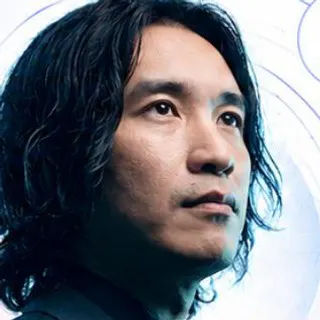
What leaned on one man wasn't the product. It was how decisions got made
Huang's exit won't stop NVIDIA's sales or products anytime soon. What the filings revealed is that the company's decision-making was built on top of one person.
The factory keeps running; what shook was the bet on the next decade
AI computing isn't about to stall. The sales, the locked-in product roadmap, the $279 billion in supply commitments — the factory is already running.
Yet in seven trading days the stock fell about 17 points behind the chip index. What the market discounted, we think, wasn't current sales but the person who decides which technology to bet on next, and how big. CUDA and the pivot to AI were both early, outsized bets by Huang. Who makes that call now? Until there's an answer, we expect the discount to stay.
The dependence was in how leaders were grown and overseen
Sixty executives reporting directly, no board chair, and the CEO himself briefing the board on leader development. The system that made NVIDIA fast also became its weak spot the moment one person was gone.
Working with AI and data ourselves, this reminded us that the documents describing how a company makes decisions deserve as much attention as its earnings. Tesla spells out its dependence on its founder; with NVIDIA, you have to infer it from how the system is described. And the board could still act within three days because the founder didn't control the vote. How much a company leans on one person, and whether anyone can stop that person, are two separate questions worth checking.
What Japanese companies can learn: how a founder's company hands over
Japan's Corporate Governance Code for listed companies asks boards to take an active role in CEO succession planning. Japan has plenty of companies led by their founders for decades.
The smooth transitions at Apple, Alphabet and Amazon all named a successor the day the founder stepped back. If your president disappeared tomorrow, who would run the next meeting? Is that written down, and does the board have it? It's a question any company, large or small, can check today.
SOURCES ── References
- NVIDIA, Form 8-K (event of November 11, 2026) (November 12, 2026)
- NVIDIA, "NVIDIA Announces CEO Transition" (November 12, 2026)
- NVIDIA, Annual Report (Form 10-K, fiscal year ended January 2026) (February 25, 2026)
- NVIDIA, Quarterly Report (Form 10-Q, quarter ended July 2026) (August 26, 2026)
- NVIDIA, 2026 Proxy Statement (DEF 14A) (May 12, 2026)
- NVIDIA, 2025 Proxy Statement (DEF 14A) (May 13, 2025)
- NVIDIA, 2024 Proxy Statement (DEF 14A) (May 14, 2024)
- NVIDIA, Corporate Governance Policies (March 3, 2025)
- NVIDIA, Form 8-K (SB Energy partnership and residual value guaranties) (August 17, 2026)
- NVIDIA, "NVIDIA Vera Rubin Ramps Into Full Production to Power Agentic AI Factories Worldwide" (May 31, 2026)
- NVIDIA, "NVIDIA Hopper in Full Production" (September 20, 2022)
- NVIDIA, "GTC Berlin 2026: Live Updates From NVIDIA CEO Jensen Huang's Keynote" (October 2026)
- NVIDIA, Colette Kress (executive bio)
- Tesla, Annual Report (Form 10-K, fiscal year 2025)
- Meta, Annual Report (Form 10-K, fiscal year 2025)
- Apple, 2026 Proxy Statement (DEF 14A) (January 8, 2026)
- Microsoft, 2026 Proxy Statement (DEF 14A) (October 21, 2026)
- Alphabet, 2026 Proxy Statement (DEF 14A) (April 24, 2026)
- Meta, 2026 Proxy Statement (DEF 14A) (April 16, 2026)
- Amazon, 2026 Proxy Statement (DEF 14A) (April 9, 2026)
- Tesla, 2026 Proxy Statement (DEF 14A) (October 19, 2026)
- Broadcom, 2026 Proxy Statement (DEF 14A) (March 2, 2026)
- AMD, 2026 Proxy Statement (DEF 14A) (March 27, 2026)
- AMD, Q3 2026 earnings release (8-K exhibit) (November 3, 2026)
- Broadcom, fiscal Q3 2026 earnings release (8-K exhibit) (September 2, 2026)
- Anthropic, Registration Statement (Form S-1/A, Amendment No. 2) (November 10, 2026)
- Anthropic, Free Writing Prospectus (English translation of the Japanese amended registration statement) (November 12, 2026)
- Intel, "Intel CEO Brian Krzanich Resigns, Board Appoints Bob Swan as Interim CEO" (June 21, 2018)
- Intel, "Intel Names Robert Swan CEO" (January 31, 2019)
- Apple, "Letter from Steve Jobs" (August 24, 2011)
- Google, "A letter from Larry and Sergey" (December 3, 2019)
- Amazon, "Email from Jeff Bezos to employees" (February 2, 2021)
- CNBC, "Nvidia CEO Jensen Huang resigns: Live updates" (November 12, 2026)
- CNBC, "Nvidia after Jensen Huang: What founder transitions show" (November 13, 2026)
- CNBC, "I interviewed Huang three weeks ago. Now Nvidia faces a world without him" (November 13, 2026)
- TechCrunch, "Nvidia's Jensen Huang resigns, chipmaker names CFO Colette Kress as interim CEO" (November 12, 2026)
- Al Jazeera, "Why did Nvidia CEO Jensen Huang resign, and who is Colette Kress?" (November 12, 2026)
- Fortune, "Nvidia's Jensen Huang resigns, CFO Colette Kress named interim CEO" (November 2026)
- WIRED, "'Bring Back THE Boss': Nvidia Employees Petition for Jensen Huang's Return" (November 12, 2026)
- Business Insider (via Yahoo Finance), "Jensen Huang on Nvidia succession weeks before scandal hit" (November 12, 2026)
- Stripe, "A conversation with NVIDIA's Jensen Huang" (Stripe Sessions 2024)
- Spencer Stuart, "2026 U.S. Spencer Stuart Board Index Highlights" (September 2026)
- TV Asahi (ANN), remarks by Minister of Economy, Trade and Industry Ryosei Akazawa (November 13, 2026) (in Japanese)
- National Institute of Advanced Industrial Science and Technology, ABCI 3.0 User Guide: System Overview (in Japanese)
- SoftBank Corp., "SoftBank Corp. Builds World's Largest NVIDIA DGX SuperPOD with NVIDIA Blackwell GPUs" (July 23, 2025)
- Japan Exchange Group, Japan's Corporate Governance Code (June 11, 2021) (in Japanese)
- Share prices: daily closes from Yahoo Finance (NVDA, AMD, AVGO, TSM, ^SOX, AAPL, GOOGL, AMZN, INTC), compiled by DATA TIMES (retrieved November 14, 2026)


