Was the brain tired before the muscle tore? NeuralPort reads “brain fatigue” from a one-minute eye test
Your body can feel fine while your brain is worn out. NeuralPort, a Kyoto-based neuroscience startup, turns that hidden “brain fatigue” into a number with a one-minute test: put on a VR headset and look at pictures. Honda's corporate baseball team uses it every day, and at one pro sports team's training camp, the players who pulled muscles just from running all had high scores. Co-founder and COO Fuma Hayashi talks about research that bridges the eye and the brain, what injuries might reveal, why fixed routines suit only some athletes, the move into webcams and cars, and the goal of recreating “the zone” scientifically. We also checked what the research actually says about fatigue and injury.
 DATA TIMES Editorial Team
Interview · 19 min

Heavy legs. Stiff shoulders. Sleepiness. But think of the fog that settles in after a long day of thinking, when your judgment starts to slip. That's fatigue too.
Researchers study it as mental fatigue. A May 2026 analysis that pooled 19 studies found that after a mentally draining task, athletes' reaction time, technique and decision-making all got worse. Your legs can be fresh and your play can still suffer, because your head is tired.
The catch is that people rarely notice it in themselves. So societies are starting to let machines do the noticing. In September 2026, Japan's transport ministry announced that new car models must carry a system that detects drowsy or distracted drivers and warns them, starting in September 2031.
I studied social welfare at university, then spent graduate school using motion capture to analyze how soccer players move. Cameras can measure the body in fine detail. But the brain giving those muscles their orders? I'd always assumed its fatigue was beyond measuring.
A company in Kyoto is trying to measure exactly that, from the eyes, in about a minute. It's called NeuralPort.
Using it is simple. You put on a VR headset and look at the pictures that appear. The measurement takes about a minute. Since the 2026 season, Honda's baseball club, one of the strongest teams in Japan's corporate league, has been using ZEN EYE Pro. It has also been named to "Sugoi Venture 100," a list of standout Japanese startups in the October 26, 2026 issue of the business weekly Shukan Toyo Keizai.

I got to sit down with NeuralPort's co-founder and COO, Fuma Hayashi. CEO Shimafuji was on a flight home from the U.S., so Hayashi walked me through everything, from the company's origins to the science.
Here's where the conversation led: brain fatigue may be showing up in performance, and even in injuries, without athletes ever feeling it.
- Brain fatigue shows in the eyes
NeuralPort has people look at pictures in a VR headset and scores brain fatigue from their gaze and pupil responses in about a minute. - The link to injuries is showing up in the field, but science hasn't settled it
Hayashi says that at one pro sports team's training camp, the players who pulled muscles just from running all had high scores. Studies that directly track fatigue and injury are still few, and the answer isn't in yet. - The end goal is to recreate "the zone" scientifically
Measure, recover, find each person's best state, then switch into the zone. That four-step plan is how NeuralPort wants to "update" the brain.

Fuma HayashiFuma Hayashi
COO, NeuralPort Inc.
“Everyone gets brain fatigue. If you think you never have, you just haven't noticed it”── Fuma Hayashi, in this interview
- UniversitySchool of Human Welfare Studies, Kwansei Gakuin UniversityStudied social entrepreneurship and started a documentary video company while still a student
- Since 2024Joined NeuralPortStarted by leading the company's creative work, then joined the leadership as a co-founder
- TodayCOORuns development, designs field research and leads sales. Also a master's student at Osaka University
Research that bridged the eye and the brain
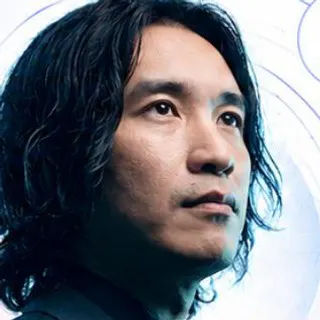 Ogasawara
Thank you for joining us, Mr. Hayashi. Could we start with your own background?
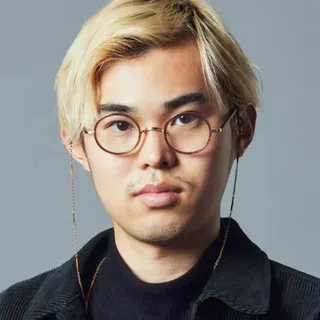 Hayashi
Sure. Let me start with the company. NeuralPort was founded in 2020. But while our CEO, Shimafuji, was still at a research institute, conflict-of-interest rules kept her from running a company, so it sat idle for a while. It only got going as a startup after she left.
I joined partway through, in 2024. I was a student in the School of Human Welfare Studies at Kwansei Gakuin University, and in my senior year I ran a documentary company that followed politicians and musical productions behind the scenes. Shimafuji and I met as members of the same cohort in a community for student entrepreneurs.
I'd played sports for years, so a company that studies people to support top performers in sports always sounded interesting to me. At first, I handled the company's creative work. Not just videos — I also led the rebranding. I wanted to bring the storytelling I'd learned in documentaries to startups. If you change how deep tech is presented, you change how people understand what a startup is worth. That's why I got involved.
OgasawaraSo you started out on the creative side. What do you do now?
HayashiThese days, pretty much everything. I manage development, I do research and I sell. Once I got involved beyond the creative work, I realized I could contribute much more. I was also wondering whether to keep my video company going, so I closed it and joined NeuralPort full-time.
Shimafuji handles fundraising and the core neuroscience. My strength is designing research in the field. We use our brain fatigue measurement with sports teams, but also with people like office workers doing demanding mental work, essential workers, and people in dangerous jobs. For each kind of work, I design a study of how brain fatigue drags performance down, then bring the tool into that workplace.
All of it rests on the research Shimafuji did before the company.
OgasawaraTell me about that research at the core of the company.
HayashiShimafuji studied human behavior at Osaka University's School of Human Sciences. Her topic was using eye tracking to tell apart developmental conditions such as autism and ADHD.
If you study people's eye movements for long enough, you start asking why those differences show up in the eyes in the first place. Follow that question and you end up at the brain. So she sought out labs on her own, including ATR (Advanced Telecommunications Research Institute International) in Kyoto. At ATR, she worked on some remarkable research: using a technique called neurofeedback to weaken fear memories, the kind tied to trauma.
Eye movements are usually studied in psychology. The brain belongs to neuroscience and medicine. Very few researchers work from both sides. Even in the U.S., where I've just been, the fields are siloed. Shimafuji happened to bridge the eye and the brain, on her own. That's a big part of how the company came to be.
OgasawaraA window to the brain. So why did Shimafuji move from patient research to athletes and working people?
HayashiAs I understand it, there were two reasons. One was a sense of limits: research often meant working with one patient at a time, which couldn't reach most of society.
The other was her younger sister. She's two years younger and boxed through university. She got into university on a sports scholarship. But right around the time she was deciding whether to go pro, she found she couldn't throw a punch anymore. It was the yips. She retired from the sport. Shimafuji wondered whether her research might have saved her sister's career. That became the other big reason.
Two years ago, nobody knew the term “brain fatigue”
OgasawaraThe yips can end careers, even for professionals. Are most of your users pro teams?
HayashiThe yips come up a lot in sports: pro baseball players, golfers, boxers.
As for users, Honda's baseball club signed a contract for this season, and the players measure every morning and every evening.
That said, this is also why we go abroad. The market overseas is far bigger. In the U.S. especially, technology that starts in sports gets adapted for the military, what people call dual use, and many startups there carry big valuations.
 Ogasawara
Every morning and evening? That only works if it's quick. How is it different from measuring the brain with EEG or MRI?
HayashiEEG, where you put electrodes on the head, MRI, and fMRI in research are widely used in labs, but they still haven't caught on at training grounds. Accuracy alone doesn't make something work as a business in the field.
So the question was how to measure easily while still getting data from several angles. That's why we use the eyes. We output two things: cognitive fatigue in the prefrontal cortex, the area behind your forehead that handles thinking and judgment, and fatigue in the autonomic nervous system. We plot them on two axes.
We only settled on that format about two years ago. When I joined in 2024, "brain fatigue" barely meant anything to people.
OgasawaraThe term itself didn't land?
HayashiPeople talked about "brain stress" or a "tired brain," but "brain fatigue" as a term has really only appeared in the last year or two. Many people in Japan say they can't physically feel their brain being tired. People who work extremely hard know the feeling, but at events for older people, we sometimes hear, "I've never felt brain fatigue."
But everyone gets brain fatigue. If you think you never have, you just haven't noticed it. You're tired whether you feel it or not. So step one is helping people notice, then connecting them to care. One use is helping shoppers in a store choose care products.
Pulling a muscle just from running
OgasawaraSo people keep playing on a tired brain without knowing it. Is brain fatigue involved in problems like the yips you mentioned?
HayashiYes. One thing that keeps showing up in our research is that injuries from the inside happen when brain fatigue is high. I don't mean getting hurt by a slide tackle in soccer. I mean pulling a muscle just from running, an injury whose cause lies inside your own body.
We spent about a week with a pro sports team at its training camp. During that week, around five players got those kinds of internal injuries, and every one of them scored 55% or higher on our scale. Some players came down with a fever after a spell of high brain fatigue, too.
OgasawaraEvery one of them? The club must have been surprised.
HayashiAt first, I don't think they trusted us much. But the players with high numbers in our data kept getting hurt, one after another, and I think that changed how they saw us.
People still question how well it performs. But I think performance has two sides: pushing it higher, and keeping it from dropping because of injury or a slump. I want to deliver information that works for both raising performance and preventing the drop.
OgasawaraSo you're tackling an open question from the field. What data do you look at for each of those two sides?
HayashiFor the past two years or so, we've done research sport by sport. But starting from scratch every time you enter a new sport isn't a healthy way to do research. So now we're looking at how brain fatigue relates to basic human abilities like jumping and grip strength. Can you hit your maximum force? Can you control it? How quick is your burst? Those basics give us data that works across every sport, whether it's soccer, baseball or motorsport.
For office work or driving, the performance you need to measure is completely different, so we stay flexible and figure it out as we go. When I worked as a documentary cameraman, you had to stay flexible and keep an open mind, so this suits me. Every time, I think: people are really hard to figure out.
Fixed routines suit only about half of athletes
OgasawaraSo some basics hold across sports. Do people differ in how their brains get tired?
HayashiThey do. We're getting interesting data from the teams using it. We sort brain patterns into eight types and combine them with four categories of fatigue.
For example, coaches' training plans are mostly routine. But some types thrive on routine and some don't. My rough sense is about half and half, so fewer people suit routine than you'd expect.
OgasawaraFewer than you'd expect? Japanese sports seem to treasure routine.
HayashiExactly. In baseball, players treat routine almost like a good-luck ritual: how they step into the batter's box, how they spend the hours before a game, how they warm up, the same every time. In Japan, that's seen as admirable. Long practice and finishing the set menu tend to earn praise.
Some American players listen to music until 30 minutes before a game, warm up in those last 30 minutes, and still perform brilliantly. There are probably plenty of players like that everywhere. But in Japan, if two players are both underperforming, the one doing everything by the book gets the credit, so everyone ends up doing that.
Pitchers make it easy to see. Each one decides how many hours ahead to start stretching. Some warm up long, others keep it short and sharp. From around next year, we plan to work with coaches to adjust individual training based on each player's brain type.
OgasawaraI actually took the business version of your quiz this morning. I got the "Recharge" type.
HayashiOh, really? Recharge is a fairly rare type. People like that perform better when they properly rest. We've had people take that advice, rest, and come back saying, "It actually worked." Everyone says, "I'll rest properly from now on" — we'll see.
Some people never take a break and just grind out mediocre effort for hours. Others rest in between and hit a high score cleanly every time. The same effort pays off differently depending on type. Some people perform better when they rest.
OgasawaraPoint taken. So what type are you?
HayashiI came out as "Adaptive" — the type that changes itself to fit the situation. Pretty much the opposite of Recharge.

From one minute in VR to webcams and cars
OgasawaraIf even how you should rest depends on your type, I'd love to see this at work. What would it look like in a company?
HayashiThe foundation is the one-minute brain fatigue measurement. On top of that, we're getting more requests for research on real-world performance, using VR and eyeglasses that track your gaze continuously. We're developing the glasses with Yamamoto Kogaku, a Japanese eyewear maker.
But while pro athletes can make time to measure, asking office workers to put on a VR headset every morning is a stretch. So we're using the eye data we've built up to measure automatically through the webcam on your computer, like the one we're talking through right now. It would be a service a team can share within a department, and we're pitching PC makers on building it in as standard.
It can also pair with smart offices, which are spreading, to adjust lighting or air conditioning based on what's measured. Knowing the data isn't the point. What matters is how you care for people and raise performance afterward. Our measurement is just the entry point. It's about what comes after you measure.
OgasawaraAfter you measure. Are other industries reaching out beyond sports and offices?
HayashiCars. Systems that use in-car cameras to detect drowsiness and fatigue become mandatory from 2031. No single supplier serves every automaker; each one builds its own system for its own vehicles. So we're hearing from people in the auto industry.
With our data, we can apply our existing model to something like drowsiness detection with only small adjustments, and if accuracy improves there, it carries straight over to other fields. Using the face and eyes as the interface, we can move into many industries.
OgasawaraYou've been spending time in the U.S. Do reactions differ between Japan and America?
HayashiCompletely. In Japan, people often ask, "Do we even need to measure brain fatigue?" In the U.S., we almost never hear that. It's taken for granted that the brain sits at the very center of your physical condition.
In the U.S., the idea that the body is all connected — a "holistic approach" — runs deep. If your neck hurts, people consider that the cause might be somewhere else. Seen that way, of course a tired brain lowers athletic performance. In Japan, people more often ask, "Why would the brain affect how the body moves?"
Japan's sports market isn't big right now, so at home we're expanding into other areas like the webcam service and cars. Same technology, but a completely different way out to market.
Recreating the zone, scientifically
OgasawaraSame technology, different markets. Finally, what is NeuralPort ultimately aiming for?
HayashiWhat we're building is more than brain fatigue management. Our final goal is to recreate the zone scientifically.
Psychologists call it the flow state: the point where human performance peaks. Neuroscience is gradually uncovering what happens in an athlete's brain when they experience the zone. Our view is that it can be reproduced scientifically.
We've split the road there into four stages we call "Brain OS," versions 1.0 through 4.0. Version 1.0 detects brain fatigue. Version 2.0 relaxes a tired brain and reduces the fatigue, and we've already made progress there. Next comes creating the state that suits each person, and finally moving them into the zone. That's where the neurofeedback research Shimafuji did at ATR comes in.
I think we're at the stage where people are really starting to pay attention.
The answer will come from one minute, every day
Was the brain tired before the muscle tore? Putting Hayashi's story next to the research, what I saw was that the system for answering that question is being built in the field right now.
Fatigue is shifting from something you feel to something you measure
In Japan, 67.5% of workers say something about their job causes them strong anxiety, worry or stress. Yet few people can tell when their brain is tired. Hayashi's line, "If you think you never have, you just haven't noticed it," gets right at that gap.
The rules are moving too. From September 2031, new car models will watch for drowsy or distracted drivers. Japan's workplace Stress Check, a mandatory questionnaire, will extend to workplaces with fewer than 50 employees in April 2028. Between a questionnaire you fill out yourself and bulky lab equipment, a one-minute read of your eyes is a new option. Fatigue is starting to become something you measure and treat, not something you grit your teeth through.
On injuries, the answer is still out
Here's my answer to the title question, as of today. There's solid evidence that a tired brain dulls performance. Whether it signals an injury is coming is something teams are starting to sense in the field, but research hasn't settled it.
The pro team camp story is NeuralPort's field observation, not a published study with a comparison group. And the studies that directly track fatigue and injury are mostly small.
That's why teams like Honda's, measuring every morning and evening, matter. Who got hurt, when, and after what scores? Pile up several seasons of that and the question becomes answerable. The answer will come from one minute, every day. Independent verification by outside researchers would make it stronger still.
From work that looks at one person to work with data
Shimafuji started from one patient at a time, and from one sister who could no longer throw a punch. Hayashi and I both studied human welfare and filmed individual people in documentaries. People who came from work that looks closely at one person are now handling eye data from thousands. When NeuralPort refuses to give everyone the same advice on rest and sorts people into eight types instead, it looks like an extension of that same instinct.
If you work with a sports team, track your players' brain state daily, not just their training load. If you lead people at work, don't set one rule for how everyone should rest. If you're an engineer or researcher, expect more work on handling eye data from webcams and in-car cameras. If you're a student, know that a path from welfare or documentary work into a neuroscience startup exists. Once brain fatigue becomes measurable, everyone has one more thing to think about.
SOURCES ── References
- NeuralPort, official website (Our Services, Our Story, Science, BPP diagnosis)
- Toyo Keizai, Shukan Toyo Keizai "Sugoi Venture 100" (issue on sale October 26, 2026; in Japanese)
- NeuralPort, service agreement with the Honda baseball club for the 2026 season (PR TIMES, April 13, 2026; in Japanese)
- NeuralPort, funding from Mitsubishi UFJ Morgan Stanley Securities and others (PR TIMES, April 8, 2026; in Japanese)
- NeuralPort, capital and business alliance with Yamamoto Kogaku (PR TIMES, April 14, 2025; in Japanese)
- JST J-GLOBAL, Japanese Patent No. 7557225 (in Japanese)
- Shimafuji A. et al., "Eye-tracking based mental fatigue assessment in VR environments," AHFE Open Access 178 (2025)
- Shimafuji A. et al., a practical mental fatigue assessment model: ZEN EYE Pro, Journal of the Japanese Society for Virtual Reality in Medicine 25(1) (published June 9, 2026; in Japanese)
- Bafna & Hansen, "Mental fatigue measurement using eye metrics: A systematic literature review," Psychophysiology (April 6, 2021)
- Lu et al., "Effects of mental fatigue on sport-related reaction-time, technical, and decision-making performance," BMC Psychology (May 29, 2026)
- Wang et al., "Effects of mental fatigue on lower-limb explosive power and anaerobic capacity," Frontiers in Physiology (September 23, 2026)
- Sansone et al., "Exploring the Relationship Between Mental Fatigue and Injury Occurrence in Sport," Sports 14(4):148 (April 10, 2026)
- ATR, "Fear memory reduction without consciousness" (November 22, 2016)
- U.S. FDA, 510(k) EarliPoint Assessment, K253442 (March 5, 2026)
- U.S. FDA, De Novo EyeBOX, DEN170091 (December 28, 2018)
- Ministry of Health, Labour and Welfare, 2025 Industrial Safety and Health Survey (August 7, 2026; in Japanese)
- Ministry of Land, Infrastructure, Transport and Tourism, driver monitoring systems made mandatory (September 30, 2026; in Japanese)
- Ministry of Health, Labour and Welfare, Stress Check Program (in Japanese)
- Kwansei Gakuin University, student interview in the School of Human Welfare Studies (December 7, 2022; in Japanese)
- Forbes JAPAN, Women In Tech 30 (October 16, 2024; in Japanese)


