The Paper Résumé Is on Its Way Out. The Founder Behind 120 Million Online Learners on Credentials That AI Can Read
In 2000, Japan had about 200 e-learning companies. Almost all of them sold convenience: learn anytime, anywhere. NetLearning alone argued that the real value lay in the record of how people learn, so it had learners stay connected to its servers while they studied. More than 120 million people have since learned with the company, and over 90% of them finish their courses. Now NetLearning is focused on Open Badges: tamper-proof digital proof of what you have learned, readable by AI as well as people. In Japan, 1,059 organizations have adopted them and 3.01 million have been issued. Paper, self-reported, a list of affiliations, read by people: why are all four assumptions behind the résumé about to change? We asked founder Toru Kishida.
 DATA TIMES Editorial Team
Interview · 23 min

When we apply for a job, most of us still hand over a résumé we wrote ourselves.
Which school, which company, how many years. Qualifications you type in yourself. It's a record of affiliations plus self-reporting, and someone in HR reads it, one page at a time. Paper has turned into PDF, but the system itself has barely changed in decades.
The reader on the other side, though, has changed fast in the past year.
In September 2026, LinkedIn, one of the world's largest professional networks, said more than 20,000 companies are using its AI hiring agents, which find candidates and even run initial screening conversations. According to LinkedIn, recruiters now find qualified matches while reviewing 83% fewer profiles. The first reader of your résumé is increasingly not a person.
The readers have a new headache, too. In a US survey released with the same announcement, 39% of recruiters said their top challenge is not knowing whether a candidate, or their skills, is real. With generative AI, anyone can write a polished self-introduction. The smoother the prose, the harder it is to know what to trust.
That is why systems for proving verified skills are taking off. In October 2026, Anthropic, the maker of Claude, announced a plan to train 10,000 engineers who deploy AI inside companies by the end of 2027, and awards badges only to those who pass a hands-on practical exam. Governments are moving as well. Japan's Digital Agency lets people show national qualifications on their phones as "digital qualification certificates." The service covered 21 qualifications, such as certified care workers and tax accountants, by March 2026, and is set to add 28 more, including doctors and nurses, in fiscal 2026.
So how do you prove what you've learned when AI does the reading and the choosing? One answer spreading worldwide is Open Badges. They turn proof of learning, such as finishing a course or passing an exam, into tamper-proof digital data that belongs to the learner. Because they follow an international standard, badges from anywhere can be collected in one place and carried with you. According to 1EdTech, an education technology standards body, worldwide issuance grew from 74.7 million in 2022 to 320.4 million in 2025. That's more than four times in three years.
In Japan, the group that has done the most to spread Open Badges is NetLearning.
NetLearning is an e-learning company founded in Tokyo in 1998. It launched its service in April 2000. Over the 26 years since, by its cumulative count at the end of September 2026, it has served 121.42 million learners, worked with 7,665 companies and organizations, and produced 17,859 courses. Its average course completion rate in fiscal 2025 was 91.2%. Japan's e-learning market is expected to reach about ¥392.4 billion in fiscal 2025 (roughly $2.6 billion at ¥150 to the dollar), and NetLearning has been building it almost from day one.
A training course at work, a digital certificate from a university: plenty of people in Japan have used NetLearning's systems without knowing it. Its Open Badges are used by the University of Tokyo, Waseda University, Toyota and NTT Docomo, among others, and as of March 2026 more than 158 universities, including over half of Japan's national universities, had adopted them.
And this time, we got to sit down with Toru Kishida, the founder of the NetLearning group.
Here's what we learned, up front:
- In 2000, one company out of about 200 bet on learning records
While the others sold "learn anytime, anywhere," it valued being able to see how people learn. That led to completion rates above 90% and more than 100 million learners. - All four assumptions behind the résumé are changing
Paper, self-reported, a list of affiliations, read by people. These are giving way to digital, third-party proof, a record of skills, and AI as the reader. - Broadcast-style e-learning will disappear
Said by the man who built it. Next comes a "data wallet" where each person keeps their own learning records. - It's a race of speed
Since this spring, demand has outrun the sales team. Across Asia, the window to become the first and only platform is now.

Toru Kishida
Founder, Representative Director and Chairman of the Board, NetLearning Holdings
“Learning has always been a black box to others and a lonely thing for the learner. The internet lets us change that at the root.”── Toru Kishida (from this interview)
- 1998Founds NetLearningStarts an e-learning company in Tokyo in January
- 2000Launches the serviceIn April, as president, opens an internet learning service
- 2010Sets up NetLearning HoldingsA holding company to bring the group together
- 2019–Chairman, Open Badge Network FoundationLeads the foundation that promotes Open Badges in Japan and guarantees their quality
- NOWRepresentative Director and Chairman of the Board, NetLearning HoldingsThe group's founder. Also vice chair of 1EdTech Japan
Toru Kishida founded NetLearning in 1998 and, in April 2000, launched its internet learning service as the company's president. The plan back then was 20,000 learners in the first year. The total now exceeds 120 million. Today he is Representative Director and Chairman of the Board (Founder) of NetLearning Holdings, setting the group's direction. He also chairs the Open Badge Network Foundation, set up in 2019, and serves as vice chair of 1EdTech Japan, the Japanese chapter of the global standards body for education technology.
The one company that didn't say anytime, anywhere
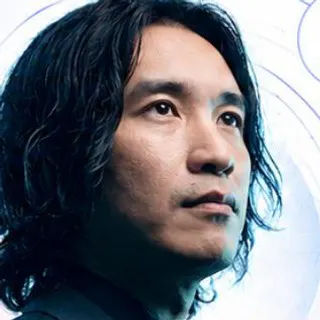 Ogasawara
I've really been looking forward to talking with you! I was actually born in 2000, the year your service launched. To start, what was that year like?
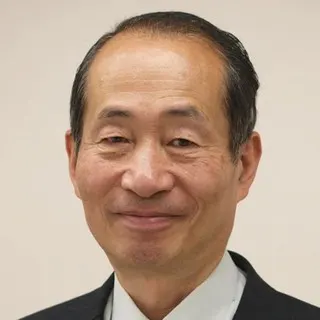 Kishida
2000 was sometimes called "year one of e-learning" in Japan. In a sense, we helped create that market.
When we launched, there were already about 200 e-learning companies. Today there are probably around 2,000. And among them, we were the only ones who thought about it very differently.
Ask any of the others what e-learning was, and they would say: "It's very convenient. You can learn anytime, anywhere, free of the limits of time and place." That's what 199 companies were saying.
NetLearning alone said something else. Yes, it is convenient. But beyond that, it changes learning at the root, because you can capture a record of how people learn.
OgasawaraOne company out of 200! Could you tell me a bit more? What changes about learning once that record exists?
KishidaOver human history, teaching developed enormously once industrial society created schools. Learning didn't. To others it was a black box, and to the learner it was lonely. That had never changed.
With e-learning, you can see the process. Where did someone get stuck? How fast did they go, and how did they work through it? So you can support them, and you can design the learning itself. That's what changes learning at the root. That was our idea.
OgasawaraA black box to others, lonely for the learner. Hearing it put that way, it rings true. Did that difference in thinking also show up in how you did business?
KishidaIt did. The other companies put a server inside the client company, loaded their courses onto it, and said, "Use it however you like." They weren't interested in learning records, so they didn't collect them. Login IDs were shared, too. Everyone used the same ID, and they sold licenses like "up to a few dozen users at once." They went around selling a server and a course bundle as a package.
We believed the learning record was where the value was. So we said, stay connected to our servers the whole time you learn. In 2000 that meant dial-up, and connecting cost something like 20 yen a minute. We still asked people to stay connected.
What happened? In the end, nobody used the other companies' courses. Our completion rate was 90%. We had a team, the Learning Center, where real people supported learners. And when you compare prices, nothing is more expensive than something nobody uses. We became the market leader very quickly.
It came down to a different philosophy. They were selling products. We were providing learning as a service and taking responsibility for results. For them, the sale was the end of the relationship. For us, the contract was the beginning. That's how we earned a position where more than 120 million people have taken our courses.
Ogasawara"The contract is the beginning" says a lot about how you work. After supporting more than 100 million learners that way, what are you focused on now, if I may ask?
KishidaWe call this stage our "second founding." We are expanding from developing people to helping them put their skills to use. That's what Open Badges are for.
From developing people to putting them to work
OgasawaraNot just developing people, but helping them use what they've learned. I'd love to hear more! Sorry to start with the basics, but what exactly is an Open Badge?
KishidaAn Open Badge certifies that a person has a certain skill, or has studied a certain subject. We have been working on them for about seven years now.
Open Badges are issued according to a global standard. So a badge from any issuer can go into the recipient's wallet. That's why they're called "open."
There were plenty of digital badges for proving learning before. But each used its own format, so they only worked inside the system that issued them. Once badges became open, they took off explosively.
OgasawaraIs it a bit like loyalty cards? Every shop used to have its own, and then came points you can collect anywhere. Would that be the right picture? And could you tell me how far they've spread?
KishidaWorldwide, more than 300 million Open Badges have now been issued. Almost every university and almost every major company uses them. They are completely mainstream.
In Japan, we have issued more than 3 million, and about 1,050 organizations issue them through us. There are now more than 20,000 kinds of badges. Around 170 universities use them, including more than 55% of national universities. More than half of the big universities, those with over 5,000 students per year, have adopted them. Leading companies, starting with Toyota and Asahi Kasei, are using them more and more. Adoption has real momentum.
South Korea has around 400 universities, and about 70% of them already use our Open Badges. I think it will eventually reach all of them.
OgasawaraSeventy percent in Korea! I had no idea it had gone that far. If people can carry proof of their learning like this, how will hiring and job changes change?
KishidaToday, a résumé is a piece of paper. It is self-reported. It is only a record of affiliations: which university, which company, from which year to which year. And fourth, it is read by people.
All of that is about to change completely. First, it becomes digital. Instead of self-reporting, someone will properly certify that "this person has acquired this skill."
The reader of your résumé: from people to AI
OgasawaraA résumé someone else vouches for is reassuring. What about the fourth point, that people read it? How does that change?
KishidaAI will be the one reading it.
Each Open Badge carries detailed information behind it, called metadata: how the person studied, for how many hours, what skills they acquired. AI reads all of it. Then the skill set of someone holding, say, five badges becomes visible, and employers can find them and say, "I want this person."
If people read paper résumés, there's a limit to how many they can get through. But AI agents can go out and read the whole world. Then they pick the best person.
So the paper résumé will definitely end, and we are entering the era of the digital résumé built on Open Badges.
OgasawaraThe end of the paper résumé. It's something we've all taken for granted, so that gives me a jolt. What does it mean for the people doing the learning?
KishidaWhen what you learn is certified and gets you found, that becomes a reason to learn. So it feeds back into developing people.
We want to build this out properly in the area of putting people's skills to use, adding a second pillar next to the people-development business we've run until now. We are evolving toward a service that unites developing people and putting them to work.
OgasawaraYou mentioned AI reading credentials. If I may, will AI also change what we learn and how?
KishidaA great deal. Education and learning until now have been knowledge-based.
Industrial society needed a high-quality workforce. The goal was to produce many people with the same capabilities. Now we've entered an era where each person needs different skills. Organizations are shifting to job-based roles. And AI has changed what knowledge itself means.
What we need now are people who can execute. One step further, people who can make things happen. The question is how to develop people like that, one by one. We call this AI-driven approach "dynamic learning."
Broadcast-style e-learning will disappear
OgasawaraDynamic learning is a new term for me. So learning moves and adapts to each person. Then what happens to e-learning as we know it?
KishidaE-learning that broadcasts the same course to everyone will probably disappear. Learning management systems will stop being platforms for distributing courses.
OgasawaraHearing that from someone who spent 26 years building those systems is honestly a little surprising. What becomes the center instead?
KishidaWe think the Open Badge wallet is what makes it possible.
An Open Badge wallet is a kind of next-generation wallet, built to W3C standards, that can hold digital IDs and certificates, and it will come into general use. Into it go records of all kinds of learning, of things you've done. It becomes a personal record store. Student IDs, too. Not just your attributes, but what you've actually learned.
The concept is a digital twin: a place that records a person's activities and learning in digital form.
What will matter most for the personal AI agents that are coming, AI assistants for each individual, is actually how personal data gets used. Each person manages their own data, keeps it under their own authority, and uses it themselves. The wallet becomes the platform for the age of personal AI agents.
OgasawaraAn age where we carry our own data in our own wallets. It sounds like that would transform not only education but society as a whole. How big a change do you see coming?
KishidaIndustrial society created schools. I think we're facing a change as big as the birth of industrial society, or bigger.
Industrial society came from automation in the physical world. When looms became automatic, people started thinking, "Buy ten of these machines and hire ten people," and companies and factories were born. Now the automation of the intellectual world is beginning.
The intellectual world has no physical limits, so there's no limit on speed or volume. Something even more dramatic than industrialization could happen. Our sense of time may change a lot. In industrial society, time earns interest, assets depreciate, and the basics of business run on time. Place, too: a factory only works if everyone gathers in one spot at a set hour. In the AI era, that may be different.
Automating intellectual work won't mean replacing people one for one
OgasawaraEven our sense of time and place could change. What might that look like closer to home?
KishidaTake self-driving cars. You call a car with your phone, it comes, and when you get out it drives itself away. Some say society would need only a twentieth as many cars.
If humanoid robots became common, you could just have a robot drive your car. Then today's cars would be fine, even used ones. Automation would advance without changing how society is organized.
But in reality, robots won't drive the cars. The cars themselves will change. The steering wheel disappears. In shops, a robot won't stand at the register; the register disappears. The whole store becomes the robot.
Right now, everyone thinks of AI agents too much as people: as a subordinate, a colleague, a boss. AI started with chat. Building ChatGPT around a chat window was a stroke of genius and a huge success. So people extend that and try to use AI as if it were a person. But this is a transition. The era when AI only moves if you talk to it will end soon. It won't substitute for people. The process of work itself will become something completely different.
OgasawaraNot a substitute for people, but a different system altogether. In that world, what will be asked of humans?
KishidaHuman intellect is what's being tested.
I think knowledge has five levels. At the bottom is data. Above that is information, data that has taken on some meaning. Then knowledge. Then science, a discipline with a method. And at the top, philosophy. We've entered an era where scattered data has enormous value. AI has now reached the level of knowledge.
Information means nothing without knowledge. Say, "The Bank of Japan raised interest rates by 0.25%." That's information. Without knowledge, it's just a number that went up by 0.25.
And today's knowledge is still fragmentary. Above it sit systematic understanding, like what capitalism actually is, and disciplines with methods, and above those, philosophy. That's the level where humans stand. It's about what view of life, what view of the world, what values each of us holds.
OgasawaraSo the human role is at the top level of knowledge. That makes me curious about the business side, too. What are the biggest challenges in making this world real?
KishidaFirst, you have to understand the business model correctly. Platform businesses started emerging around 2010. The world's top companies are all platform businesses. And what decides who wins is speed.
One in ten thousand platforms wins, so speed is everything
OgasawaraPlatform businesses. Sorry if this is basic, but what's the biggest difference from an ordinary business?
KishidaWhen the iPhone appeared, there was a superb phone called the BlackBerry with about 60% market share. The BlackBerry people thought they couldn't lose. Within a few years their share had fallen to a few percent. Total defeat.
That's because it wasn't a fight between two phones. BlackBerry was a phone. The iPhone was a platform. A million apps run on it. Google, Facebook, Airbnb, Uber: all platform businesses. Japan has almost none.
Traditional companies create value inside themselves and deliver it to customers. Platforms are different. On a platform, the customers create value for each other. Airbnb doesn't need to build hotels. Uber doesn't need to own cars. So they grow incredibly fast, and end up with more rooms than the world's largest hotel chain.
The trade-off is fierce competition. Everyone rushes in, and maybe one in ten thousand succeeds. It isn't a business where you aim to be number one. You aim to be the only one. Within that structure, we are trying to become the only Open Badge platform, not just in Japan but across Asia.
OgasawaraLike ride-hailing apps: no drivers if there are no riders, and no riders if there are no drivers.
KishidaExactly. The launch is the hardest part of a platform business. With small numbers, it has no value. You have customers but no drivers, or drivers but no customers. You have to grow both sides together, like an ecosystem, and fast. Once the numbers reach a certain level, it breaks out all at once.
I think we're getting close to that breakout. Especially since this spring, the market's response feels completely different.
OgasawaraReally! Where are you feeling that difference?
KishidaOur sales team can't keep up with the inquiries. We expected this day would come, but now we have to scramble to grow the organization fast enough to keep pace with the market.
Reading about Facebook's explosive early growth, they dreaded the end of summer vacation. The moment break ended, every student would log on at once, and they worried whether the system would hold.
With platforms, whoever starts first has a strong chance of staying ahead. So we want to launch in country after country across Asia as fast as possible. We've started pilots or regular issuance in about four or five countries. We want to grow that to 10, then 20 countries.
What learning in the AI age needs most: vitality
OgasawaraOne last question, if I may. Many DATA TIMES readers are engineers, data scientists, and students studying those fields. How should they approach learning from here on?
KishidaMy answer may be abstract too, but in the end it's how you want to live.
Foundational knowledge: history, how different philosophers have thought, art. That's what will matter a great deal from now on. What you might call human capacity.
And going one step further back, I'd say vitality. We are living things, animals, human beings. The power to live, to truly enjoy this life, to live alongside nature with energy. I live on Hachijo-jima, an island south of Tokyo, and I want each person to have real vitality, and to live with human capacity built on top of it. It's about living.
After an hour of talking about AI, the last answer I got was "vitality."
Learning records become context-rich data that AI can trust
After the interview, I laid Kishida's words alongside NetLearning's announcements and the Open Badges standard. What emerged was a simple picture: a judgment made 26 years ago, that the record of learning is where the value lies, has become the company's greatest strength in the age of AI.
The 1998 bet was a data business ahead of its time
In 2000, the other 199 companies were selling courses and servers. The relationship ended at the sale, so they never kept learning records. NetLearning alone asked people to stay connected, and chose a system that builds up learning records the more it is used.
As records accumulate, you can see where people get stuck, and people can step in to help. Support raises completion, which builds more records. In today's terms, it's a loop where the service gets better as data piles up. Kishida said in the interview that "data becomes more valuable the more of it you have." He was doing that when connecting cost 20 yen a minute. Now that AI companies all compete to build products that get smarter with use, it looks like a data business 26 years ahead of its time.
To AI, a self-reported résumé is text of unknown origin
When we work with AI and data, the thing we always worry about is whether the data comes with context. Who made it, when, and against what standard? Text without that may be readable to an AI, but the AI can't judge whether to trust it.
A self-reported résumé is exactly that. "Proficient in Python" says nothing about who checked. An Open Badge is the opposite: the issuer, the passing criteria and the hours of study are inside it, and you can verify it hasn't been tampered with. It is context-rich data that AI can trust when it searches for people. The more AI agents comb the world for candidates, the bigger that gap will grow.
Chasing a one-of-a-kind position with an open standard
Finally, something that nagged at me throughout the interview. The Open Badges standard is public, and badges from anywhere go into the same wallet. That also means users can easily switch to another issuing service. So how can anyone aim to be "the only one"?
My answer: the network of issuers. More than half of Japan's national universities, Toyota and NTT Docomo, universities in South Korea. A place to learn (LearningSpace), a place to issue proof (Open Badges) and a foundation that guarantees quality, all within one group. The standard is open, but the network of issuers is hard to copy. That's why Kishida kept coming back to speed: it's a race to build out that network. The change in market response since spring may be the signal that the network has started pulling in users on its own.
Beyond the age when learning became visible
What is e-learning? In 2000, almost every company answered "convenience." Kishida answered "learning you can see." Twenty-six years later, that answer has reached the point of certifying what you learned, carrying it with you, and having AI read it.
What lies ahead is a society where learning records build up in each person's wallet. In Japan, more than half of national universities use Open Badges, and some universities are turning the student ID itself into a digital wallet. A Gakken group training company is using badges for a skills test taken by foreign workers. Across Asia, after Japan and South Korea, five more countries and territories are preparing to issue badges, and Bangladesh has issued its first. Worldwide issuance has more than quadrupled in three years.
Where to look next depends on where you stand.
- If you're a student
Keep the badges you earn from courses and qualifications in one wallet. They're the raw material of the résumé AI will read. And as Kishida says, make time for history, philosophy and art. The more knowledge AI takes on, the more the levels above it matter. - If you work in HR or training
Design not only what people learn, but how that learning is certified and put to use. Systems that start from the skills a company wants to build and connect them to learning are already turning into products. - If you work in engineering or data
Verifiable credentials and wallets where individuals control their own data are foundational technology for personal AI agents. Designing ways to hand AI trustworthy context will matter well beyond hiring.
Learning was always a black box to others and lonely for the learner. A company that spent 26 years opening that box is now trying to hand what's inside back to each of us. The day the paper résumé ends may be closer than we think.
SOURCES ── References
- NetLearning Holdings: Company profile (in Japanese)
- NetLearning Holdings: Top message, May 11, 2026 (in Japanese)
- NetLearning: Company profile (in Japanese)
- NetLearning: Official site, cumulative clients, learners, courses and completion rate as of September 30, 2026 (in Japanese)
- NetLearning Holdings: Open Badge business, figures as of end of September 2026 (in Japanese)
- Open Badge Network Foundation: About the foundation (in Japanese)
- INTERNET Watch: NetLearning, a tutor-supported web learning system for business, April 19, 2000 (in Japanese)
- NetLearning: LearningSpace announces AI recommendations aligned with organizational strategy, PR TIMES, July 29, 2026 (in Japanese)
- NetLearning: AI speeds up e-learning production, grading and feedback, PR TIMES, April 14, 2026 (in Japanese)
- NetLearning Holdings: Digital student ID service from April, PR TIMES, March 30, 2026 (in Japanese)
- NetLearning Holdings: Open Badge service launched in Bangladesh, PR TIMES, February 26, 2026 (in Japanese)
- NetLearning Holdings: Gakken group's TOASU adopts Open Badges, PR TIMES, June 24, 2026 (in Japanese)
- NetLearning Holdings: All Open Badges 3.0 certifications obtained, PR TIMES, March 6, 2025 (in Japanese)
- 1EdTech: 2025 Badge Count Shows Accelerating Momentum in Digital Credentials, December 11, 2025
- 1EdTech: Open Badges Specification 3.0
- LinkedIn: LinkedIn Announces Hiring Assistant 2, its Next Generation Hiring Agent, to Help Recruiters Deliver Stronger Hiring Outcomes, September 29, 2026
- LinkedIn: LinkedIn expands verification to help members and businesses build trust on and off LinkedIn, September 23, 2026
- Anthropic: Claude Frontier Academy: $100M to train 10,000 engineers, October 2, 2026
- Digital Agency of Japan: Launch of online and digital national qualifications, June 1, 2026 (in Japanese)
- Reich, Ruipérez-Valiente: The MOOC pivot, Science 363(6423), 2019
- Yano Research Institute: E-learning market survey 2026, April 22, 2026 (in Japanese)


