A ¥10 Billion Building: How Is Its Price Actually Set? Gorlem's Daisuke Nomura Is Using AI to Untangle Construction Before It Starts
The price of an office building is largely fixed before construction begins. It is settled as dozens of people pass work along, from drawings to quantity lists, suppliers, quotes and schedules. The final amounts and orders are kept, but the decisions and changes that led to them are not kept together in one place. Tokyo startup Gorlem turns those decisions into data AI can read. At Shimizu, one of Japan's largest builders, a CO2 calculation that used to take a month now takes about a week. Construction costs in Japan have risen about 20% in five years, and from fiscal 2028 a system for assessing buildings' life-cycle carbon will begin. We asked CEO Daisuke Nomura why a project can never be built for half the price once work begins, and what matters more than software when one person can now build what used to take twenty.
 DATA TIMES Editorial Team
Interview · 22 min

In my line of work, when I don't know something, I ask AI first. How to read a dataset, how to phrase something in legal language: these days you get a plausible answer to almost anything.
But there's one question even the smartest AI struggles to trace in detail.
"How did this building end up at this price?"
It sounds answerable. Add up the steel, the concrete, the rest. I thought so too. But in this interview I heard something else: the decisions and changes that lead to a price are spread across many people, and rarely kept together in one place. If AI can't trace it, that's not because AI isn't smart. It's because the "why" it would need to read isn't gathered in one form.
And the question has suddenly become urgent. Construction is a giant industry: Japan's construction investment is expected to reach ¥81.47 trillion in fiscal 2026 (roughly $540 billion at ¥150 to the dollar). That industry is under three pressures at once.
- Prices are rising
Japan's construction cost deflator, an official index of building costs, stood at 121.9 in fiscal 2025 against 100 in fiscal 2020. That's about a 20% rise in five years. - Workers are disappearing
4.78 million people worked in construction in 2025, about 30% fewer than at the 1997 peak, and 36.6% of them are 55 or older. Since April 2024, construction has also been subject to legal caps on overtime. - Carbon is being counted
An amended building energy law passed in July 2026. Starting in fiscal 2028, large office buildings and similar projects will have to report their life-cycle carbon, the CO2 emitted over a building's whole life, to the national government.
Build without blowing the budget. Pass veterans' know-how to the next generation. Calculate and cut carbon before building. If the reasons behind a building's price were connected as data, forecasting, handing over and counting carbon would all get easier.
That is exactly what Gorlem, a Tokyo construction-tech startup founded in 2022, is trying to turn into data AI can read. At Shimizu, one of Japan's largest general contractors, Gorlem's system cut a CO2 calculation that used to take a month to a week, and office staff with no architectural training can now handle it in about 30 minutes. At Maeda Corporation, a calculation that used to eat up a full month every quarter now takes about 90% less work.
A month down to a week. A 90% cut. That's what happens when you put construction's "why" into words.
And this time, we got to sit down with Gorlem's CEO, Daisuke Nomura.
Here's what we learned, up front:
- Once construction starts, you can't halve the cost
A ¥10 billion, three-year plan can become ¥9 billion and two and a half years. It can't become ¥5 billion and one year. The game is decided by the data and the plan before ground is broken. - The changes along the way aren't kept together
Many people pass the work along until a price emerges. The final amounts and orders are kept, but the decisions and changes behind them aren't gathered in one place. So it's hard to apply them to the next building. - AI's real job is to put veterans' judgment into words
In a world without manuals, Gorlem interviews each specialist and turns their reasons into something AI can read. - When one person can build what twenty used to, software isn't the edge
Instead of selling software, Gorlem works inside contractors' teams to change how the work itself is done.

Daisuke Nomura
CEO, Gorlem
“Once construction starts, building it for half the price or in half the time is impossible. That's why I want to work on the data and the plan that come before.”── Daisuke Nomura (from this interview)
- About 6 yearsEngineer at a major materials makerOptimized automotive glass production processes using computer simulation
- From age 30Global consulting firmLed new business development as a technology consultant
- ThenBusiness development at a startupWorking with many companies, he saw how much room construction had to improve
- NOWCEO, GorlemFounded the company in 2022 at 36. Runs field trials with Shimizu, Takenaka and Hankyu Hanshin Properties
At a major materials manufacturer, Daisuke Nomura spent about six years optimizing automotive glass production with computer simulation. He went on to lead new business development at a global consulting firm and to work in business development at a startup, then founded Gorlem at 36. An engineer who spent years optimizing manufacturing with data is now trying to reconnect construction's process with data.
An industry still waiting for its game change
 Ogasawara
Thank you for joining us today! To start, could you tell me about your career? What did you do before founding the company?
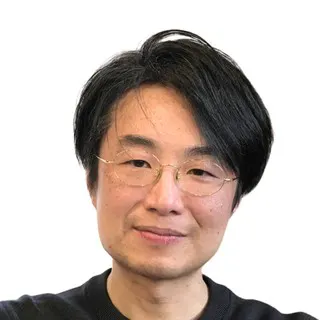 Nomura
I started as a production engineer at a major materials manufacturer. For about six years I optimized automotive glass production processes using computer simulation.
There was something that frustrated me the whole time. I believed we should switch to a new production method. But my job was improving the accuracy of the old one. The harder I worked, the longer I kept the old method alive. My own effort was holding the company back from changing.
And at that company, you'd be in your fifties at the earliest before you could make a call like switching production methods. I was 30. So I moved to technology consulting, but consultants advise; the client decides. Then I moved to a startup, and there the founder decided. The only way to find out whether my ideas were right was to start a business myself. So I founded Gorlem at 36.
OgasawaraYour own improvements kept the old way alive. That sounds frustrating. What made you take the leap to start your own company?
NomuraAt a company, maybe 30 or 40% of your work follows company policy rather than your own decisions. So even when it succeeds, part of it isn't your idea, and when it fails, you can say, "Well, that's how the company is set up."
While I still had the energy, I wanted to do things my way, in a way I could take responsibility for. That's why I started the company. I wanted to be at the helm.
OgasawaraTaking the helm yourself. That's inspiring! Out of all the industries, why construction?
NomuraAt the startup I worked with lots of companies, and I felt construction had a huge amount of room to improve.
I was also interested in it as an industry. In consumer electronics, Japan has been losing market share. In cars, companies like Toyota have a firm grip. In IT, Microsoft and Google are strong, and the gap between Japan and the US or China is wide.
But in construction, no one anywhere has broken away yet. The market is huge. The game change hasn't happened yet, so there's room for Japan to build a new industry. That's what I thought.
OgasawaraThe game change hasn't happened yet. Within construction, why did you focus on data in particular?
NomuraIf you want to make a big change, it's better to start further upstream.
Once construction starts, the plan is fixed: "We'll build this for ¥10 billion over three years." You can make that more efficient and say it came in at ¥9 billion, or finished in two and a half years. But "¥5 billion instead of ¥10 billion" or "one year instead of three" — once construction has started, that's impossible.
How this building should be built, what the best method is: that has to be set up in the stage before. That's the part where the data and the plan are made. That's where I wanted to work.
A building's price is set before construction starts
OgasawaraYou can't halve it once construction starts. I'm a complete outsider to construction, so forgive the basic question: what actually happens in that "stage before"?
NomuraFirst you draw a rendering of the finished building, and from that you create drawings. As they're refined, they become design drawings.
From the drawings you measure wall areas and floor areas, and say, "We need this much wallpaper, this much concrete," turning it all into an itemized quantity list. Once the list exists, you decide "this goes to that supplier, this to another," and rough unit prices emerge. Add a margin, and you negotiate a price with the client.
Once the price is set, the assembly order follows. Raise the steel frame, attach hooks, hang the exterior panels, install the window frames, fit the glass. That sets the construction schedule. Only then does the site start assembling parts according to the plan.
What we handle is the data up to the point where the site starts.
 Ogasawara
From renderings to drawings, quantity lists, prices and schedules. That's a lot of stages! How are those stages connected today?
NomuraPeople get together and decide things through discussion. So the reasons behind the design, the supplier and the price are spread out, and tracing the whole picture is difficult.
The reasons behind a price are spread out
OgasawaraThe reasons are spread out. From outside construction, that's hard to picture. How does that happen?
NomuraIt's not a hundred people each fully involved the whole time. Lots of people pass the work along, each for a slice of time. Things get decided through each person's judgment and discussions. Look at person A alone and you can't tell why something was decided. That makes forecasting and optimizing hard.
Designs change midstream too. By the end, it's murky, and the change history is scattered: some on A's computer, some in B's files, some maybe in C's handwriting.
The final amounts and orders are kept, but the decisions and changes that led to them aren't kept together in one place. So it's hard to apply them to the next building.
Remembering everything that passes between a hundred people is beyond what a human brain can process. That's what data and AI can handle well.
OgasawaraHard to apply to the next building. How does AI change that?
NomuraWe use AI mainly for two things: "translation" and "aggregation."
Translation means, for example, turning drawings into quantity lists. Today someone reads the drawings and translates them into a list. After that, deciding "let's order from here" is someone slogging through Excel and email. Moving from there into the plan is the same. AI converts all of that automatically.
Aggregation means linking those translations together: this drawing means this price. Then when something changes midstream, say you switch the exterior from double glazing to single panes, you can see the impact in advance. That's what matters.
Turning veterans' know-how into words AI can read
OgasawaraSee how the price changes before you change the drawings. That sounds incredibly useful! But to build something like that, you must have to talk to a lot of people on the ground?
NomuraExactly. We can link data together ourselves to some extent, but to pull in each piece of data automatically, we have to go into the field.
Even just making the quantity list, there's a person for roof drains, a person for concrete, a person for steel, a person for wallpaper, all separate. Each one follows logic in their own head for how to write things up.
The sequence is recorded: "we made this list from these drawings." But why they wrote it that way exists only in that person's head. So we go to each person, learn "ah, so this is the logic construction uses," and put it into language AI can read. There's no manual.
 Ogasawara
Going to each person in a world with no manual. That sounds exhausting. Were there walls you ran into, and how did you get past them?
NomuraThere's no dramatic story, but... persistence, I think.
If you asked general contractors, I think they'd all name the same problems I just described. They've surely run improvement efforts before. But it hasn't happened. I suspect they just couldn't see it through.
The investment no single company will approve, shared across the industry
OgasawaraEveryone knows the problem, yet no one could see it through. Why is that?
NomuraThere are many stakeholders, they all say different things, and it's fairly tedious work. For any single person in charge, the return on effort is terrible.
Take design alone. There's architectural design and civil engineering design, and within architecture, the look of the building, the structure, electrical and mechanical are all separate designs. To connect them, the architect has to understand the equipment design, and talk to the estimators and the purchasing team too. For one person, it crosses too many departments.
On top of that, general contractors don't build everything themselves like a manufacturer would. They're the ones placing orders. The people actually doing the work are spread across many companies, and those companies work for other contractors too, so they won't change their methods for just one. Someone tackling it for a year or two can't see it through.
OgasawaraSo you're the cross-cutting link across departments and companies.
NomuraRight. We can do it because we work with several large contractors and developers. It's hard for one person, hard for one company, and probably hard even for two.
Say you ask, "Invest ¥200 million here over three years." Even if the return is there, at a single company it probably won't get approved. But because we work with many companies, we can make that investment. We can build the industry's standard.
The edge when one person can build what twenty used to
OgasawaraBuilding the industry's standard. Your scope has widened a lot, from CO2 calculation to estimating and construction planning. Did that also grow out of what customers asked for?
NomuraIt's a mix of what order we want to do things in to reach our goal, what users need, and timing. One company is focused on the environment, another wants to cut costs, and the timing of system investment differs by company. We fill in where those overlap.
What feels like a new phase recently is that software development has become extremely fast. We can do almost anything now compared with before.
OgasawaraIs that faster development mostly thanks to AI?
NomuraYes. Right now I'm probably doing the development work of 10 or 20 ordinary engineers by myself. It's completely different from before.
But it's also scary. Something like ordinary SaaS (software delivered over the internet) can now be copied in one or two weeks. Standing out there is very hard.
OgasawaraTwenty people's work by yourself! But that also makes you easier to copy. In that world, where do you see your company's strength?
NomuraIn the short term, it's construction knowledge and our relationships with customers. Being good with AI isn't enough to deliver what we do.
In the medium term, though, I think users themselves will be able to build software to some extent. Users who know construction could switch with some IT help, or other construction-savvy players could pump out software.
So the medium-term strength is that we're not selling software; we're changing the whole process. We tell contractors, "Let's change your design-to-estimating work together." Because we're changing the act of estimating itself, that's a different kind of value from other players.
Prices are rising and everyone's struggling. If a building you thought would cost ¥10 billion actually costs ¥12 billion, that's 1.2 times the budget, and you're in the red. If you can forecast that ¥10 billion properly from the start, users gain that cost advantage. We do that too.
OgasawaraNot selling software, but changing the way work is done together. That must mean a very different kind of involvement.
NomuraPut simply, it's not "we sell software for ¥1 million." We become part of the contractor's team and work alongside them. The result is something like "efficiency freed up billions of yen." For a ¥2 trillion company, a 10% efficiency gain is ¥200 billion. That's where we need to be.
Lately "roll-ups," buying small companies and growing them by adding AI, have become popular. What we want is to rebuild the flow of the whole industry together with contractors. And the technology needed for that is just now coming within reach. Nobody is doing it yet, so it's also a competitive advantage.
Facing the fear of losing one's job, honestly
OgasawaraJoining the team and going into the field. Many of the people there must be veterans who've done this work for years. How did they react at first?
NomuraThey're struggling with the problem, so there wasn't much hesitation.
But what I've seen grow lately is less hesitation about something new and more fear that their own job might disappear. Myself included, AI can do so much now that there are more and more moments of "wait, is this coming for my job?" Nobody enjoys being told that something they've taken pride in can now be automated.
OgasawaraPrecisely because it's work they're proud of. How do you deal with that feeling?
NomuraLying is bad, but so is saying, "AI makes this easy." We get to see what AI can do earlier than our users, so we tell them honestly, "By next year, it can probably do this much," and we talk it through together. That's what we've been doing lately.
OgasawaraHonestly, and together. At sites where adoption has moved ahead, is change already happening?
NomuraIt is. By the end of this year or next year, I think the industry will change dramatically, not just because of us. Adoption speed and what's possible — there are so many more cards to play now.
From fiscal 2028, assessing a building's lifetime CO2
OgasawaraSpeaking of the industry changing, I understand that from fiscal 2028, a system for assessing a building's life-cycle carbon, the CO2 from construction through operation to demolition, will begin. I'm an outsider, so forgive me — how will this change construction?
NomuraIt's something that has to be done, so interest among those involved is rising. We've seen more companies interested this year than last.
But it's a politically charged area, so I don't expect it to jump tenfold next year. It'll rise gradually toward 2028.
From another angle, big companies have to disclose and cut emissions under various frameworks. It used to be enough to say "we'll reduce." Now it's reached the stage where they're asked, "Did you actually hit your target?" Many are putting budget toward that.
 Ogasawara
So it's no longer enough to say "we'll reduce"; you're asked whether you really did. That makes counting carbon accurately before building matter even more. To finish, how would you like Gorlem to evolve from here?
NomuraTwo things.
The first is CO2. Toward 2028, the industry still can't do this without a lot of effort, so we want to help. Smaller companies especially have no one in charge and no capacity to take it on. I want smaller companies to be able to do it properly too. And since disclosure means nothing without actual cuts, I want to help with how to build more environmentally friendly buildings.
The second is the front half of the construction process I talked about at the start. I want to automate it as much as possible and become a company that can propose what's actually optimal when you build a building. That's where we're heading.
What AI in construction lacks isn't data volume but reasons
After the interview, I laid Nomura's words alongside Gorlem's announcements and the government's life-cycle carbon documents. What emerged was a single picture: the price problem, the labor problem and the carbon problem all lead back to the same pre-construction line items.
What's missing isn't numbers but the why behind them
Construction isn't short of data. Drawings, estimates, invoices, purchase orders: there are mountains of them. What's missing is the record of why those numbers were decided.
Working with AI and data, we see this all the time. Sales figures are kept, but why a discount was given lives only in the salesperson's head. Hand AI only the results, and it can't help with the next decision. When Nomura talked about putting things into language AI can read, I understood Gorlem's job as writing the reasons next to the numbers. It's painstaking work. But without it, no AI, however smart, will work in construction.
The cheaper AI makes software, the more persistence is worth
What struck me was that two ideas came up in the same interview: one person doing twenty people's development, and getting past the walls through persistence.
Software can now be copied in a week or two. But interviewing the roof-drain person, the steel person and the wallpaper person one by one, and aligning how they write things across departments and companies, can't be fast-forwarded by AI. Gorlem takes on the "¥200 million over three years" that one company won't approve by working with many. That Shimizu and Takenaka are both customers and shareholders looks like exactly that: the industry co-investing in a shared foundation. The cheaper software gets, the more this cross-company legwork should be worth.
Nomura's "a 10% gain at a ¥2 trillion company is ¥200 billion" is no exaggeration either. Shimizu's consolidated revenue for the year to March 2026 was ¥2.0578 trillion. Selling software at so much per copy versus working inside how a company that size operates: the money at stake differs by three or four orders of magnitude.
The price breakdown doubles as the carbon calculation
The moment it clicked for me was reading the government documents.
Under the life-cycle carbon system starting in fiscal 2028, emissions from the materials stage are calculated by multiplying the quantity of each material by its CO2 per unit and adding them up. Quantity of each material. That is exactly the itemized list Nomura described building from drawings.
In other words, the data used to set the price and the data used to count carbon are the same data. Gorlem expanded from CO2 calculation, and it answers rising prices by forecasting costs up front, because it's working with the same line items. Labor shortages, rising prices, carbon reporting: all three pressures point to the same pre-construction list.
Pre-construction data is construction's next battleground
How is a building's price set? Before the interview, it seemed a simple question. But the answer is spread across many people's decisions and rarely kept together in one place. That's why improving construction has taken time.
What Gorlem sees ahead is big. From fiscal 2028, large buildings such as offices will start reporting life-cycle carbon, and calculating and assessing a building's lifetime CO2 will be expected. In another interview, Nomura noted that each company's top expertise sits in the heads of people around 55 to 60 and could be lost when they retire. If that knowledge becomes data, planners could draw on similar past projects with AI. In the same interview, he said Gorlem is running trials with major contractors in Southeast Asia and the UK. A path is opening to take Japan's way of building abroad, in the form of data.
Where to look next depends on where you stand.
- If you're a student
Construction is a giant industry still waiting for its game change. Outside electronics, cars and IT, there's room to build a new industry from Japan. Nomura's view could be one map for thinking about your career. - If you work in construction or real estate
Your price breakdown is also your carbon calculation. Keep estimating and ordering data together with the reasons behind it. It pays off for cost forecasting, for the 2028 reporting, and for passing on veterans' know-how. - If you work in engineering or data
The faster AI makes software, the more value shifts to turning field judgment into data. Talking to people in a world without manuals and aligning inconsistent records is going to get more and more interesting.
Behind every price are hundreds of decisions. A company reconnecting those "whys" is starting to change how buildings get their price.
SOURCES ── References
- Gorlem: Gorlem raises ¥800 million from ANRI, Shimizu, Takenaka, Hankyu Hanshin Properties and MIRAITRONC, February 12, 2026 (in Japanese)
- Gorlem: Official website (in Japanese)
- Gorlem: SHIMZ Carbon Assessment Tool cuts CO2 calculation time by three-quarters, PR TIMES, February 20, 2025 (in Japanese)
- Gorlem: Maeda Corporation cuts CO2 calculation workload by about 90% with Gorlem CO2, PR TIMES, March 6, 2025 (in Japanese)
- Sogyo Techo: Interview with Daisuke Nomura of Gorlem, June 3, 2026 (in Japanese)
- Ministry of Land, Infrastructure, Transport and Tourism (MLIT): Construction investment outlook for fiscal 2026 (in Japanese)
- MLIT: The state of the construction industry, 2026 (in Japanese)
- MLIT: Construction cost deflator, fiscal-year figures as of June 30, 2026 (in Japanese)
- MLIT: 8th meeting of the study group on building life-cycle carbon, October 1, 2026 (in Japanese)
- MLIT: Cabinet approves bill to amend the Building Energy Efficiency Act, March 27, 2026 (in Japanese)
- MLIT: Study group material 3, 8th meeting (in Japanese)
- MLIT Housing Bureau: Status of building BIM and life-cycle carbon assessment (in Japanese)
- MLIT: Outline of the bill to amend the Building Energy Efficiency Act (in Japanese)
- MLIT: BIM-based drawing review starts in building permits, April 2026, created March 2026 (in Japanese)
- Nikkei xTECH: Nakano Sunplaza redevelopment hits an unusual setback as construction costs rise, November 1, 2024 (in Japanese)
- Tokyo Metropolitan Government Bureau of Finance: Public works contract data, fiscal 2025 full year (in Japanese)
- Shimizu Corporation: Financial results for the fiscal year ended March 2026, May 12, 2026 (in Japanese)
- Ministry of Health, Labour and Welfare: Overtime caps in the construction industry (in Japanese)


