Most Korean Tourists in Japan Have Been Before. A Former Korean Air Flight Attendant Is Using AI to Send Them to the Countryside
In 2025, 9.46 million people from South Korea visited Japan, more than from any other country or region, and over 80% of those who came for leisure had been before. Yet few foreigners stay at Japan's farm inns, largely because rural lodgings and experiences can often be booked only by phone or from a paper flyer. Korean startup BABAGROUND turns farm and village stays, meals and experiences into product pages with AI and distributes them to global booking sites. We asked CEO Heo Jung, a former software developer and Korean Air flight attendant who started the company after a 10-month backpacking trip, why rural Japan could be Korean travelers' next destination.
 DATA TIMES Editorial Team
Interview · 16 min

When my Korean friends visit Japan, they usually come to Osaka. Osaka, Tokyo, Fukuoka: that's how I pictured Korean travel to Japan.
The numbers tell a bigger story. In 2025, 9,459,711 people from South Korea visited Japan, more than from any other country or region and over a fifth of all visitors. And according to Japan's tourism agency, among Koreans who came for leisure, only 17.2% were first-time visitors. More than eight in ten had been to Japan before.
The agency's analysis shows that Koreans on their first trip mostly stick to Japan's three big metropolitan areas, but the more often they visit, the more likely they are to head into the regions. Been to Tokyo, been to Osaka; next, somewhere new. For repeat travelers, that's a natural progression.
Yet the countryside that should welcome them is barely reaching foreigners. Stays at Japan's farm and fishing-village lodgings, known as nohaku, grew to 8.68 million guest nights in fiscal 2024, but only 750,000 of those were by foreigners, under 10%.
One reason is simple. Many farm inns and rural experiences can only be booked by phone or from a paper flyer. They aren't on online booking sites at all. To those of us who work with AI and data, this looks less like a shortage of travelers and more like a shortage of product data.
A Korean company is trying to fix that "not listed" problem with AI: BABAGROUND, founded in 2019.
BABAGROUND runs Nonunbub (노는법, "how to play"; Asobikata in Japanese), a site for booking stays at farms and villages in rural, mountain and fishing communities across South Korea, along with home-cooked meals and farming or local-cooking experiences. According to the company's materials, it works with more than 400 villages and farms nationwide, has 100,000 members, and scores 4.8 out of 5 in customer satisfaction. Its staff interview villagers, take photos, turn everything into product pages with AI, and push those pages to global booking sites as well. It is now linking up with Klook, and plans to connect with KKday next.
Now it's bringing that system to Japan. With support from KOTRA, the Korean government's trade and investment promotion agency, it is developing products around an old farmhouse and experiences in Ibaraki Prefecture, and it has signed a memorandum of understanding with a tourism planning company in Okinawa.
And this time, we got to talk with BABAGROUND's CEO, Heo Jung.
Here's what we learned, up front:
- The business began with "village meals" on a 10-month trip
From developer to Korean Air flight attendant. On the long journey that followed, what stayed with him most was stepping into local people's lives and sharing the meals they cooked. - Farm stays aren't online
There's almost no information online, and many farmers are elderly. So the company visits on referrals from local governments and uses AI to build product pages from what it gathers. - Japan, because it's where Koreans travel most
Japan's farm inns mostly host Europeans and Taiwanese; Koreans are still rare. BABAGROUND brings a sales channel aimed at Korea. - The goal: connect to 100 booking sites
Register a lodging once, and it appears on many booking sites, with reservations and availability managed in one place. AI runs that back end.

Heo Jung
CEO, BABAGROUND
“Meeting the people who live there, seeing their real lives, eating the meals they cook together. That was the best part.”── Heo Jung (from this interview)
- Early careerDeveloper at an IT startupStudied information and communication engineering, then worked as a programmer at a small IT venture
- ThenKorean Air flight attendantSwitched jobs to work with people, flying to cities around the world
- About 10 monthsBackpacking tripTraveled through little-known places in Asia, the Middle East and Africa
- NOWCEO, BABAGROUNDFounded the company in 2019. Now expanding Korea's rural travel model to Japan, and next to Italy
Heo Jung studied information and communication engineering and worked as a developer at an IT startup before an unusual turn: becoming a Korean Air flight attendant. He then spent about 10 months backpacking through Asia, the Middle East and Africa, and founded BABAGROUND in 2019. He brings both a developer's eye for systems and a flight attendant's eye for travelers.
From programmer to the skies
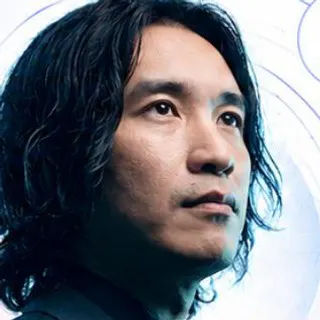 Ogasawara
Thank you for joining us today! To start, could you tell me about your career?
 Heo
I majored in information and communication engineering at university, then worked as a programmer at a small venture company.
But I really wanted a job where I'd meet people. So I became a Korean Air flight attendant.
OgasawaraFrom programmer to flight attendant! Those are completely different jobs. What did you notice while flying around the world?
HeoAs a flight attendant you go to big cities a lot. But gradually I wanted to visit small towns and places people don't know much about.
When I actually went, they were fascinating. Even within Korea, visiting rural villages was fun. What if I built a system so that ordinary people could enjoy places like this easily? That was seven years ago.
OgasawaraSo ordinary people could enjoy little-known places. I understand you then took a long trip of about 10 months. What stayed with you most?
HeoI traveled as if I lived in each region, and the best part was meeting the people who lived there.
Seeing their real lives, experiencing them, staying with them, eating the meals they cooked together, trying farm work. Those moments were wonderful.
So our service puts that at its very center. Customers are really drawn to it, and many come back again.
Farm inns had no booking button
OgasawaraStepping into people's lives and sharing meals is the heart of the service. In Korea, was that kind of rural travel easy to book?
HeoHardly at all. Travel sites were mostly built for cities and famous spots, and rural tourism hadn't gone digital.
Big travel companies have packages, but they're mainly about free-and-easy travel. In the countryside there simply was no travel infrastructure. So we arrange buses and put together schedules to make it easier to experience regional culture and daily life.
OgasawaraSo you prepare the whole trip, even the transport. Who actually uses it?
HeoThe biggest group is women in their fifties. Recently, among foreign bookings, we see a lot of families with children. By country, Australia and Singapore so far.
When we visited Ibaraki in Japan, we talked with guests at an inn, and many were women in their forties. When I asked why they came, they said lodging and meals were bundled, so everything was taken care of. In a word: it's easy.
OgasawaraChosen because it's easy and all-in-one. Founding in 2019 means you hit the pandemic almost immediately. That must have been hard.
HeoBack then, many people frowned on travel products and advertising, so it was tough.
But in Korea too, gathering in large groups was difficult during COVID. Travel company packages mostly moved in groups of dozens. With our service, if two people book, only those two go to the farm. That actually turned into an opportunity.
AI writes the product page for the farmer
OgasawaraSmall trips with just your own party. That worked during the pandemic. Sorry for the basic question, but how do you gather information on farm inns in the first place?
HeoFarm information is almost never online.
So first we work with local governments to get introductions to farms. Then our staff visit in person and collect all the materials. From those we build detailed product pages, and we automate that with AI.
Many farmers aren't comfortable with digital tools. Rather than having them build pages themselves, we use AI so their offerings can go digital easily.
OgasawaraAI builds the product pages. Are those pages used only on Nonunbub?
HeoWe don't just list them on our own site; we link them to global booking sites used around the world. We're now connecting with Klook, and once that's done, we plan to connect with KKday as well. We use AI for that linking too.
For each product, we create pages not only in Korean but in Japanese and English, and publish them automatically. People from Singapore have actually seen those pages and visited Korean villages.
OgasawaraData machines can pass along. Beyond building pages, do you also create the travel products themselves?
HeoYes. Many Korean farmers only offer lodging and nothing else.
In those cases, with funding from local governments, we combine experiences and meals into trips with a set schedule.
Why Japan, and why Ibaraki
OgasawaraTrips with a set schedule. Now you're bringing that system to Japan. What made you decide to expand here?
HeoIn Korea, actually, the number of farm-stay products is still small, while Japan has many products, and they're highly polished.
Above all, Japan is the country Koreans travel to most. If we help those travelers visit Japanese farms, our site gets used more and becomes better known. That's why we decided to expand to Japan.
OgasawaraBringing Japan's farms to Korean travelers. I understand Ibaraki is where you started in Japan. How did that come about?
HeoIt started with KOTRA, the Korea Trade-Investment Promotion Agency, a government body that helps Korean companies expand into Japan. It connects companies with Japanese partners relevant to their business.
Since we work with farm stays and travel, the idea was that if they introduced us to local governments, things would go well. Through KOTRA, we were introduced to people in local government in Ibaraki.
OgasawaraYou connected with local governments. In Ibaraki, who are you trying to reach, and with what kind of trips?
HeoIbaraki has many places whose appeal isn't widely known yet. That's exactly why local officials are so eager to boost the area.
For example, Koreans who go to Ibaraki mostly go for golf. But officials want ordinary travelers too, not just golfers. Ibaraki has a lot of rural tourism, and they asked us to help build it up.
Local revitalization volunteers introduced us to an old farmhouse and other places. We're building those into products right now.
OgasawaraPrecisely because it hasn't been discovered. Are talks moving forward anywhere else in Japan?
HeoWe recently went to an exhibition at Tokyo Big Sight. Many local governments were there, and we talked with people from various regions.
Right now we're in positive discussions with regions such as Awaji Island, Nagasaki and Kumano. In Okinawa, we were invited to exhibit at the ResorTech EXPO in Okinawa in November. Within Japan, we want to start where demand is strongest.
OgasawaraAwaji, Nagasaki, even Kumano. What do Japanese regions hope to get from BABAGROUND?
HeoJapanese farmers and local officials often tell us that foreigners who visit Japanese farms are mostly Europeans and Taiwanese. Lots of Koreans come to Japan, but they don't seem to go to those places much.
Our site is built for Koreans, and Koreans actually use it to visit. And because we list not only on our own site but also on major booking sites, the whole of Korea can find them. I think that's what appeals to them.
One lodging, 100 booking sites
OgasawaraThe whole of Korea can find them at once. Finally, as you add more destinations, what role do you see AI playing?
HeoTwo things.
The first is the time and cost of building pages. Right now people have to visit, take photos, research and list everything. That costs a lot. If AI does it, we can cut costs and be far more efficient. Many farmers are older, and with AI they'll be able to go digital easily too.
The second is connecting to many booking sites. Our goal is to connect with about 100. But connecting isn't enough; you have to manage them. If there's one lodging, its bookings have to stay in sync across every site. Opening this site, then that one, is really hard. If AI handles that management, it becomes much more convenient.
What rural Japan lacks isn't travelers but being listed
After the interview, I laid Heo's words alongside the company's materials and Japanese and Korean travel statistics. What emerged: the travelers and the lodgings are both there; only the data connecting them is missing.
Demand is already at the door
Koreans visit Japan 9.46 million times a year, more than 80% of leisure visitors are repeaters, and the more they visit, the more they head into the regions. Japan, for its part, aims to grow farm-stay guest nights to 12 million a year by fiscal 2029.
Travelers want to come, and lodgings want them. Yet foreigners still make up under 10% of farm-stay nights. Just as Myeongwol Village filled nine months ahead with a single page, what was missing wasn't demand but a doorway to be found through. Nonunbub's business is building that doorway across borders.
Turning phones and flyers into data AI can read
Working with AI and data, you hit the same wall in every industry: the most important information sits in phone calls, on paper or in someone's head, not in data.
Farm inns are no different. Their appeal lives in a grandmother's stories, a handwritten flyer and photos. Nonunbub reads that with AI, aligns it to OCTO and Google standards, and turns it into data booking sites can pass between them. AI's role is less about writing nicely and more about getting scattered information into a form that can be distributed. That, to me, is the most interesting thing about this company.
Rural Japan's next guests: Korean women in their forties and fifties
Eighty percent of Nonunbub's members are Korean women in their forties and fifties. Experienced travelers with time and money who are tired of planning logistics, they choose trips that bundle lodging, meals, experiences and transport because "it's easy." The women Heo met at the Ibaraki inn said the same.
Japan's rural lodgings often seem to offer foreigners "free-and-easy experiences." For this generation, a trip that handles everything from pickup to dinner will likely land better. After Europeans and Taiwanese, the next visitors to rural Japan may be Korean mothers looking for something beyond golf.
Connecting Korean travelers with rural Japan
Why isn't rural Japan better known among Koreans? Before the interview, I wondered if it lacked appeal. The answer was the opposite. The appeal is there. The travelers are there. What was missing in between was a booking button.
What BABAGROUND sees ahead is broad. In Japan it is developing products in Ibaraki, and in May 2026, at a business-matching event KOTRA held in Tokyo, it signed a memorandum with Okinawa tourism planner YUZU to co-develop trips around Okinawan daily life and food culture. It is in talks with Awaji, Nagasaki and Kumano, and in November it exhibited at ResorTech EXPO in Okinawa, where CTO Seo Myeong-seok took the stage at the Global Pitch on November 20. Beyond that, it has its eye on Italy, where rural tourism thrives. A system for selling village trips, born in Korea, is starting to cross borders.

Where to look next depends on where you stand.
- If you run a local government, inn or experience
Before foreigners can come, you need to be listed. Then present lodging, meals, experiences and transport as one trip. Korean travelers are already at the door. - If you're a student
Programmer, flight attendant, a long journey, then a startup. What looks like a detour became the company's strength. An experience you truly loved can become a system that brings it to others. - If you work in engineering or data
Taking scattered audio, PDFs and photos, aligning them to industry standards and distributing them: one of generative AI's most practical uses may be this kind of data prep.
The appeal is there. The travelers are there. All that was missing was a booking button. Someone has come from Korea to build it.
SOURCES ── References
- Japan National Tourism Organization (JNTO): Visitor arrivals by nationality and purpose, 2025 final figures (in Japanese)
- JNTO: Visitor arrivals, August 2026 estimates, September 16, 2026 (in Japanese)
- Japan Tourism Agency: Consumption trends of international visitors, 2025 annual report (in Japanese)
- Japan Tourism Agency: Destinations by number of visits to Japan (in Japanese)
- Japan Tourism Agency: Overnight travel statistics, 2025 final figures, July 6, 2026 (in Japanese)
- Ministry of Agriculture, Forestry and Fisheries (MAFF): White paper on food, agriculture and rural areas, FY2025, chapter 7, published May 29, 2026 (in Japanese)
- MAFF: White paper on food, agriculture and rural areas, FY2024, chapter 7 (in Japanese)
- BABAGROUND: About
- Nonunbub (Asobikata) Japanese site
- Venture Square: BABAGROUND grows as an AI-based rural tourism platform, March 24, 2026 (in Korean)
- Venture Square: BABAGROUND selected for TIPS, begins developing global distribution technology for rural content, May 6, 2026 (in Korean)
- Venture Square: BABAGROUND partners with YUZU for Okinawa local travel products, June 2, 2026 (in Korean)
- Venture Square: BABAGROUND named an outstanding company at Incheon Tourism Startup IR Day 2025, November 14, 2025 (in Korean)
- Dong-A Ilbo: BABAGROUND pioneers regional tourism with Nonunbub, May 30, 2025 (in Korean)
- Klook: How to book on Klook, updated November 4, 2025
- KKDAY JAPAN: KKday begins supplying experiences to JAL's mile program, PR TIMES, June 22, 2026 (in Japanese)
- Daigo Town: Fukuroda Falls and Namase Falls (in Japanese)
- Okinawa IT Innovation and Strategy Center: ResorTech EXPO 2026 in Okinawa, PR TIMES, August 10, 2026 (in Japanese)


