One 30-minute spike can set a Japanese factory's power bill for a year. Korea's Tilda lets AI decide when its batteries charge
For a Japanese factory on a high-voltage contract, the basic charge is set by the single 30 minutes of highest demand in the past year. Seoul-based AI company Tilda brings ArgMax Power to Japan: instead of running factory batteries on a fixed timetable, it forecasts two days ahead and adjusts them every few minutes. At one Japanese plant, it cut peak demand by 35% compared with the previous year under rule-based control. We asked Ki Nam Han, CEO of Tilda Japan, and Ji Ryang Chung, founder and CEO of Tilda Corp., how the system works, what that 35% actually measures, and why they run the numbers before any installation and tell some factories it isn't worth it.
 DATA TIMES Editorial Team
Interview · 19 min

When my electricity bill arrives, I honestly look at one number: the total. You pay for what you use. I assumed that was how it worked everywhere.
It isn't. In Japan, facilities that take power at high voltage, such as factories and shopping malls, play by a different rule. Their monthly basic charge is based on "contracted power," and under the common "actual-demand" method, that figure is the highest average demand recorded in any 30-minute window over the past 12 months, including the current month.
So if a factory runs everything flat out for just 30 minutes one day, that spike keeps raising its basic charge for the next year.
One tool for keeping that peak down is rooftop solar paired with a battery that stores the power. The Japanese government is subsidizing batteries for businesses and factories to speed up adoption.
But a battery doesn't cut costs just by sitting there. When it charges and when it discharges decide how much value it delivers. An analysis presented to a study group at Japan's Agency for Natural Resources and Energy noted that commercial and industrial sites vary so much in demand patterns and use cases that it is hard for owners themselves to judge whether a battery will pay off, and listed this as one of the obstacles to wider adoption.
Could AI take over that job of deciding how to run them?
That's the question Tilda, an AI company based in Seoul, is working on.
We were introduced to the company by the Incheon Center for Creative Economy & Innovation, a startup support organization in Incheon, Korea.
And this time, we got the chance to talk directly with Ki Nam Han, CEO of Tilda Japan!
Ji Ryang Chung, the company's founder and CEO, also sent us detailed written answers.
Here's the short answer up front: a factory battery's value depends as much on how you run it as on what you install.
- A factory's power bill hinges on its single busiest 30 minutes of the year
For high-voltage factories in Japan, the basic charge is set by the largest 30-minute demand of the past year. A battery meant to shave that peak is useless if it's empty when the peak hits. - The AI looks two days ahead and corrects itself every few minutes
ArgMax Power forecasts demand and solar output up to two days ahead from the site's own history, weather forecasts and the factory's operating calendar, then plans charging and discharging. When the forecast is off, it re-plans every few minutes. - It shows whether it will pay off before anything is installed
Tilda estimates savings from a year of the site's 30-minute data and doesn't recommend the system to factories where the effect would be small, such as those with flat demand. At one Japanese plant, peak demand fell 35% compared with the previous year under rule-based control.

Ji Ryang Chung
Founder and CEO, Tilda Corp.
“Modern, expensive equipment operated by fixed rules that someone had written years earlier. The equipment was capable of much more, but the operating logic had not changed.”── Ji Ryang Chung, in his written answers for this article
- –2018Principal engineer at Samsung ElectronicsEarned a PhD in artificial intelligence at Texas A&M University. From 2011, applied AI to real manufacturing problems at Samsung Electronics
- 2019–2021Partner at Minds & CompanyWorked on AI projects for industrial clients as a partner at an AI consulting firm
- 2021Founded Tilda as CEOFounded Tilda in Seoul. Sets the company's strategy and the technical direction of its AI, and personally leads its business in Japan, Korea, Southeast Asia and Europe
- NOWCommercial orders begin in JapanEstablished Tilda Japan in Kobe in 2025. After a trial at a Japanese factory, regular commercial orders through partners started in Japan in September 2026
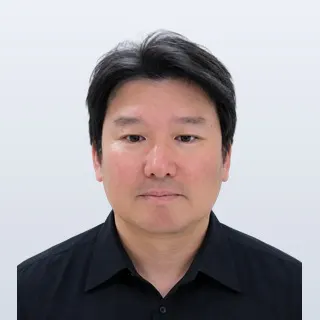
Ki Nam Han
CEO, Tilda Japan
As CEO of Tilda Japan, based in Kobe, he oversees the company's operating sites and business in Japan. Together with partners who handle sales and installation, he brings ArgMax Power to factory batteries.
New equipment, old operating rules
 Ogasawara
Thank you for joining us, Mr. Chung! Could you start by telling us about your career so far?
 Chung
I earned my PhD in artificial intelligence at Texas A&M University. I then worked at Samsung Electronics as a principal engineer from 2011 to 2018, applying AI to real manufacturing problems. From 2019 to 2021, I was a partner at Minds & Company, an AI consulting firm, where I worked on AI projects for industrial clients. In 2021, I founded Tilda.
The turning point was seeing the same pattern at many sites: modern, expensive equipment operated by fixed rules that someone had written years earlier. The equipment was capable of much more, but the operating logic had not changed.
At Samsung, I learned that an AI model is only useful if it works inside the constraints of a real production line: safety rules, the way operators work, and equipment that cannot be stopped for experiments. AI that can't work within those constraints doesn't get used on the factory floor.
OgasawaraWhy energy, and batteries in particular?
ChungEnergy was the place where that gap between capability and operation showed up most clearly in money.
Batteries installed at factories are 15- to 20-year assets, yet most of them run on a simple timetable: charge at night, discharge during the day.
A timetable cannot know that tomorrow will be cloudy, that a production line will start early, or that today's peak will come at 2 p.m. instead of 11 a.m. As a result, the battery is often empty when the peak arrives, or full when it should be absorbing surplus solar power. The customer has paid for the battery but gets only part of its value.
At the same time, electricity prices were rising and more factories were adding solar panels and batteries. Better operation could create real savings without new hardware, and forecasting and optimization had become practical enough to run on small devices at the site. That made it the right moment to start.
One 30-minute peak sets a year of basic charges
OgasawaraMr. Han, I'd like to bring you in here. When a battery cuts the peak, how does a factory's power bill change? Sorry if that's a very basic question.
HanNot at all. A factory's power bill has two main parts: the basic charge, and the energy charge you pay for the amount you use. At a factory, the amount used doesn't change much from month to month.
The basic charge is what matters. It's set by peak usage, measured in 30-minute blocks. And once a peak is set, it sticks for a full year. Say you use 168 kW for just 30 minutes this month. Even if you bring your peak down to 100 kW next month, your basic charge is still calculated at 168 kW for the next 12 months.
That's why how far you can cut the peak matters so much.
OgasawaraCouldn't a factory just use a little less power during the peak?
HanMr. Ogasawara, has the breaker ever tripped at your home? You've got the rice cooker on in the evening, someone's using a hair dryer after a bath, then you start vacuuming, and click.
It varies by region, but most homes in Japan have a breaker matched to the amperage in their contract. When you try to go over it, the breaker trips. So you simply can't use more than your contract allows.
At a factory, that would shut down production. So factories have no hard cap on their peak. They can draw as much as they need. But if they go above their previous peak for 30 minutes, the basic charge resets at that higher level.
Thirty minutes of running everything flat out to meet a delivery deadline can be enough to raise a whole year's basic charges.
OgasawaraThat's scary. And having someone watch it around the clock sounds hard too.
HanIt's possible, in principle. You put someone in charge, they watch the power usage, and they switch by hand: "We're at the peak, so discharge," "We're off-peak, so charge." But doing that 24 hours a day, all year round, takes a team of people. The labor would cost more than the savings on electricity.
So most factories have run their batteries on a fixed schedule. Discharge in the morning, charge in the afternoon, and so on.
But a fixed schedule can't respond to an unexpected peak. Say a factory is drawing 168 kW at its peak, and right then the battery starts charging at 200 kW, as scheduled. The power the factory pulls from the grid pushes the peak even higher. A battery installed to cut the power bill can end up raising the basic charge instead.
AI that looks two days ahead and corrects every few minutes
OgasawaraMr. Chung, how does ArgMax Power work toward that ideal? Could you walk us through a typical day?
ChungThe system forecasts the site's electricity demand and solar generation up to two days ahead, using the site's own history, weather forecasts and the factory's operating calendar (the working days and holidays provided by the customer).
From these forecasts, it plans when to charge and discharge, taking into account the tariff: the demand-based basic charge and the time-of-use energy prices.
During the day, the system updates its forecast every few minutes and adjusts the battery at short intervals. How short depends on the installed hardware: on our own gateway, Senta, a device that connects the site's equipment to our system, the battery can be adjusted every second. If demand rises faster than expected, the system discharges earlier; if solar output is higher than expected, it stores the surplus.
The system does not control production equipment. It only decides how the power needed right now is supplied: from the grid, from solar, or from the battery.
OgasawaraForecasts are bound to be wrong sometimes, though.
ChungYes. Forecasts are always partly wrong, so the system is designed to correct itself frequently rather than rely on a perfect plan. It doesn't just follow a schedule fixed the day before. It re-forecasts every few minutes, so an unexpected increase in production or a sudden drop in solar output when clouds roll in is reflected quickly.
Behavior during a network outage also depends on the hardware. On Senta, decisions are made at the site, not in the cloud, so AI control continues even if the connection is lost, and model updates resume when it returns.
Real-time protection of the battery itself stays with the site's existing battery management system, the controller that keeps the battery operating safely. ArgMax Power doesn't replace it. It sits on top and sends only charge and discharge commands. Operating limits, such as the allowed state-of-charge range and the maximum charge and discharge power, are set by each customer according to its own requirements, and the AI only operates within them.
 Ogasawara
Why train a separate model for each factory? It seems like learning from many factories at once would make it smarter.
ChungEvery factory has a different demand pattern, a different mix of equipment and a different electricity contract. A model trained on the average of many sites will be average at each of them. So we train a separate model for each site, and one customer's data is never mixed with another's.
To start, we need one year of 30-minute demand data, the capacity of the solar and battery equipment, the electricity contract and the operating calendar. In Japan, high-voltage customers can get 30-minute data from their utility, so no new metering is needed. Operation can start within one month of receiving the data.
OgasawaraMr. Han, what do you actually show the people at the factories that adopt it?
HanIn this field, I don't think many companies in Japan are using AI for system design or control yet. So when you tell a customer "the AI will control it," I don't think it really lands.
That's why we made the screen as easy to understand as possible. How much power the factory is using right now, how much the solar panels are generating, and whether the battery is charging or discharging: you can see the flow of electricity at a glance, in real time. You can also see the plan the AI has made in a chart.
Customers tell us it's very easy to understand.
What the 35% is measured against
OgasawaraI hear you've cut peak demand by 35% at a factory in Japan. Mr. Chung, what exactly is that 35% comparing?
ChungThe figure comes from a manufacturing plant in Japan where ArgMax Power has been running continuously since October 2025.
Before ArgMax Power, the plant's battery was operated by a conventional rule-based energy management system. We compared peak demand under ArgMax Power with the same period of the previous year under the rule-based system, using the same solar and battery equipment. The result was a 35% reduction in peak demand, verified by an independent third-party verification body in November 2025.
The verified figure is the reduction in peak demand. We do not publish the site's electricity use or bill, as these belong to the customer.
This is a result for one site, not a product specification. The reduction at another site depends on its demand pattern and on the size of its solar and battery equipment.
OgasawaraIf it varies by factory, I'm curious which factories it actually pays off for.
ChungThe most important condition is a high-voltage contract with a demand-based basic charge, because that is where peak reduction turns into savings. In practice, we look for batteries of about 200 kWh or more. Smaller systems can be connected, but the savings are usually too small to matter.
Poor fits are low-voltage contracts without a demand-based charge, sites with very flat demand, very small batteries, and new buildings that have no demand history yet.
The battery, power conversion equipment and installation are supplied by our installation partners. Tilda provides the AI control software as a subscription. The fee is agreed with each customer within the savings that ArgMax Power creates, so the customer's net benefit stays positive.
We do not publish a standard payback period, because it differs greatly from site to site. Instead, before any investment, we run the same optimization model on the site's past year of 30-minute data and calculate the expected savings and the right battery size. This analysis is free of charge under a non-disclosure agreement.
OgasawaraMr. Han, do you start with that estimate in actual sales, too?
HanYes. There are two kinds of factories: those that already have solar and batteries, and those that have neither. Either way, we start with a simulation.
If a factory already has the equipment, we take its past power usage data and show how much the bill would fall with AI control. To be honest, at a factory that uses power at the same steady level all day, there's no peak, so AI control doesn't change much. For those factories, after they've seen the results, we sometimes recommend against adopting it.
If a factory has nothing yet, we work backward. Say they want to cut their power bill by 30%: how much solar and battery capacity would that take? From there, the dealer estimates the installation costs, so the customer can see clearly how many years it will take to get the investment back. If it pays back in five years, go ahead; if it's six, what then? That decision is the customer's.
You install the equipment, and then the solar panels produce more than you can use, or the battery turns out too small, and the bill doesn't drop as much as you hoped. To keep that from happening, we show numbers with solid grounds up front, so the customer can choose.
Lessons from Japan, and what comes after solid numbers
OgasawaraMr. Chung, what have you learned from introducing the service in Japan?
ChungThree things.
First, Japanese companies rarely hand control of their equipment directly to an overseas startup. Working through local partners, who handle sales, installation and on-site support, and having our own subsidiary in Kobe, has been essential.
Second, the equipment varies widely. Connecting to each manufacturer's battery management system requires detailed knowledge of its communication interface, so installation requires partners with power-system engineering skills, not only general construction capability.
Third, the electricity contract is an advantage in Japan. Because high-voltage customers can get 30-minute data from their utility, we can show expected savings before any equipment is touched.
Regular commercial orders through our partners started in September 2026.
OgasawaraWhere is ArgMax Power headed next?
ChungWhat we offer today is battery optimization so factories and commercial facilities can use more of their own solar power, with tariff models for Japan, Korea, Thailand and Vietnam. We also offer pre-installation savings and sizing analysis, and remote monitoring.
What we're testing is battery operation at a public AI facility in Seoul where GPU servers of research institutes and AI startups are concentrated. Its electricity use resembles a small AI data center, so the results will show whether ArgMax Power can also reduce energy costs at AI data centers, where power demand is growing rapidly. The system controls only the battery, not the servers or cooling.
Further ahead, we're planning to combine batteries at many sites to participate in electricity markets and demand response, where customers are paid for adjusting their power use, including automated bidding on the Japan Electric Power Exchange (JEPX). We're also planning reports for RE100, the initiative for running a business entirely on renewable electricity, and for greenhouse gas disclosure.
The evidence we will use is the number of sites in regular operation and, for each site, the measured savings compared with conventional rule-based operation.
A battery's real work starts after installation
OgasawaraMr. Han, to close, what are you hoping for in Japan from here?
HanThe government is pushing hard to get batteries installed with subsidies, to bring down power bills. Installing batteries is important, of course. But what matters most, I think, is how you run the batteries you've installed.
So instead of looking only at whether a battery was installed, imagine looking at the results: whether it's being run in a way that cuts the power bill, and how much this year's bill fell compared with last year's. If systems like that spread, it would be a big tailwind for control solutions like ours. Even without them, of course, we're confident we can grow on our own.
In fact, it's already starting to spread by word of mouth, from the president of one factory that adopted it to the president of another: "This is how much our power bill went down." I'd love for more people to learn, at trade shows and elsewhere, that AI can run batteries.
Batteries are shifting from equipment you buy to equipment you run
Han's explanation started with a home circuit breaker and led to basic charges set in 30 minutes, batteries running on timetables, AI that forecasts two days ahead, and factories Tilda advises not to adopt it. After the interview and the written answers, I came away with three takeaways.
A factory's power bill depends on the moment, not just the volume
When we think about saving energy, we think about using less: switching to LED lighting, adjusting the air conditioning. All of that matters.
But a high-voltage factory's basic charge is set by its single highest 30 minutes of the year. You can trim usage steadily, but if a peak spikes for 30 minutes one day, that number stays on the bill for a year. In the government study group's model, too, peak shaving paid off most at daytime factories with a sharp morning peak, and less at round-the-clock factories that use power evenly.
When Han said Tilda sometimes advises factories with steady all-day usage not to adopt the system, that's the flip side of the same rule. The same amount of electricity can produce a very different bill depending on when you use it. Knowing which kind of bill your own factory has looks like the first step.
Battery prices are out of your hands, but how you run them can change today
In the government study group's model, at today's prices (¥106,000 per kWh including installation), even a daytime factory couldn't recover its investment within 20 years. In the same model, if prices fall to ¥60,000 per kWh, the government's target for fiscal 2030, the internal rate of return finally turns positive, at 1.8%.
Factories can't change battery prices. But how they run the batteries they already have is something they can change starting today. And remember, that model assumed the battery runs on the ideal plan that cuts the peak the most, every day. A battery on a timetable is running well short of that ideal.
Tilda's AI aims to close that gap by forecasting two days ahead and correcting every few minutes. Setting its fee within the savings it creates also reflects, I think, a view that a battery's value should be measured by the results of how it runs, not by the price of the hardware.
For foreign AI to work in Japanese factories, it needs to speak to the equipment and have a Japanese partner
The first lesson Chung drew from Japan was that Japanese companies rarely hand control of their equipment directly to an overseas startup. The second was that every manufacturer's equipment speaks a different communication protocol. The report to JETRO also noted that many manufacturers don't design their equipment to be controlled by a third party.
However good the algorithm, if it can't talk to the factory's battery, it can't move anything. Setting up a subsidiary in Kobe, teaming up with sales and installation partners, and building a screen anyone can understand may look like a long way around. I came away feeling it's a sure path to earning trust in Japanese factories.
For companies with factories, "whose AI connects to which equipment" may become one more thing to compare when choosing batteries. For engineers, this is a fascinating field where forecasting and optimization show up directly on the monthly power bill. A battery's real work starts after it's installed. And in Japan, the work of running it has begun.
SOURCES ── References
- Tilda Corp., Official website
- Japan External Trade Organization (JETRO), Selected applicants for the Subsidy for Promoting Foreign Direct Investment into Japan (September 18, 2025; updated October 13, 2026, in Japanese)
- JETRO, Tilda Japan: Development and demonstration of an AI solution for real-time control of batteries in self-consumption solar systems to cut electricity use in manufacturing (project report, in Japanese)
- TEPCO Energy Partner, How contracted power is determined (actual-demand method) (in Japanese)
- Mitsubishi Research Institute, Use cases and profitability of commercial and industrial battery storage systems (Agency for Natural Resources and Energy study group on stationary storage, Document 6-1, July 22, 2025, in Japanese)
- Agency for Natural Resources and Energy, Purpose of the FY2025 study group on expanding stationary battery storage (Document 4, July 22, 2025, in Japanese)
- Sustainable open Innovation Initiative (SII), Application guidelines for the FY2025 supplementary subsidy for renewable energy and distributed energy resources (March 26, 2026, in Japanese)


