Measure a 300-meter ship to within 5 mm? The inspection drone EXA and Aeronext got flying in three months
Can you hand the inspection of a 300-meter steel ship to a drone? EXA, an IT company that grew out of a Japanese steelmaker, and Aeronext, which designs drone airframes around the job they do, are building a purpose-made inspection drone that aims to map a ship's hull to within 5 millimeters. Three months after they started working together, their test drone was flying. We talked with the three people driving the project and Aeronext President & CEO Keisuke Toji about why steel hulls throw sensors off, what a drone built for inspection looks like, how inspectors could give drones instructions in plain language, and a future where fleets of drones fly with no one piloting or even watching.
 DATA TIMES Editorial Team
Interview · 37 min

Drones inspecting bridges and rooftops barely make the news anymore.
In Japan, inspection is now the biggest paid job drones do. Impress Research Institute estimates that the country's drone business reached ¥497.3 billion (about $3.3 billion at ¥150 to the dollar) in fiscal 2025, and inspection is the largest service segment, at ¥98.3 billion.
So how do you inspect a steel ship more than 300 meters long?
A big ship is a slab of steel about the length of the Eiffel Tower lying on its side. It still has to go into dry dock on a schedule so people can check the hull for damage. Workers put up scaffolding to reach the high spots and crawl into dark, cramped tanks. EXA lists the problems with this: the risk of falls and oxygen deprivation, the time and money spent putting up and taking down scaffolding, and an aging pool of skilled inspectors.
Could a drone take over the climbing? And if it could, what would be the hardest part?
That's the question EXA, an IT company based in Yokohama, has taken on.
In September 2026, EXA announced it was stepping up development of a "Physical AI Platform": drones collect the data, AI analyzes it, and inspectors check the ship on a copy rebuilt inside a computer. Physical AI means AI with a body, like a robot or a drone, that sees, moves and handles things in the real world. The drone side of the project belongs to Aeronext, a company that designs a drone's airframe structure around the job it has to do.
And from the day the two companies started working together to the day their test drone flew, it took just three months. Starting in November 2026, trials on a real ship begin, using a vessel owned by Toei Kisen, a shipowner in Hiroshima Prefecture.
This time, we got to sit down with all three people driving the project, plus Aeronext's CEO.
The short answer: handing ship inspection to a drone comes down to three things.
- Get both precision and low cost
The goal is to map a ship more than 300 meters long to within 5 mm (the test drone is still being checked against that). Inspection that costs too much simply stops happening. So instead of an off-the-shelf drone, they are designing a purpose-built one with only the equipment it needs. - The hard part isn't flying. It's the steel
Following a planned route is a solved problem. What's hard is that a giant steel hull scrambles compasses and GPS, and sensors go wrong in ways you can't see. - People still make the final call
AI ranks what needs a closer look, inspectors ask the drone for extra shots in plain language, and a human makes the last decision.
We spoke with these four online on October 9, 2026.
Three people behind the ship-inspection drone, and Aeronext's CEO
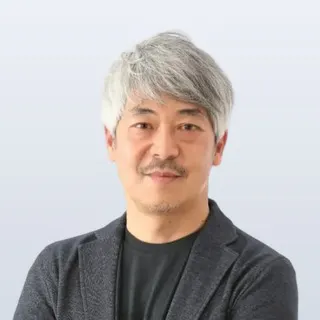
Keisuke Toji
President & CEO, Aeronext
Co-founded the company behind G-Guide, Japan's on-screen TV program guide, while at the ad agency Dentsu, and ran it as president for 18 years. CEO of Aeronext since 2017, he is taking the "no one piloting, no one watching" autonomous flight developed for delivery drones into inspection and farming.

Daisuke Takeishi
Head of MIRAI Design Works Department, EXA Corporation
“We want to capture a ship more than 300 meters long to within 5 millimeters, at the very most”
Joined EXA in 2000 and led AI adoption for financial-sector clients. As head of the MIRAI Design Works Department, EXA's new-business unit, he leads this project.

Takumi Shibata
Head of Engineering, Aeronext
“An AI with a body can do things only an AI with a body can”
Heads Aeronext's engineering department and decides where its development goes next, from delivery drones built on 4D GRAVITY to work over the sea and inspection.

Masaki Okochi
Engineering Department, Aeronext
“Try it, improve it, try it again, improve it again. That's what we've always done”
Studied aerospace engineering, worked at All Nippon Airways and started his own company before joining Aeronext in 2017. He is at the center of building prototype airframes from scratch and flying them.
A sky-robot company meets an IT company born in a steel mill
 Ogasawara
Thanks for joining us, everyone! Toji-san, let's start with you. How did Aeronext get started?
Toji (Aeronext CEO)Aeronext is a startup founded in 2017. Our vision is to turn new airspace into a new economy.
Back then, the drone market was mostly aerial photography, with a person flying the drone by remote control. From the very start, we went after remote, automated flight instead. Our first angle was airframe design. We invented a center-of-gravity control technology called 4D GRAVITY and built the business from there. Of all the uses we could see, delivery fit best, so for the past several years we've mainly worked on using drones to make local deliveries more efficient.
That work gave us the technology to fly drones automatically and remotely. Now, with advances in AI, one remote pilot doesn't steer anything, and doesn't even watch. We're developing technology to fly 100 or 1,000 drones at once with AI.
We started with delivery, and we're now taking the same technology into farming, surveying, inspection and monitoring. Shibata and Okochi, who are here today, lead that development. Then came our meeting with EXA, a truly wonderful company, and now we're trying to put our technology to work much more widely.
OgasawaraFrom delivery into inspection and monitoring, and that's where you met EXA. Takeishi-san, what kind of company is EXA, and how did you end up working on ship inspection?
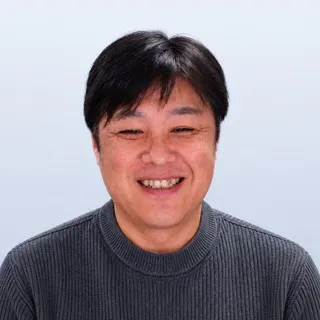 Takeishi (EXA)
EXA started as the information systems division of NKK, Nippon Kokan, a steelmaker, and became its own company. We're a systems integrator with deep roots in manufacturing, and next year we mark our 40th anniversary.
Until now, we've solved clients' problems by building systems for them. But the world is changing, and we want to move the center of our business toward delivering value itself. We got a new president last year and started a new five-year medium-term plan this fiscal year: the first two years to transform, then three years to hit our targets. One of the company's goals is new businesses that create new value in new areas, so we set up the MIRAI Design Works Department, the unit I'm in, to work out where to go.
In manufacturing, EXA has spent a long time building up technology in what's called CPS, cyber-physical systems. What could we build on that? AI is essential from here on, and since manufacturing is our trade, we live in the physical world. So we decided we wanted to grow physical AI into our next strength.
Then, which industry? Shipbuilding, as it happens. We've been in that industry for more than 30 years, going back to the NKK days. Right now the government is also working to revive Japan's maritime industry. It's a way to contribute to society, and it plays to our strengths. And the maritime industry still has a lot of dangerous work sites. Out of all that, we picked ship inspection as our first use case.
OgasawaraAn IT services company can't build the flying machine on its own. Was there a reason you teamed up with a drone company?
Takeishi (EXA)We're an IT services company built around software development, so we don't have hardware expertise. When we thought about who to partner with, we felt that just using a drone off the market wasn't the answer.
We want to take general-purpose technology, tailor it to the fine details of real work on site, and put it into practice there. That's what we call the last mile. To do that, the most valuable thing is to team up with a company that can properly design the airframe itself. We researched our options, and through a lucky connection we ended up working with Aeronext.
In terms of roles, we build the simulation in digital space and the AI-based inspection itself. The valuable data that feeds it, the high-quality data, is what Aeronext's drone goes out and collects.
From a daycare connection to a test drone in three months
OgasawaraLet me turn to Aeronext's development team. Shibata-san, you lead development. What has the team built so far, and what's your role in this project?
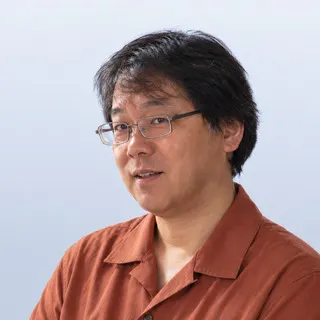 Shibata (Aeronext, Head of Engineering)
For the company as a whole, the core technology is the 4D GRAVITY approach that came up earlier. We've spent years developing delivery drones around it. The results include AirTruck, a dedicated delivery drone built with ACSL, and LogiAir, built with Prodrone.
Beyond delivery, we do all sorts of joint research and contract development with companies, schools and JAXA, Japan's space agency. With the National Institute of Technology, Hiroshima College, a maritime college, we worked on a drone that syncs with a self-navigating boat and lands on it. Recently, with JAXA, we've also been developing ways to search for objects floating at sea. In Mongolia, we work with a local drone maker on manufacturing and quality checks, help with blood delivery by drone, and support the growth of the local drone industry.
On this project, we're responsible for collecting data reliably with the drone.
OgasawaraFrom delivery all the way out to sea. Okochi-san, I hear you're the one with your hands on the hardware. How have you been involved in development?
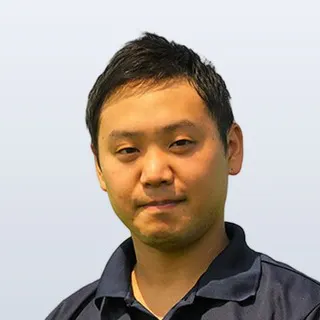 Okochi (Aeronext, Airframe Development)
As Shibata said, we don't mass-produce airframes. We build prototypes, fly them and develop new technology from them. Try it, improve it, try it again, improve it again. Because that's what we've always done, we know how to build a prototype drone from scratch, and fast.
As Takeishi-san mentioned, the idea was that the drone EXA needed should be built specifically for the job. They valued how fast we iterate and what we know about prototyping, and that's how we got brought into this team.
OgasawaraI'm curious how that team came together in the first place. Okochi-san, how did the two companies meet?
Okochi (Aeronext, Airframe Development)Honestly? One of the dads at my kid's daycare, from the same class, works at EXA. We're daycare dads. We do barbecues together, go out for drinks. He told me EXA was starting a drone project, and he introduced us.
That led to my first meeting with Takeishi-san at Japan Drone, a trade show held every June. We had a booth there again this year. We talked, and things took off from there.
OgasawaraWait, it started with daycare dads! Takeishi-san, did you already know each other?
Takeishi (EXA)Not at all. As it turned out, that daycare dad is the head of our sales division. I used to handle financial-sector clients, and I'd worked with him in the same organization. That's how it came up: "You're doing drones, right? A daycare dad I know says he does drones."
The trade show was the following month, so I said I'd like to meet. We met in June and decided in July to work together. In these three months, they built us a test drone, and we're already running experiments. That speed really impresses me.
OgasawaraJust three months! That's incredibly fast.
Takeishi (EXA)The business itself only started this fiscal year. From April to June, we worked on the core software technology in-house. Once we had some confidence in it and were ready for the next step, we looked at a lot of drone makers, but nothing felt right. Just as we were wondering what to do, we happened to meet.
OgasawaraFrom a daycare barbecue to a first meeting at a trade show to a test drone in three months. That's fate! Still, did the two companies easily agree on what you were aiming for and what kind of drone you needed?
Takeishi (EXA)I think the speed comes from the fact that we understand each other on exactly that.
When we first brought it to them, what we wanted to do was a big technical stretch. And Aeronext, especially Okochi-san, said, "We want to try this. It's worth taking on." Being able to share that kind of dream from the start made a huge difference.
We talk openly about what's possible and what isn't, and move forward. I really wanted to do this project, so I see them as partners, as teammates. We weren't sitting side by side the whole time, but we shared the vision, and each side went off and prepared with that picture in mind. Having a technical team that understands what we're after and moves ahead of us is a huge reassurance.
The shared dream: measure a 300-meter ship to 5 mm
OgasawaraWhat was that dream?
Takeishi (EXA)The first thing I told them was: we'll fly a drone and film a ship. A ship is a giant structure more than 300 meters long. We want to fly a drone along it and capture it as point-cloud data to within 5 millimeters, at the very most. When I said that, they may well have been thinking, "Seriously?" But they came right back with ideas on how to actually do it.
The other thing is cost. If you want to build something great, maybe you can, with unlimited money. But when you're inspecting the huge number of structures out there, if the cost is more than people can pay, the inspection just doesn't get done. Then what's the point?
How do we do it with the bare minimum, in terms of cost and as a business? Instead of "add this, add that," they think it through with us. I see a lot of value in that.
OgasawaraShibata-san, how did Aeronext take Takeishi-san's "dream"?
Shibata (Aeronext, Head of Engineering)I talked earlier about how we've broadened our business, and moving into new fields is an important phase for the company going forward. So we were really grateful when Takeishi-san brought us the inspection idea.
To be honest, inspection is a crowded market. There are already plenty of drones out there, and it felt like a world where it's a bit late to jump in. That's why we hadn't touched it.
But for the "last mile" work Takeishi-san described, there's still a lot of room. And simply as engineers, we wanted to get our hands on new technology. We'd always been interested in inspection and surveying, so we were keen to do it.
OgasawaraLet me ask about the technology. With a ship more than 300 meters long, I wouldn't even know where to begin. Takeishi-san, where are you starting?
Takeishi (EXA)The big picture is that we're starting with the outside of the ship. Once we get the exterior right, we'll move inside. Outside first, then inside, step by step.
Let me also explain why we care so much about precision. Ship inspections have something called a close-up survey. Under international classification society rules, it's an inspection where the surveyor sees structural details from within arm's reach. Remote inspection techniques such as drones can now stand in for close-up surveys, as long as they produce data as good as a surveyor looking up close and the attending surveyor accepts it. That's why we want to capture the ship as finely as a person would see it from arm's length.
Right now we're on the exterior. How do you capture the outside of a huge ship, and how much precision can you get on something that big? That's the challenge.
OgasawaraHow much precision on a ship that big. Okochi-san, what does a drone need to measure it accurately?
Okochi (Aeronext, Airframe Development)That's exactly what we're testing now. We're not at the point of saying we've nailed 5 mm. We've run several tests, and the feeling is we need a bit more precision.
Vibration and shake in the airframe may be what's holding precision back. To capture fine detail for 5 mm, you have to fly quite close to the hull. Say you shoot from 10 meters away: if the camera's angle wobbles by just 0.01 degrees, the spot it captures moves by nearly 2 millimeters. That's why we're testing vibration. We've developed drones for years, so we know many ways to damp vibration. We'll compare them and, on the hardware side, cut vibration and shake as much as we can.
Beyond that, and this is something we'll work out with EXA, there may also be ways to improve precision in software. We want to look at that together.
OgasawaraSo you're attacking it from both hardware and software. Takeishi-san, where does EXA improve the precision?
Takeishi (EXA)Aeronext is improving what it can in the airframe design itself, such as its rigidity. They're also looking at camera shake and image distortion from vibration as we run the trials.
On EXA's side, it's about how precisely we can stitch the point-cloud data together. There's a lot software can do to correct the data so the shape comes through clearly. We've scanned huge factories before, so we have plenty of know-how in point-cloud processing. We want to use it and push precision as far as we can with hardware and software together.
Building a body for inspection, starting with its shape
OgasawaraLet me ask Okochi-san more about the airframe. Honestly, I still can't quite picture a drone that meets those requirements. What technology goes into it, and how are you developing it?
Okochi (Aeronext, Airframe Development)As hardware, the airframe doesn't need anything special.
A drone carries a computer called a flight controller. Tell it "go to these coordinates by this route," and as long as the drone knows where it is, it can fly that precisely. That part is existing technology, so we don't think we need to develop anything new there.
What's different is building a map from point-cloud data and having the drone figure out where it is in that map and how to move. There are various techniques for that, but we have to test how they work in practice. That's uncharted territory for us, too.
If we combine existing technologies, we can see roughly how to get there. But the details EXA needs, like getting a little closer, how to design the route, what to do about obstacles, will come up as we go. We'll work through those with EXA.
OgasawaraSo flying a set route is existing tech. Shibata-san, then where does your 4D GRAVITY come in? I picture it as technology for keeping the drone stable...
Shibata (Aeronext, Head of Engineering)4D GRAVITY is about the airframe hardware. The route question is more on the software side.
The basic concept is controlling the center of gravity. The shape you saw on our website, with the propeller section and the payload section separated, isn't the whole story. Control the center of gravity, fly stably: it's best to think of it as a concept that covers all of that technology.
I'd add that we're also developing the piece that bridges route-planning software and the drone that actually flies. On one side, software running in the cloud or on a powerful PC on site; on the other, the drone's hardware. We put a small AI board on the drone to sit in between. Whether we'll use it for this inspection work is still to be decided, but that's something we're developing on the drone side.
OgasawaraNot a shape, but a concept built around center-of-gravity control. Okochi-san, what does that mean in practice?
Okochi (Aeronext, Airframe Development)As Shibata said, think of it as a design philosophy.
Eight or ten years ago, drones were general-purpose airframes with a camera hung underneath, or a lidar (a laser distance sensor) hung underneath. The same airframe with something dangling from it. That's all there was.
But what a drone needs depends on how it's used. Is it mainly hovering, or flying long distances like a delivery drone? Cars look very different depending on what they're for, right? So drones should have purpose-built airframes too. That's where it started. Where do you put the center of gravity for the job, how should the airframe be built? The whole way of thinking about design that weighs all of that is what we call 4D GRAVITY.
For inspection, the drone mostly hovers and moves slowly. We have a good idea of what shape it should be, so we're building it with everything we've learned.
Next stop, a real ship. Waiting there: steel
OgasawaraBefore we get to the real ship, how is the test drone doing so far? Takeishi-san, as project lead, you first.
Takeishi (EXA)We started in July, and in a very short three months they built the test drone and we've gotten as far as collecting real data. That gives me confidence that we can keep going like this.
We've really only just started flying. We're scanning a steel shipping container that Aeronext owns and working out, on both hardware and software, what data we can get and how vibration affects it. From here we clear those issues one at a time.
We've also connected with a shipowner, and next month (November 2026) we plan to scan a real ship. Since we'll be working at an actual shipyard, with wind and everything else, I expect even bigger problems to show up. Honestly, I'm looking forward to it.
Nobody's doing this yet, which is exactly why it's worth doing. I believe it's worth the money for our customers, and I want to take on the challenge of creating it with our own hands.
 Ogasawara
Looking forward to the problems. I like that. Shibata-san, from the development side, what are the challenges right now?
Shibata (Aeronext, Head of Engineering)Challenges? We're full of them. That's just how development goes.
To get specific, there's the vibration and airframe shake we've been talking about. And some requirements aren't pinned down yet. For example, should the camera and lidar move together, or should they go on something like a gimbal (a mount that cancels out camera shake)? There are lots of details like that.
But if we work through those details carefully, one by one, a path will open up. Every day we run into problems and solve them one at a time.
OgasawaraOkochi-san, in the next stage, is vibration the toughest thing for the drone?
Okochi (Aeronext, Airframe Development)For the drone itself, we plan to tune out vibration completely, so I'm not too worried about that.
What worries me more is the ship itself. It's a mass of steel. A drone knows which way it's facing from an electronic compass that reads the Earth's magnetic field, and where it is from satellite signals like GPS. Fly near a mass of steel, and the magnetic field gets distorted, while the towering hull blocks or bounces the satellite signals. That can throw off the compass and GPS. On top of that, and we haven't tried this yet so we don't know, ships can give off various radio signals. I want to see what happens in a real environment.
When we flew over a boat with Hiroshima College, the one I mentioned, an infrared sensor that measures altitude started acting up the moment the drone got over the boat. When we dug into it, it looked like something was emitting radio waves. There's a lot you can't know in advance. I suspect there are all kinds of traps waiting that you can't see.
 Ogasawara
Finding those invisible traps before you fly seems important too. Takeishi-san, are you running lots of simulations in digital space?
Takeishi (EXA)Next month (November 2026) will be our first time scanning a real ship, so that's the starting line. But to train AI, you need a system for continuous improvement, a loop that keeps turning. We're building a system to keep that loop turning in simulation.
There's one more company on the team, Forcesteed Robotics. They have deep expertise in building autonomous AI. With their technical support, EXA is building the system for training the AI itself, the behind-the-scenes machinery that makes the service work.
Inspection where you ask the drone in plain language
OgasawaraSo EXA is building even the machinery that trains the AI. That makes me wonder how people on site will give the drone instructions. Takeishi-san, does the drone fly fully on its own when it scans the exterior?
Takeishi (EXA)Yes, it flies automatically. That's where we really want to use Aeronext's know-how.
Once it flies the planned route on site, you get a 3D map of the ship in digital space. From there, you give the drone instructions in natural language, plain words, and it flies. It does re-inspections and extra checks, for example measuring the thickness of a steel plate from outside, and keeps the evidence. Plate thickness is measured by sending in ultrasound and timing how long it takes to bounce back. That tells you, in numbers, how much the steel has thinned from rust. Then comes the final inspection assessment. That's the world we're trying to build.
OgasawaraGiving a drone instructions in plain language!
Takeishi (EXA)At the last mile on site, you can't station a pilot there. Still, inspection is experts taking responsibility for a ship's life, so I think the final judgment will stay with humans.
But people can't look at everything, so AI ranks what matters and a person checks in the end. That's where natural language and UI/UX come in. Highly technical tools are a hard sell for the craftspeople on site. So we want to lower the bar, with design that doesn't feel like technology, that meets them where they are. EXA has a design team too, and we want to bring them in and build the service properly.
OgasawaraYou mentioned meeting the craftspeople where they are. How do you pass the experience and instincts of veteran inspectors on to AI?
Takeishi (EXA)As machines take over more work from people, and I think a lot of companies are working on this, there's a great deal of what's called tacit knowledge in how people act. How do you draw that out so AI can learn it? How do you build a world where AI supports decisions, and eventually makes them? I think that's critical.
Just this month (October 2026), we started R&D on it. How do you draw out people's tacit knowledge naturally? The data you get will be small, so how do you link it with the data out there, look for correlations, and guide decisions with evidence behind them? As a research theme, it's fascinating.
For that, the way you design the experience has to be built in behind the scenes. Otherwise, veterans won't even touch it. Draw out tacit knowledge naturally, without it feeling like technology. Even in AI, focusing squarely on people is going to matter more and more.
Toward a sky with no one piloting, no one watching
OgasawaraYou're starting outside the ship, then moving inside. The announcement also mentioned bridges, plants and disaster response down the road. What future are you building toward? Takeishi-san, may I start with you?
Takeishi (EXA)We're working in physical AI, and ultimately I think many industries will need robots to solve the labor shortage on the factory floor itself.
Inspection is our way in. The exterior first, then the interior. And of course, not just ships: we want to roll this out to factories, manufacturing equipment and plants. Then infrastructure. There are a huge number of structures that are 30, 50, even 60 years old. We'd like to extend inspection to those, too.
OgasawaraFrom ships to factories to infrastructure. Shibata-san, where do you see Aeronext's technology heading?
Shibata (Aeronext, Head of Engineering)Our base is delivery, so I'm interested in areas with synergy with delivery. We're still new to the details of inspection, but what we're good at is flying many drones remotely at the same time.
Take long, large structures like bridges and railways. Inspecting those has a lot of synergy with delivery. You fly many drones to inspect them. We want to focus our development on controlling many drones at once.
OgasawaraBridges and railways, with many drones. Finally, Toji-san, as Aeronext's CEO, what kind of sky do you see ahead for the company?
Toji (Aeronext CEO)It builds on what Shibata just said. A drone is a robot that's good at approaching things from the air. In the end, it's about expanding the jobs that should be done from the air.
As a business, the key is utilization: how much you can keep each drone working. And, as Shibata said, simultaneous remote autonomous flight. We've said it from the beginning: no one piloting, no one watching. Fully autonomous, unmanned drones flying many at once. That's what drives utilization.
Lately I've been using the phrase "economies of scope." With drones, how many roles one drone can play at the same time matters a great deal. It ties into ideas like dual use and triple use. From the air, the drone handles many uses at once. You fly many at the same time, and no person is involved at all.
Further out, that connects to things like the humanoid robots on the ground that Takeishi-san mentioned. But first, what we're best at is the approach from the air. We want to achieve full automation there first and drive efficiency.
OgasawaraIn a sky where no person is involved, the way people work today, climbing into dangerous places to inspect, could change completely.
Toji (Aeronext CEO)Yes. I think people's roles will change.
At the same time, whether it's AI or robots, we're not aiming for a world that needs no people at all. Shibata's boss always talks about human-in-the-loop. Where do you bring human capabilities in to raise overall productivity? Which loop in the whole system is the best place for people? Pursuing that is the real point.
But that goes hand in hand with how good the robots get, so you can't leap straight to deciding what people's roles will be. For now, Shibata and Okochi here are engineers, and I think them enjoying their development work is what gets us closest to that future.
OgasawaraEngineers enjoying the work. Takeishi-san, do you feel the same?
Takeishi (EXA)I do. That's how we get closer to the future. EXA has lots of engineers, and the people on this project have a real sparkle in their eyes. I think that's where innovation, the kind that gets things moving, comes from. That's exactly why I want to keep finding themes and purpose they can really dig into.
OgasawaraThen let me ask the two engineers. Okochi-san, what's putting the sparkle in your eyes right now?
Okochi (Aeronext, Airframe Development)After such great answers from Toji-san and Takeishi-san, now I have to talk about what I personally want to do...
For me, it's discovering, inventing and building new technology and shapes nobody's seen before. Going from zero to one. That's what really excites me. I'm truly grateful to work somewhere that lets me do that freely. And because of that, I also think I need to turn it into business for the company, even a little. Do fun things and create technology that didn't exist before. That's about it.
OgasawaraZero to one. I like that. Shibata-san, how about you?
Shibata (Aeronext, Head of Engineering)Honestly, I think the best thing is just Okochi having that sparkle and running with it. For me personally, it's the physical AI we talked about earlier.
There's an object, there's a body. An AI with a body has the traits of that body, things the body knows, and so there's AI that's possible only because it has a body. That's what I've wanted to work on for a long time. It's on a different level from the tacit knowledge we discussed, but how do you translate a body's traits into AI? I think that's central to physical AI.
A drone is a fairly simple body, but getting that right would be fascinating. I'm not that involved in it right now, so maybe I'm not sparkling yet, but it's what I want to do next.
Ship inspection is shifting from people climbing to check, to drones capturing and people deciding
After the interview, I set the four conversations next to data on bridge inspection and the shipbuilding workforce. What looks like a story about one drone points to a change in what inspection work itself looks like.
Inspection's biggest enemy is being too expensive to do
What hit me hardest was Takeishi's point about cost. With unlimited money, maybe you can measure anything. But if the cost is more than people can pay, the inspection itself stops happening.
That's not just about ships. According to MLIT, of Japan's roughly 730,000 road bridges, the share that are 50 or more years old will rise from about 37% in March 2023 to about 75% in March 2040. Aging structures keep piling up, but the people checking them don't. In shipbuilding, too, an MLIT study group report found the share of workers in their teens and twenties fell from 35% around 2010 to 22% in 2022.
That's why I think this project will be won as much on low cost as on 5 mm. If a drone can capture a ship in a few days without scaffolding, you can inspect more often. You can ask for a re-shoot of just the spots you're worried about. Technology that raises precision is also technology that lets you inspect more often. That's how I read it.
Drones are moving from generic airframes with gear hung underneath to airframes shaped for the job
Okochi described drones from about ten years ago: generic airframes with a camera, or a lidar, hung underneath, sent to every job the same way. Shibata also said inspection was a crowded market where it felt "a bit late to jump in." There are already plenty of inspection drones for sale.
Even so, EXA looked at many drone makers, found nothing that felt right, and chose a partner that could design the airframe from its shape up, because it wanted to "tailor it to the fine details of real work on site."
It looks like the same shift that happened in delivery. Aeronext has built purpose-made drones for carrying cargo, and it has said its new delivery drone, unveiled at the Japan Drone show in May 2026, is also being considered for inspection. In ship inspection, purpose-built drones are already branching out. Inside tanks, there's the spherical drone that flies without satellites. For the underwater hull bottom, KDDI Smart Drone has laid out a plan to work with ClassNK to create technical standards for hull-bottom inspection with an "air-and-water" drone that both flies and swims by 2027. And measuring the outside of a hull towering over the dry dock is the job for this inspection drone, with its center of gravity and shape chosen for hovering patiently beside a ship. From generic drones competing on specs to purpose-built drones for each job. An IT services company teaming up with a partner that can shape the hardware from scratch is a model I expect to spread well beyond ships.
Inspection AI will be decided less by how smart it is than by whether craftspeople can ask it in plain words
Another phrase from Takeishi I can't shake is "design that doesn't feel like technology."
However smart the AI is, if craftspeople on site won't use it, their instincts never reach the AI. So you let them ask the drone for extra checks in plain language. You keep the AI to ranking what matters and leave the final call, the one that carries a ship's life, to people. Toji's "human-in-the-loop" is the same idea: where to put people so the whole system works best.
Shibata's "AI that's possible only because it has a body" connects here too. What does a drone's body sense next to steel, and how does it shake? Craftspeople's instincts and a drone body's quirks are both knowledge that hasn't yet become words or data. Who can build the easiest doorway for getting that into AI? I think that, as much as how smart the model is, will decide who wins inspection AI.
Beyond that lies the sky Toji describes, with no one piloting and no one watching. Picture a delivery drone photographing bridges and rail lines on its way back. One drone carrying, measuring and keeping watch at once. That's Toji's "economies of scope" reaching inspection work.
What to watch from here depends on where you sit.
- Companies that own factories, plants or infrastructure
Can inspection that has meant scaffolding and people climbing in be replaced by "drones capture, AI ranks, people decide"? After ships, EXA is looking at factories, plants and infrastructure. - Engineers and researchers
Locating a drone from a point-cloud map next to steel, where GPS and compasses can't be trusted. Getting to 5 mm by suppressing vibration. Turning plain-language instructions into drone movements. The boundary between hardware and software is full of unsolved problems. - Students and people choosing a career
AI, drones and design are arriving all at once in shipbuilding, an industry with a long history. With Japan aiming to double its shipbuilding output, the place where manufacturing and AI meet is closer than you might think.
Measure from the air, decide as people
For a long time, inspecting a big ship meant people putting up scaffolding, climbing it and crawling into dark tanks to check.
EXA and Aeronext want to replace that with a drone that captures the ship, AI that checks it on a copy inside a computer, and people who make the final decision. The three months that began with a daycare connection have only gotten as far as a test drone in the air. Next, alongside a real ship, they'll face the invisible traps that steel sets.
Toji said that "them enjoying their development work is what gets us closest to that future." A sky with no one piloting and no one watching will come closer through engineers with that sparkle in their eyes.
A 300-meter ship, to within 5 mm. By the time that number is routine, we may be checking not just ships but bridges and factories from the air.
SOURCES ── References
- EXA, EXA steps up development of a Physical AI Platform to cut dangerous work and ease labor shortages (September 1, 2026, in Japanese)
- Aeronext, Aeronext joins EXA's Physical AI Platform project as a technology partner (September 1, 2026, in Japanese)
- EXA, Company history (in Japanese)
- EXA, EXA teams up with Toei Kisen to begin ship-inspection trials using drones and AI (October 29, 2026, in Japanese)
- EXA, Company profile (as of April 1, 2026, in Japanese)
- EXA, LOADCAL loading computer (in Japanese)
- Aeronext, Company profile and history (in Japanese)
- Aeronext, Technology licensing business (in Japanese)
- Aeronext, AirTruck logistics drone (in Japanese)
- Aeronext, PD4B-M LogiAir (in Japanese)
- Aeronext, Joint project with the National Institute of Technology, Hiroshima College (in Japanese)
- Aeronext, New logistics drone with ActiveWing unveiled at Japan Drone 2026 (May 28, 2026, in Japanese)
- Impress Research Institute, Drone Business Survey Report 2026 (March 24, 2026, in Japanese)
- Drone Journal, Japan's drone business market (May 13, 2026, in Japanese)
- MLIT, Shipbuilding Industry Revitalization Roadmap (December 26, 2025, in Japanese)
- MLIT Maritime Bureau, Number of workers in the shipbuilding industry (in Japanese)
- MLIT, Report of the study group on transforming the shipbuilding industry (June 2024, in Japanese)
- MLIT, Aging infrastructure: current state and outlook (in Japanese)
- Ship Safety Act, e-Gov (in Japanese)
- Ordinance for Enforcement of the Ship Safety Act, e-Gov (in Japanese)
- Sekido, What are the benefits of RTK? (in Japanese)
- Forcesteed Robotics, About (in Japanese)
- Aeronext, Aeronext and Yamatane partner on AI-driven farm operations (August 27, 2026, in Japanese)
- Aeronext, Aeronext and Change Holdings partner on crisis-management AX with AI drones (August 2026, in Japanese)
- Engineer type, Masaki Okochi of Aeronext (October 14, 2021, in Japanese)
- EXA recruiting team on note, Daisuke Takeishi (May 21, 2021, in Japanese)
- IACS, UR Z7 Hull Classification Surveys, Rev.26 (2018; copy hosted by Türk Loydu)
- DNV, Survey by remote inspection techniques – use of approved service suppliers (April 1, 2019)
- Professional Mariner, ClassNK releases guidelines for drone use in vessel surveys (April 9, 2018)
- Blue Innovation, ELIOS 3 UT inspection payload certified by ClassNK (April 8, 2025, in Japanese)
- DJI, Zenmuse L2 specs
- MLIT, FY2026 research theme: Technology development for more efficient ship inspection (in Japanese)
- KDDI Smart Drone, Remote hull-bottom inspection with an air-and-water drone (2024, Cabinet Office AUV platform materials, in Japanese)


